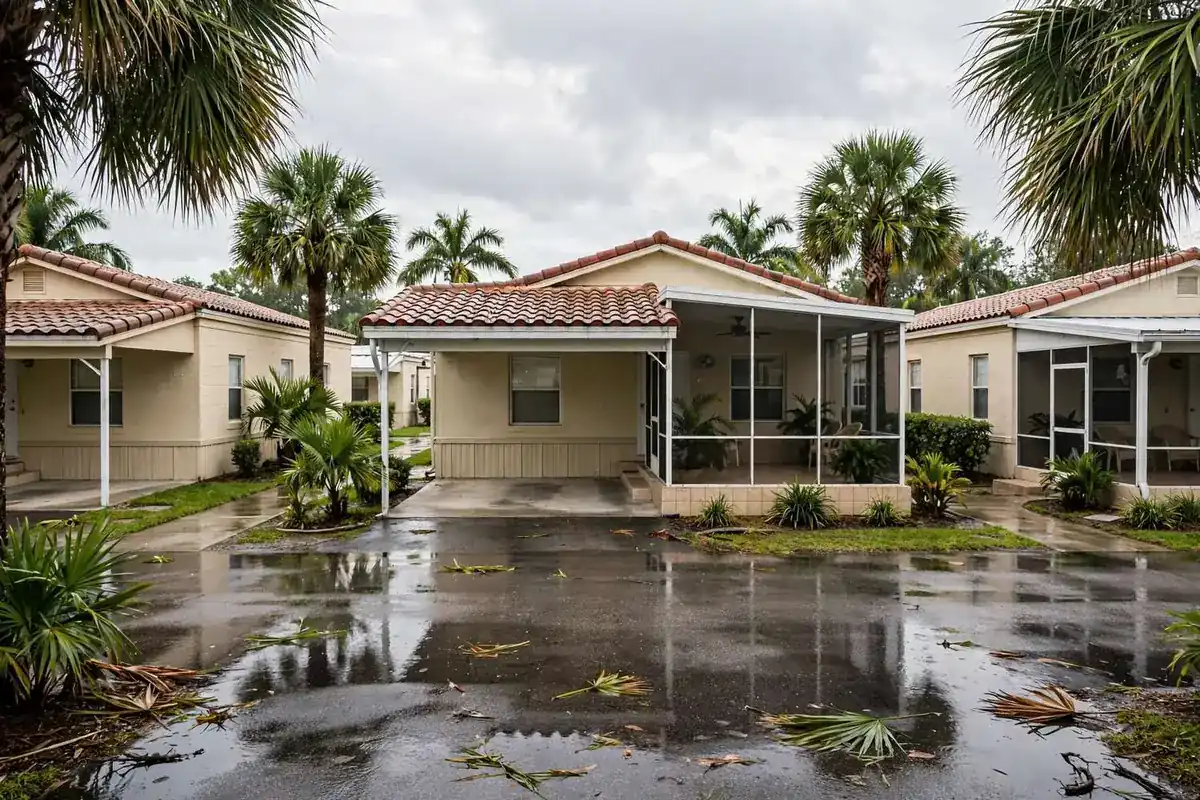
How common manufactured homes are here
Census figures (ACS 2020–2024) show how many local homes are manufactured or mobile homes:
| Area | Mobile or manufactured homes |
|---|---|
| Nokomis | 40.1% |
| ZIP 33982 (Punta Gorda, east of I-75) | 33.2% |
| ZIP 33980 (Punta Gorda, north of the river) | 23.6% |
| Englewood | 23.6% |
| ZIP 33950 (Punta Gorda) | 16.4% |
| Venice | 11.8% |
Why leaks hide in a manufactured home
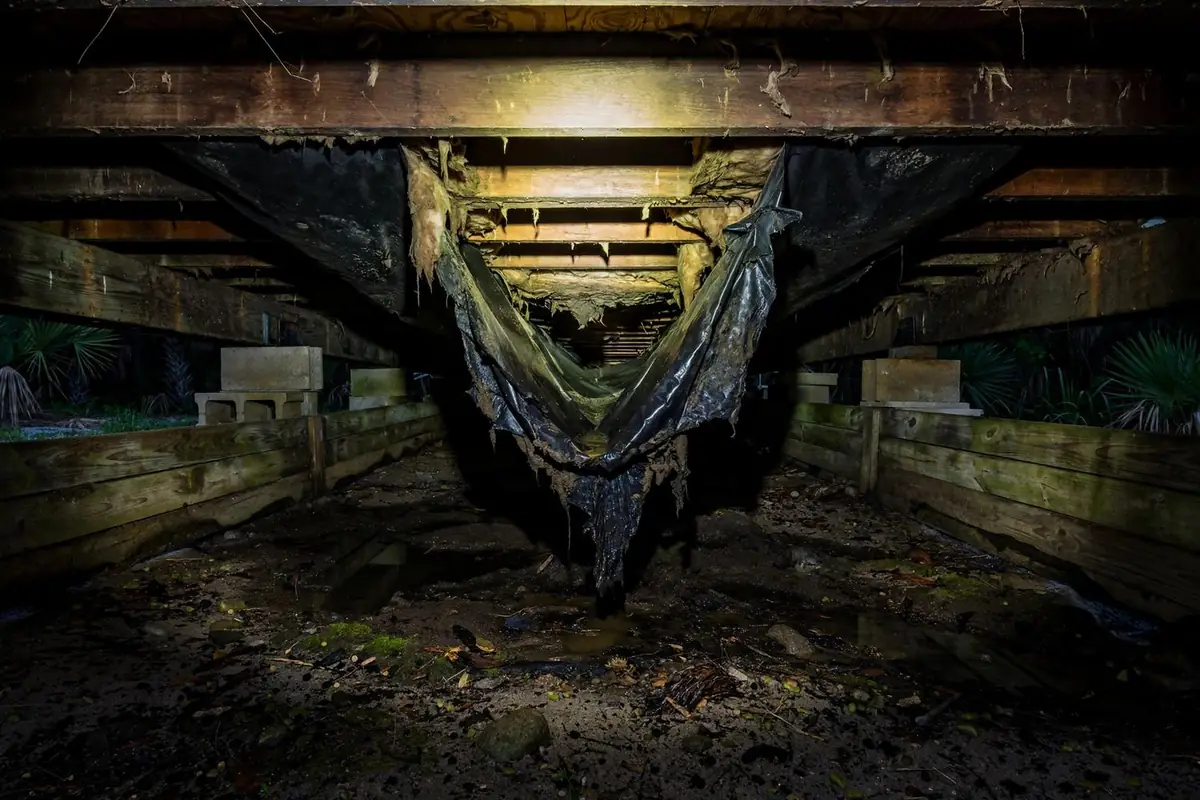
Under the floor of most manufactured homes is a sealed layer often called the belly wrap or bottom board. It holds insulation against the underside of the floor and protects the supply lines, drain lines and, in many homes, the main air ducts that run there.
When a supply line or drain leaks inside that space, the water has nowhere to go. It soaks the insulation, which then sags like a hammock and holds the water against the subfloor. Inside the house you may see nothing for weeks, or only a soft spot near the bathroom or kitchen.
Signs of water under the floor
- A floor that feels soft or bouncy near a toilet, tub, washer or the water heater closet.
- A musty smell that gets stronger when the AC runs (the ducts may be under the floor too).
- A water bill that jumped, or a meter that keeps moving with every tap off.
- Outside: a belly wrap that bulges or drips, or damp soil under one spot.
- Peeling or swollen flooring at the seams, or vinyl that lifts.
What drying usually involves
- Find and fix the leak. The belly wrap is opened at the wet area to reach the pipes.
- Drain and remove wet insulation. Soaked belly insulation rarely dries in place and is usually replaced.
- Check the subfloor. Many manufactured homes have particleboard or OSB subflooring, which swells and loses strength when wet. Soft sections are cut out and replaced.
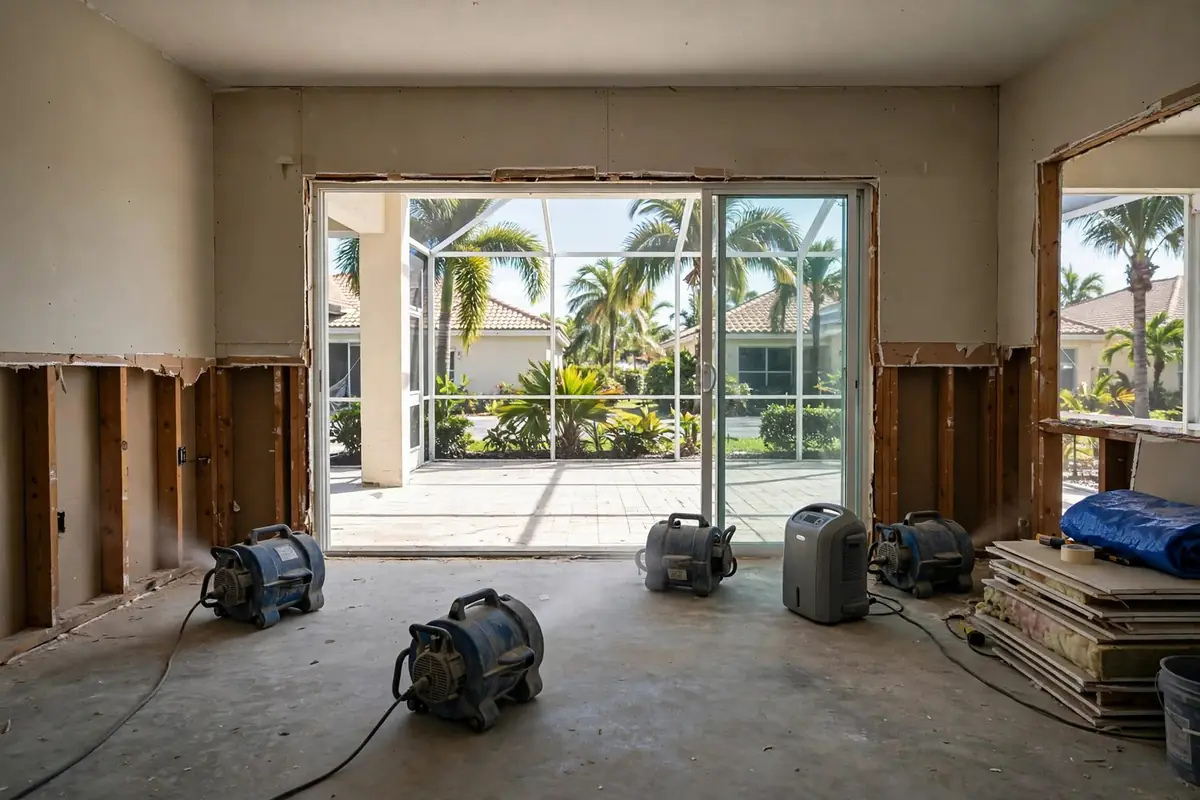
- Dry from below and above. Air movers and dehumidifiers run inside the home, with air directed into the open belly area.
- Check the ducts. Wet or crushed ducts under the floor can spread moisture and odor through the house.
- Reseal the belly wrap once readings show the area is dry, so rodents and humidity stay out.
Tell the dispatcher it's a manufactured home, so you're connected with a company that works on them.
After a flood or surge
When flood water rises under or into a manufactured home, more than the floor is affected:
- Belly insulation and under-floor ducts that sat in flood water are generally replaced, not dried.
- The water heater, furnace or air handler and any outlets that went under need a licensed trade to check them.
- Flood water can shift the home on its piers and loosen tie-downs. Florida licenses manufactured home installers through the Department of Highway Safety and Motor Vehicles; re-leveling and tie-down work is for a licensed installer.
- Skirting traps moisture underneath after a flood. Removing a few panels helps air move while things dry.
As with any home, rising water is generally a flood-policy loss. See water damage vs flood insurance.
Prevention for manufactured homes
- Look under the home once or twice a year with a flashlight, and after any big storm.
- Replace rubber washing machine hoses with braided ones, and check toilet and sink supply lines.
- Keep the AC condensate line clear; in many manufactured homes it drains under the home.
- Patch tears in the belly wrap so animals and humidity stay out.
- If you leave for the summer, shut off the main water and the water heater.
Sources
- U.S. Census Bureau, American Community Survey 2020–2024 5-year (tables B11001, B25035, B25003, B25024, B25034, B01002), via Census Reporter
- U.S. Census Bureau, American Community Survey 2020–2024 5-year, Charlotte County places and ZIP areas, via Census Reporter
- U.S. EPA, A Brief Guide to Mold, Moisture and Your Home
- FEMA, Flood insurance (National Flood Insurance Program)
Last checked 2026-11-28 by the AMR Water & Mold editorial team. Editorial policy.