Where is the water shutoff?
- At the fixture: small oval valves under sinks, behind toilets, behind the washing machine and on the ice maker line. Turn clockwise.
- Whole house, block homes: usually where the line enters the house, near the front hose bib or in the garage.
- At the meter: in a box near the street. Your utility can shut this off for you: City of Venice Utilities, North Port Utilities, Sarasota County Public Utilities, or the Englewood Water District.
- Condos: often in the water heater closet or under the kitchen sink. Building staff may need to close a riser valve.
- Water heater: close the cold supply valve on top and switch off its breaker or gas supply.
Once the main is off, open the lowest faucet or hose bib to drain pressure out of the lines.
Which plumbing failures cause the most damage?
Freezing is rarely the cause in Florida. The usual culprits:
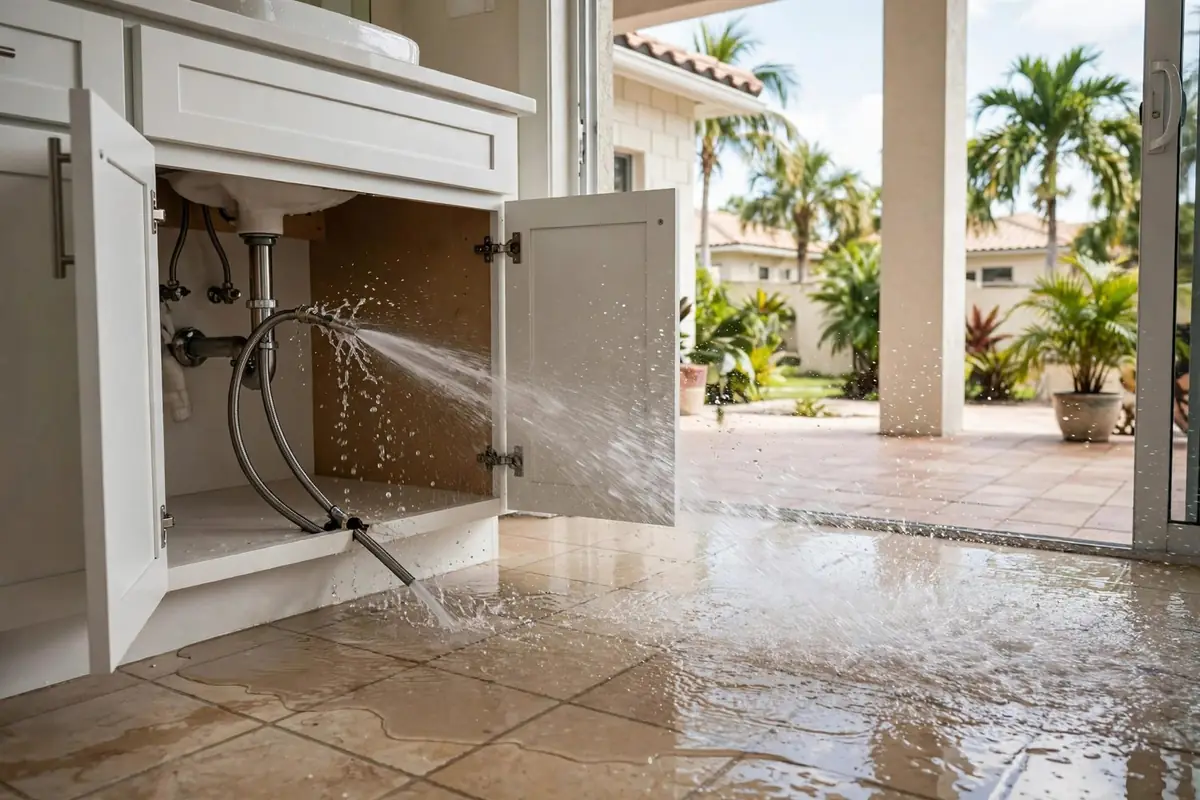
- Supply lines: braided toilet, faucet and washer hoses fail with age and can release a lot of water in an hour.
- Water heaters: a tank that corrodes through, or a relief valve that discharges into a closet without a drain pan.
- Ice maker and dishwasher lines: slow leaks under cabinets that go unnoticed until flooring lifts.
- Pipes in walls and ceilings: pinhole leaks in older copper, or failures at fittings.
- Slab leaks: a pipe under the concrete. Signs include warm spots on tile, the sound of running water, or a jump in the water bill.
- Older pipe materials: some homes still have polybutylene supply pipe, which insurers look at closely. If you don't know what's in your walls, ask a plumber.
Seasonal homes: the leak nobody sees
Venice, Englewood and Osprey have high median ages (69.2, 68.5 and 64.5) and thousands of seasonally vacant homes (Census ACS). A supply line that fails in July in an empty house can run for weeks. If you leave for the summer:
- Shut off the main water valve and switch off the water heater.
- Leave the AC on at a setting that controls humidity, rather than off.
- Ask someone to check the house after every storm and every couple of weeks.
- Consider a leak sensor or an automatic shutoff valve.
Plumber first, or water damage company first?
Both, and usually in this order: stop the water yourself, call a plumber for the pipe, and call a water damage company for the house. They're different trades. The plumber fixes the leak; the restoration company extracts, removes wet materials and dries the structure. If the leak is inside a wall, the drying company may open the wall so the plumber can reach the pipe.
Keep the failed part (the burst hose, the fitting). Insurers sometimes want to see it.
How burst-pipe damage gets dried
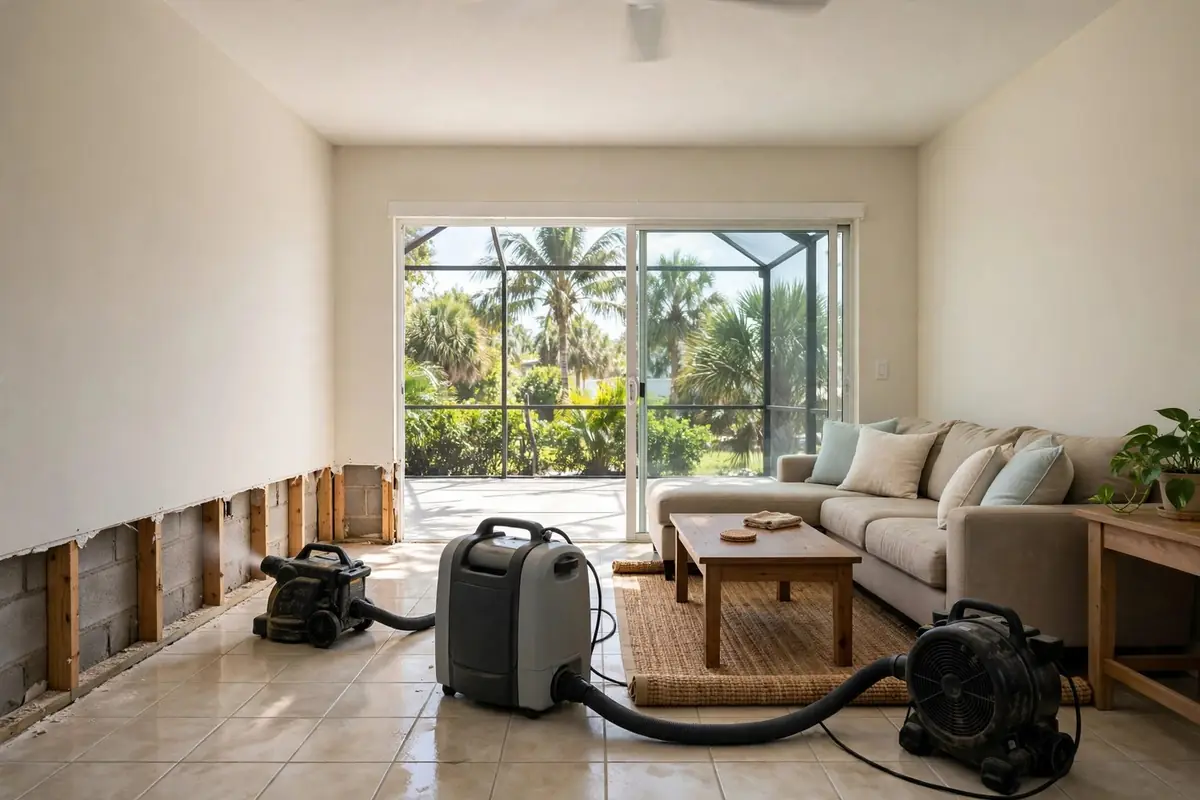
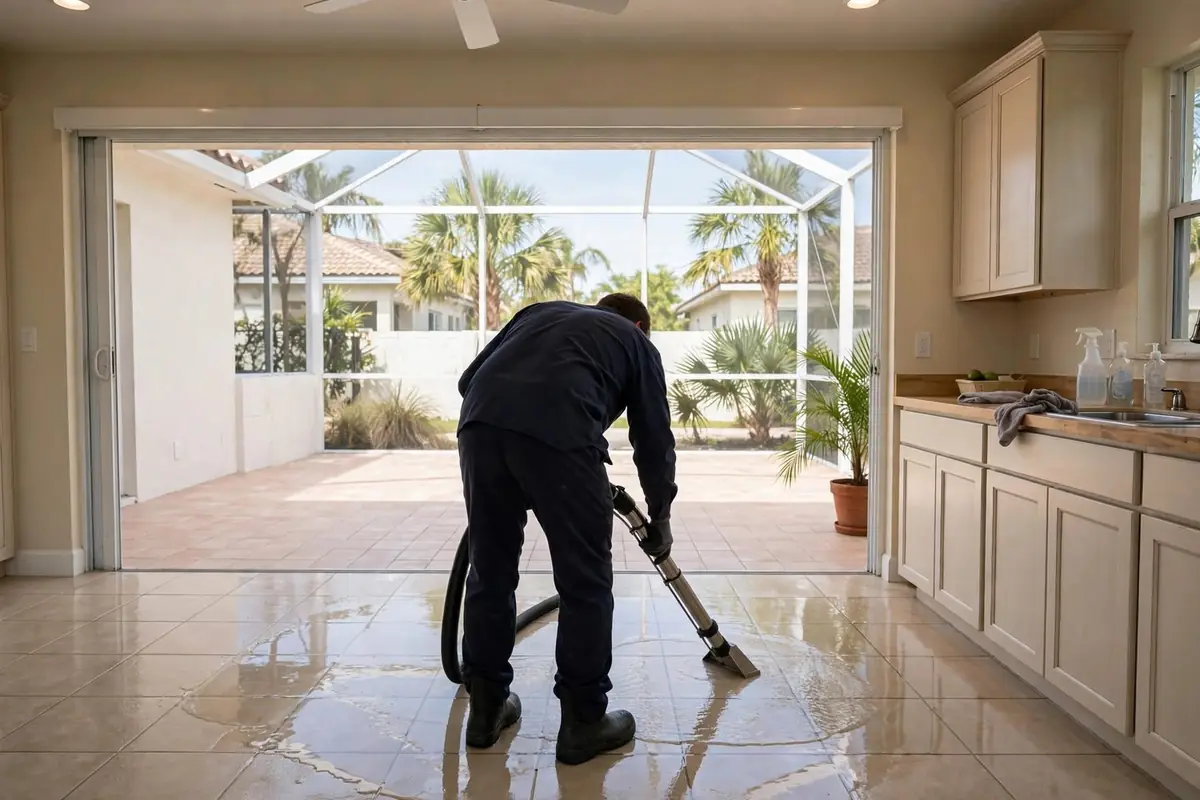
Supply-line water starts out clean, so a burst pipe caught quickly is usually the easiest kind of water damage to dry. The technician maps how far the water ran (under cabinets, below the wall plate, into the next room), extracts it, and opens up what traps water: baseboards, the toe-kicks under vanities and kitchen cabinets, and sometimes a strip of drywall where the pipe was. If the break was inside a wall, that opening also gives the plumber access. Air movers and dehumidifiers then run until meter readings show the wall and slab are dry. The full sequence is on the water damage restoration page.
What affects the price?
For a burst pipe, the biggest factors are how long the water ran before it was shut off, how many rooms it reached, and whether cabinets or flooring have to come up to dry what's underneath. A break inside a ceiling or an upstairs condo unit usually means more drywall work than one under a sink. Get the scope and price in writing before work starts. The general cost factors apply too.
Match it to what you're seeing
Related problems that start in the plumbing:
- Water heater leak
- Leak under the slab
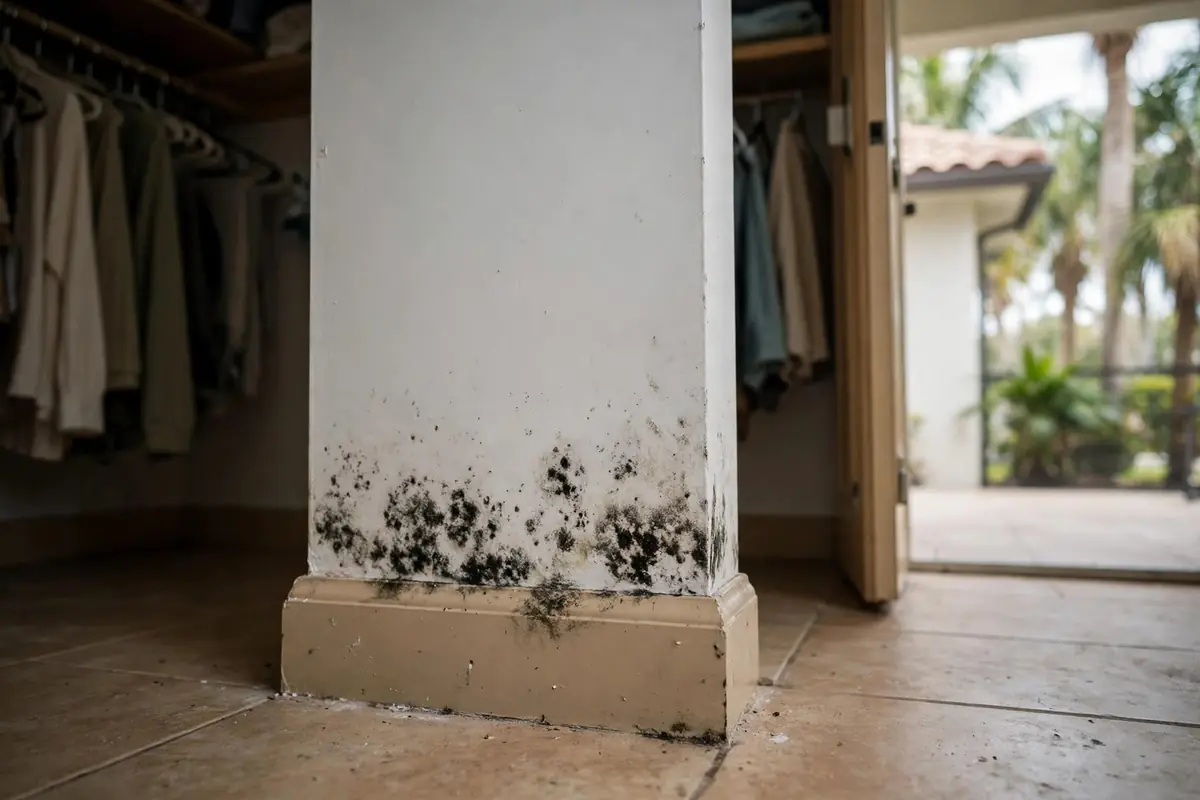
- Wet drywall after the pipe is fixed
- Guide: Florida's assignment of benefits change
More in the help library.
Sources
- U.S. Census Bureau, American Community Survey 2020–2024 5-year (tables B11001, B25035, B25003, B25024, B25034, B01002), via Census Reporter
- U.S. EPA, A Brief Guide to Mold, Moisture and Your Home
- City of Venice Utilities
- City of North Port, Utilities Department
- Sarasota County Public Utilities: water
Last checked 2026-11-16 by the AMR Water & Mold editorial team. Editorial policy.