Short answer: Shut the cold-water valve on top of the heater (or the main), then turn off power at the breaker for an electric heater, or set a gas heater's control to off. Find whether the water comes from a valve, a fitting or the tank itself. A leaking tank needs replacing. For water that spread into walls or floors, call (941) 555-0147.
Shut it down safely
- Close the cold-water supply valve on the pipe going into the top of the tank. If it won't turn, shut the main water valve.
- Electric: switch off the double breaker for the water heater, from a dry spot.
- Gas: turn the gas control knob to "off" or "pilot". If you smell gas, leave and call the gas company from outside.
- Don't touch the tank or pipes until they cool; the water inside can scald.
Where is it leaking from?
| Where you see water | Likely cause |
|---|---|
| Dripping from the pipe on the side (discharge pipe) | Temperature and pressure relief valve opening: pressure, heat or a worn valve |
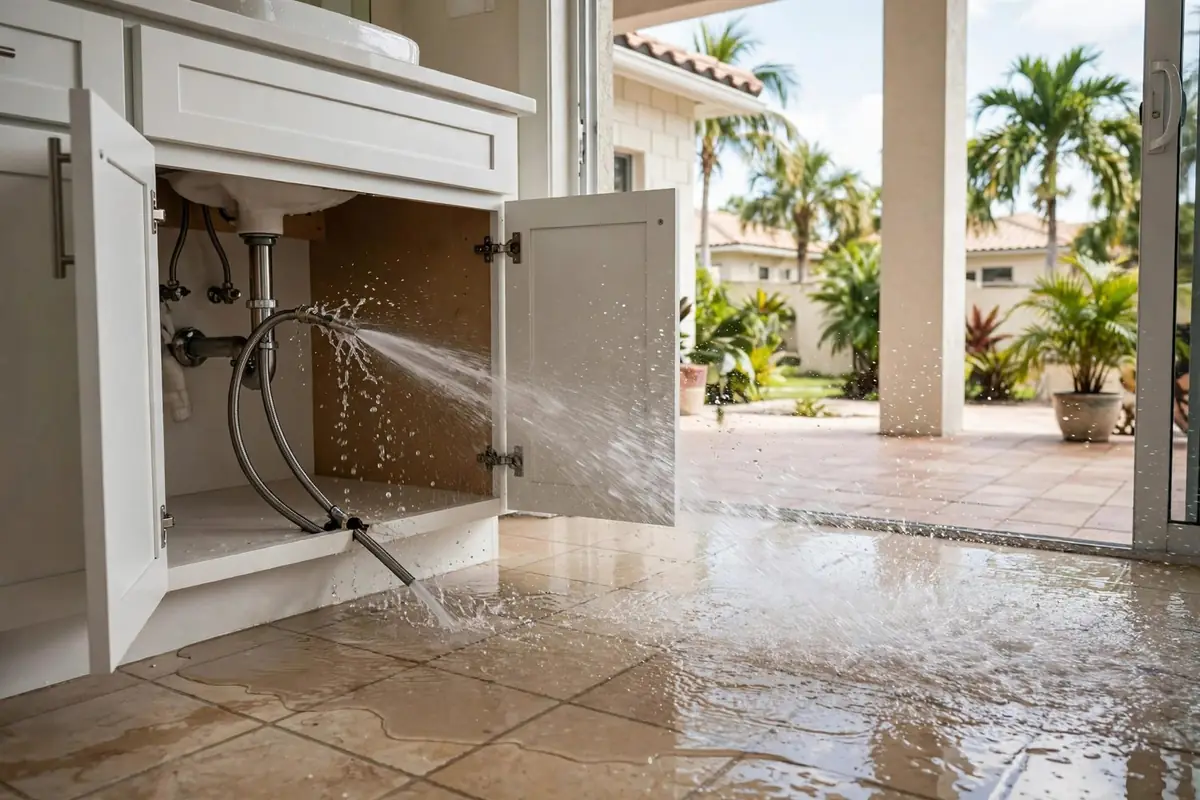
| Top of the tank, at the pipe connections | Loose or corroded fittings, a failed flex connector |
| Drain valve near the bottom | Valve not fully closed or a worn washer |
| Bottom of the tank, rusty water | Tank corrosion. The tank has failed and needs replacing |
Valves and fittings are plumber repairs. A tank leak isn't repairable.
Where the water goes
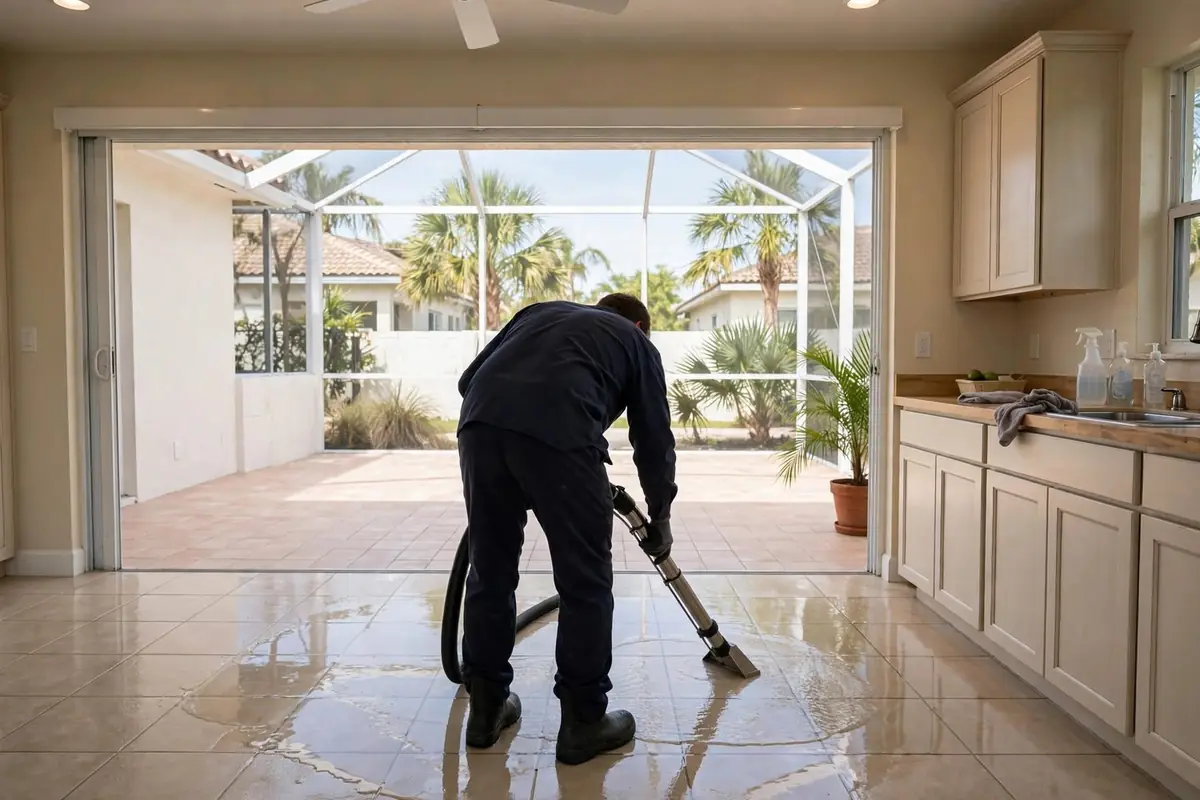
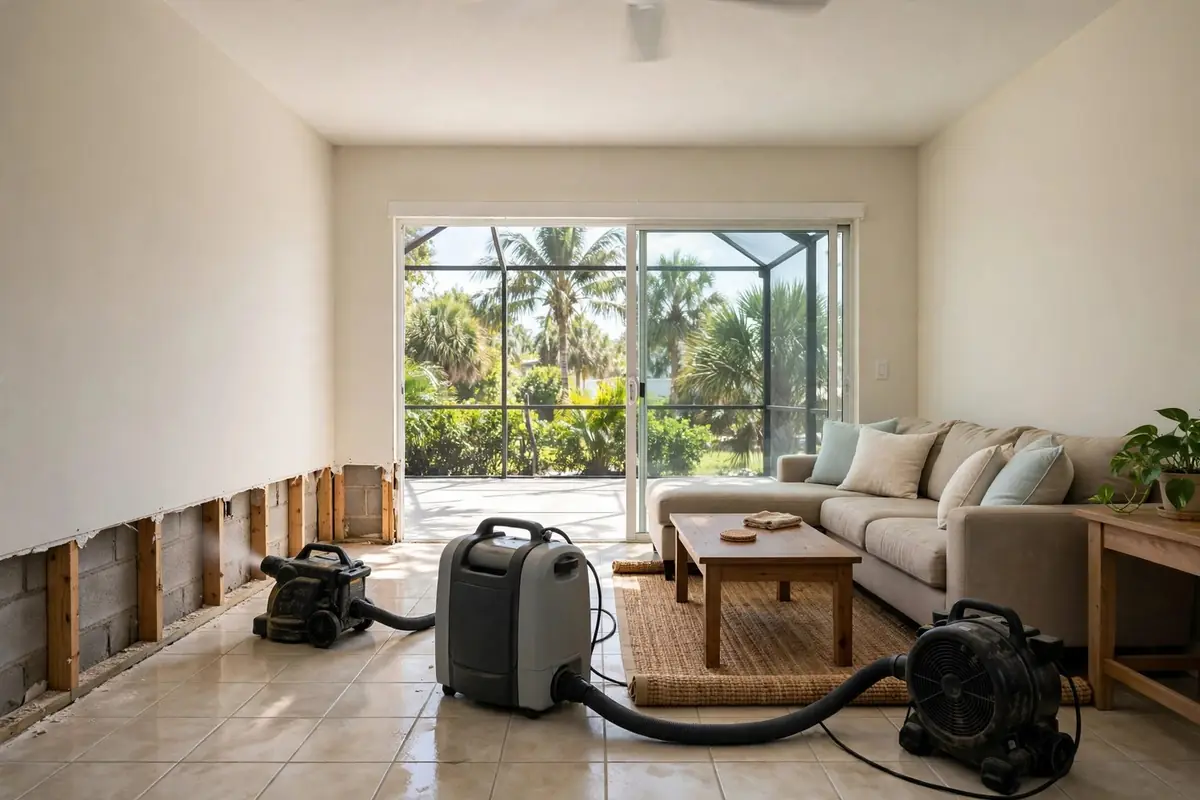
Garage heaters usually do the least harm: water runs out the door. Heaters in an interior closet or utility room are different. Water spreads under the wall plate into hallways and bedrooms, soaks baseboards and wicks into drywall. A heater in a condo can leak into the unit below. A drain pan with a line to the outside limits the damage, but only if it's piped somewhere.
After the leak
- Photograph the heater, the label and the water before cleanup, for insurance.
- Pull baseboards near the heater and check the drywall with a moisture meter.
- Replacement water heaters generally need a permit. Ask the plumber to pull it.
- Have a drain pan and a leak alarm installed with the new heater.
Sources
Last checked 2026-11-17 by the AMR Water & Mold editorial team. Editorial policy.