How long can drywall stay wet?
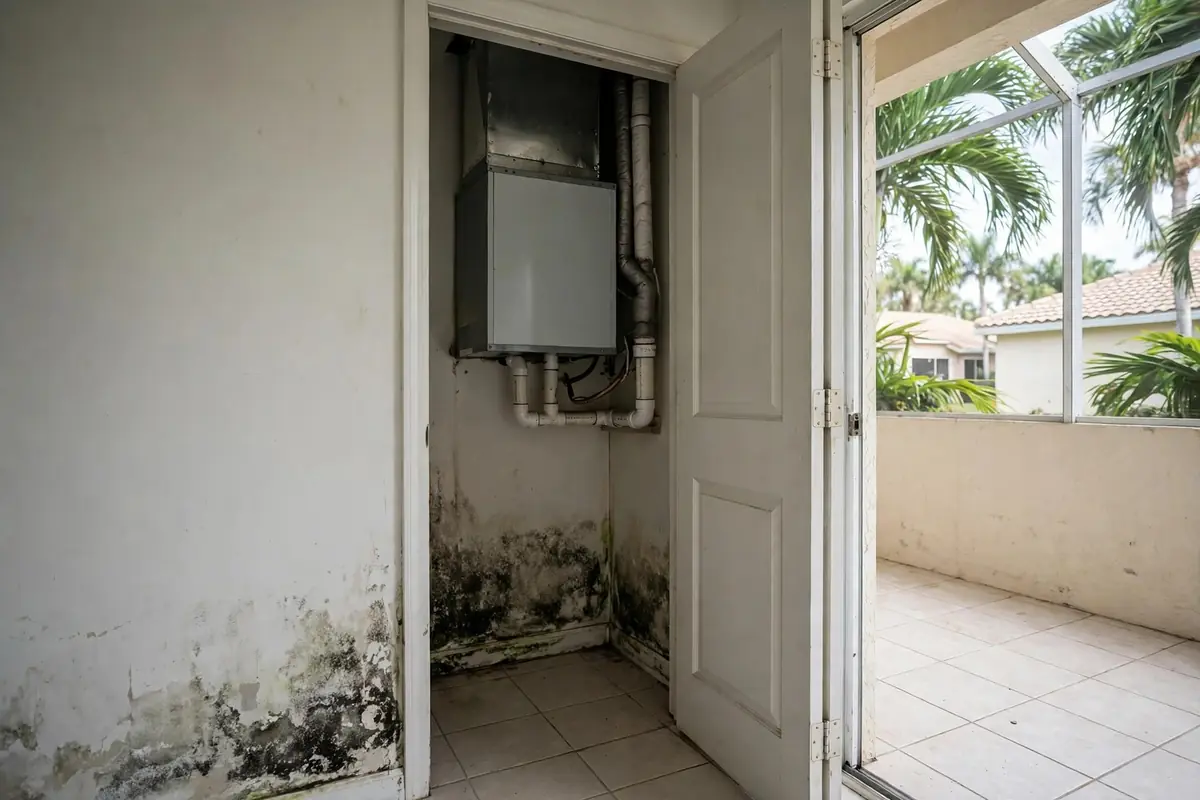
The EPA advises drying water-damaged materials within 24 to 48 hours to prevent mold growth. In a closed-up Florida house without AC, the clock runs faster, not slower: warm, humid air slows evaporation and helps mold. If drywall has been wet for more than two days, assume the back side and the bottom plate need a closer look.
Dry in place or replace?
| Usually dried in place | Usually cut out |
|---|---|
| Clean supply-line water caught early | Flood, storm surge or sewage water (contaminated) |
| Wall still firm, paint intact | Soft, crumbling or bowed drywall |
| Moisture only a few inches up | Water wicked high or sat for days |
| No insulation in the cavity | Wet insulation behind it |
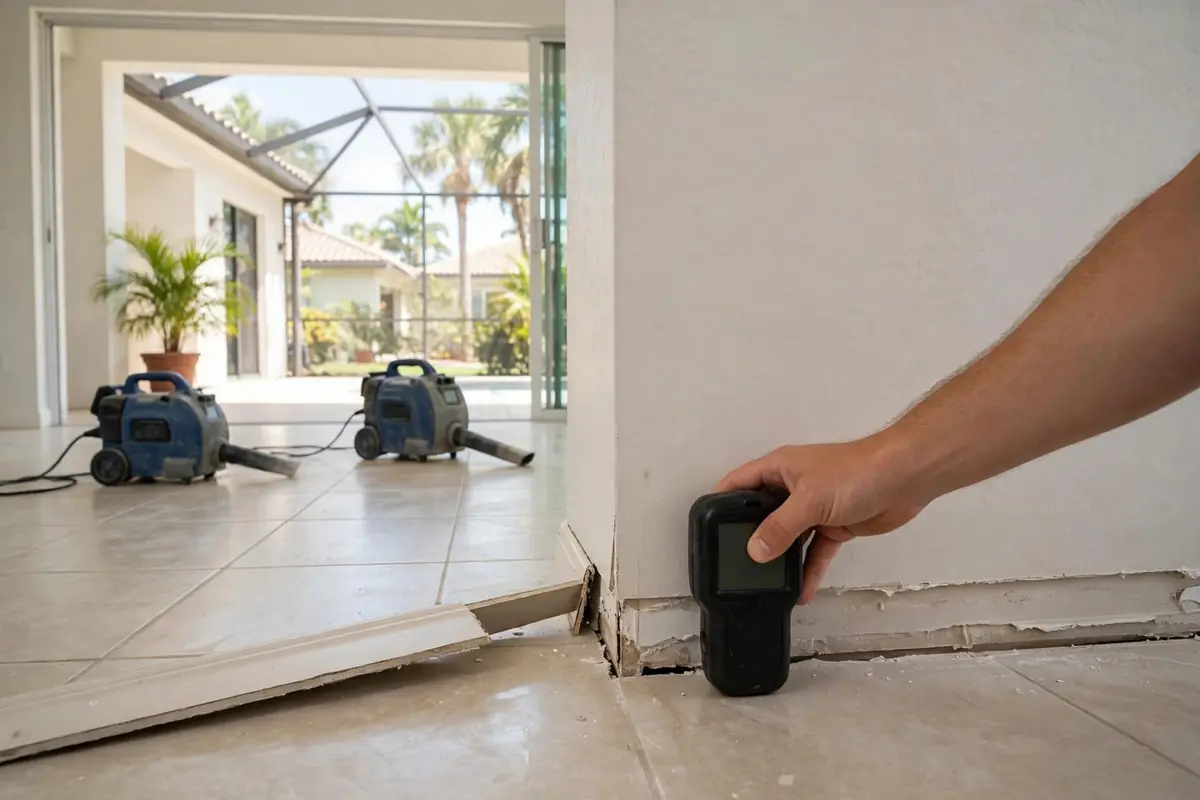
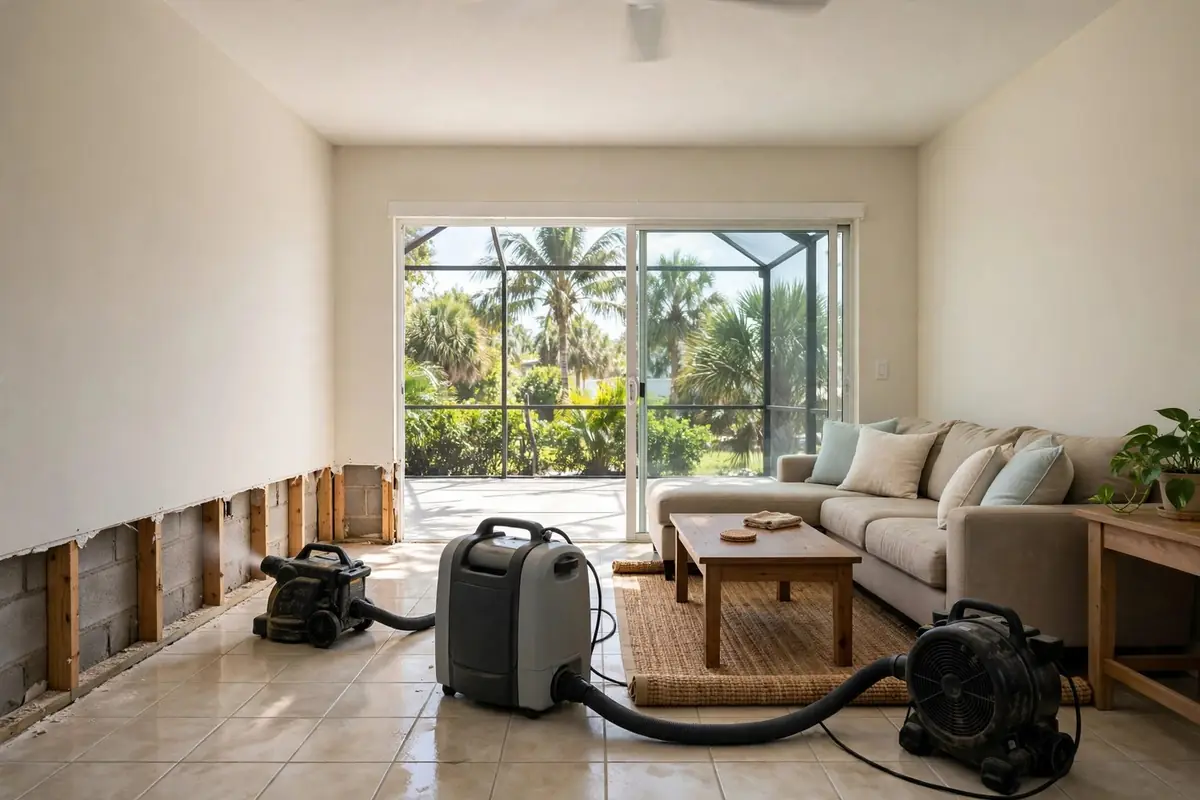
When drywall is cut, it is usually removed in a straight line a little above the highest wet reading, often 2 ft. That opens the cavity so the framing and block wall can dry, and makes the repair a clean strip rather than a patchwork.
Block walls dry slowly
Many homes in the area have concrete block exterior walls with drywall fastened to furring strips. Block holds water for a long time, and the thin gap behind the drywall gets little air. That is why technicians sometimes drill small holes behind the baseboard or remove the bottom strip of drywall on exterior walls even when the drywall looks fine.
What you can do before help arrives
- Shut off the water at the fixture or the main valve.
- Stay out of water that touches outlets, cords or appliances. Use the breaker only from a dry spot.
- Don't use a household vacuum on standing water.
- Photograph the water, the source and the damage before you move anything.
- Pull baseboards only if you can do it without breaking them; they trap water against the wall.
- Move furniture and rugs off the wet area.
- Run the AC and any fans you have. Keep windows closed in humid weather.
- Don't seal, paint or patch anything yet.
Sources
- U.S. EPA, A Brief Guide to Mold, Moisture and Your Home
- Florida Department of Health, Mold and your health
Last checked 2026-11-17 by the AMR Water & Mold editorial team. Editorial policy.