Why mold shows up after the leak is fixed
Fixing the pipe stops new water. It doesn't remove what already soaked into drywall, insulation, the bottom plate, cabinet bases or carpet pad. Those materials can feel dry on the surface while staying wet inside for days, especially against a concrete block wall or slab. Florida's heat and humidity do the rest.
Where it hides after a leak
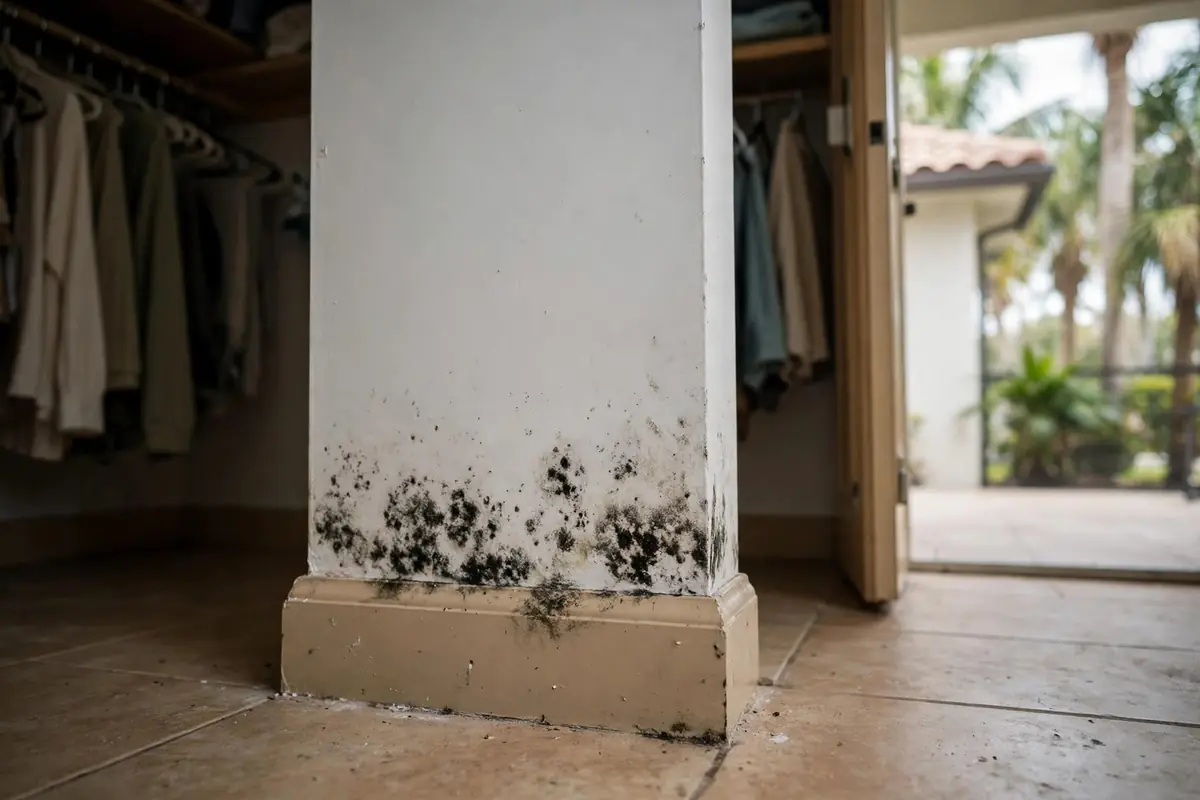
- Behind baseboards and at the bottom of drywall
- Under sink cabinets and kitchen toe-kicks
- Inside wall cavities, on the back of the drywall paper
- Under carpet pad and laminate or vinyl plank
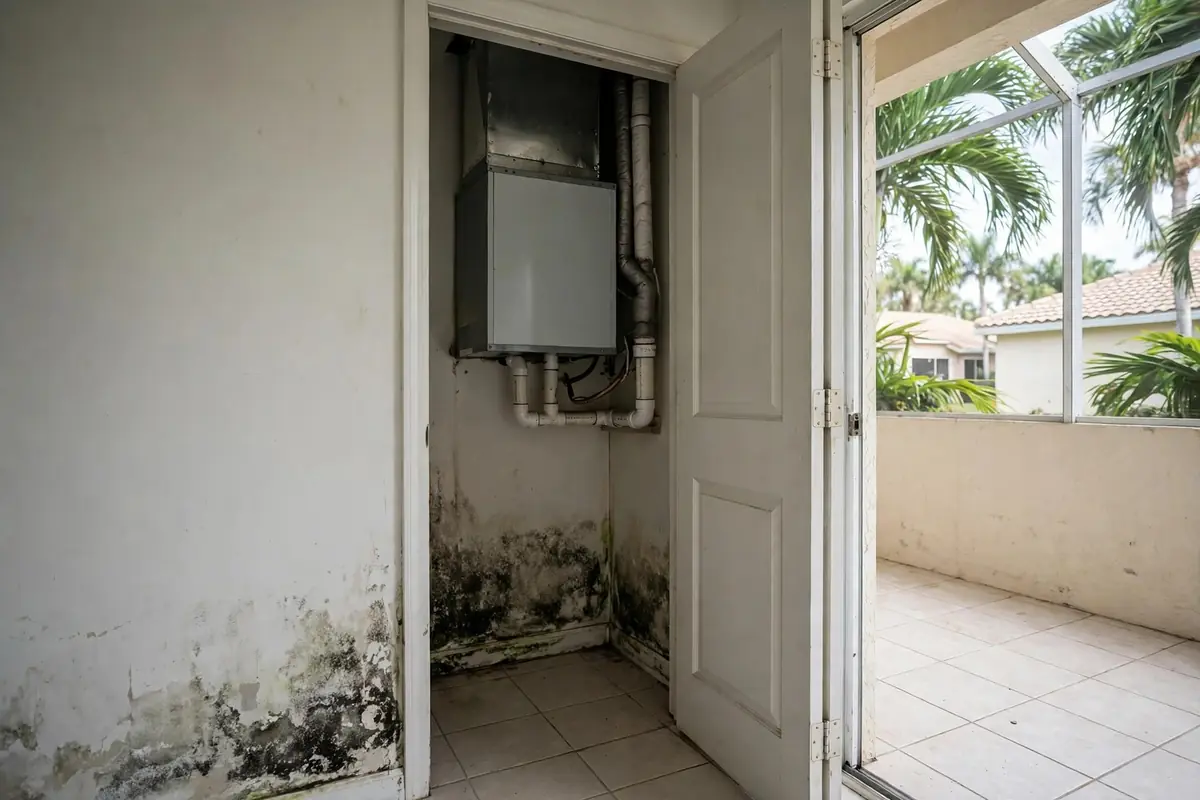
- Inside the AC closet after a pan overflow
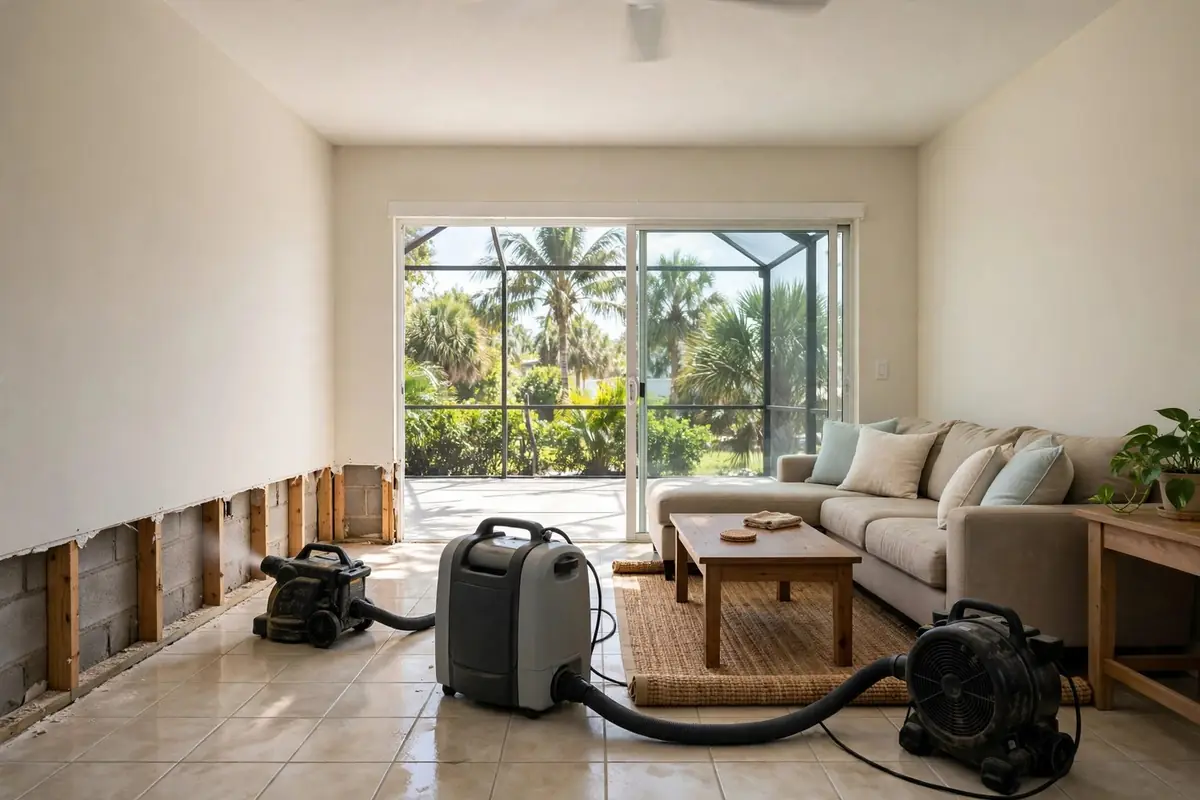
A moisture meter and a thermal camera show the wet areas without opening the wall. If readings are high, small holes or a strip of drywall may need to come out.
What proper drying should have included
- Moisture readings on the first visit, mapping how far the water went.
- Removal of wet pad, swollen baseboards and soaked insulation.
- Air movers and dehumidifiers sized for the room.
- Regular readings until materials reached a dry standard.
- A written drying log you can give your insurer.
If the leak was only mopped up and fans ran for a day, there's a good chance the wall cavity is still wet.
Next steps
Keep the AC running and humidity below 60%, as the Florida Department of Health recommends. Don't disturb large patches of mold, which spreads spores. If the area is small and the moisture source is fixed, the cleanup guidance for small areas applies. If it covers more than about 10 sq ft, Florida requires a licensed mold remediator.
Sources
- U.S. EPA, A Brief Guide to Mold, Moisture and Your Home
- Florida Department of Health, Mold and your health
- Florida Statutes, Chapter 468 Part XVI: Mold-Related Services (s. 468.8411 definitions)
Last checked 2026-11-17 by the AMR Water & Mold editorial team. Editorial policy.