What should you do first after water damage?
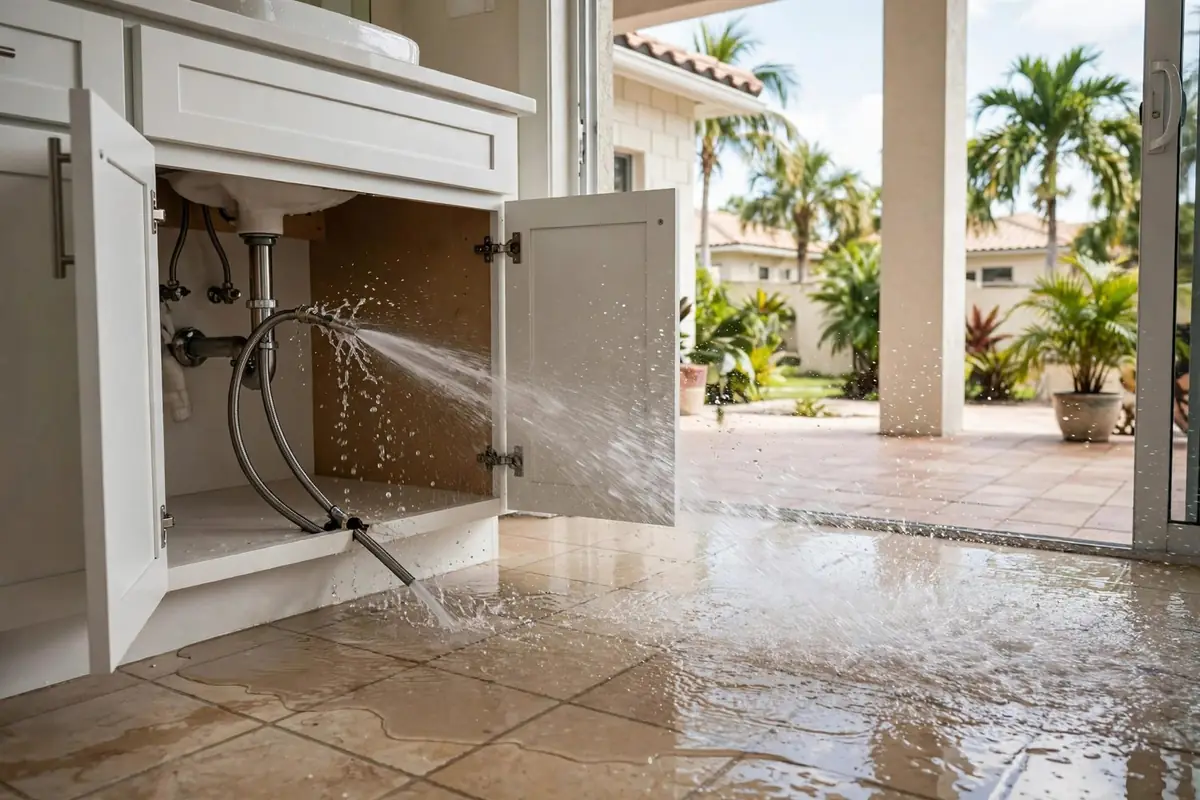
Stop the source, make the room safe, and document the damage. Everything else can wait a few minutes.
- Shut off the water at the fixture or the main valve.
- Stay out of water that touches outlets, cords or appliances. Use the breaker only from a dry spot.
- Don't use a household vacuum on standing water.
- Photograph the water, the source and the damage before you move anything.
Most Florida block homes have the main shutoff where the water line enters the house: near the front hose bib, in the garage, or in a box at the street by the meter. Condos usually have a shutoff inside the unit, often in the water heater closet. If you can't find yours, the utility can shut water off at the meter: City of Venice Utilities, North Port Utilities, Sarasota County Public Utilities or the Englewood Water District, depending on where you live.
How fast does water damage get worse?
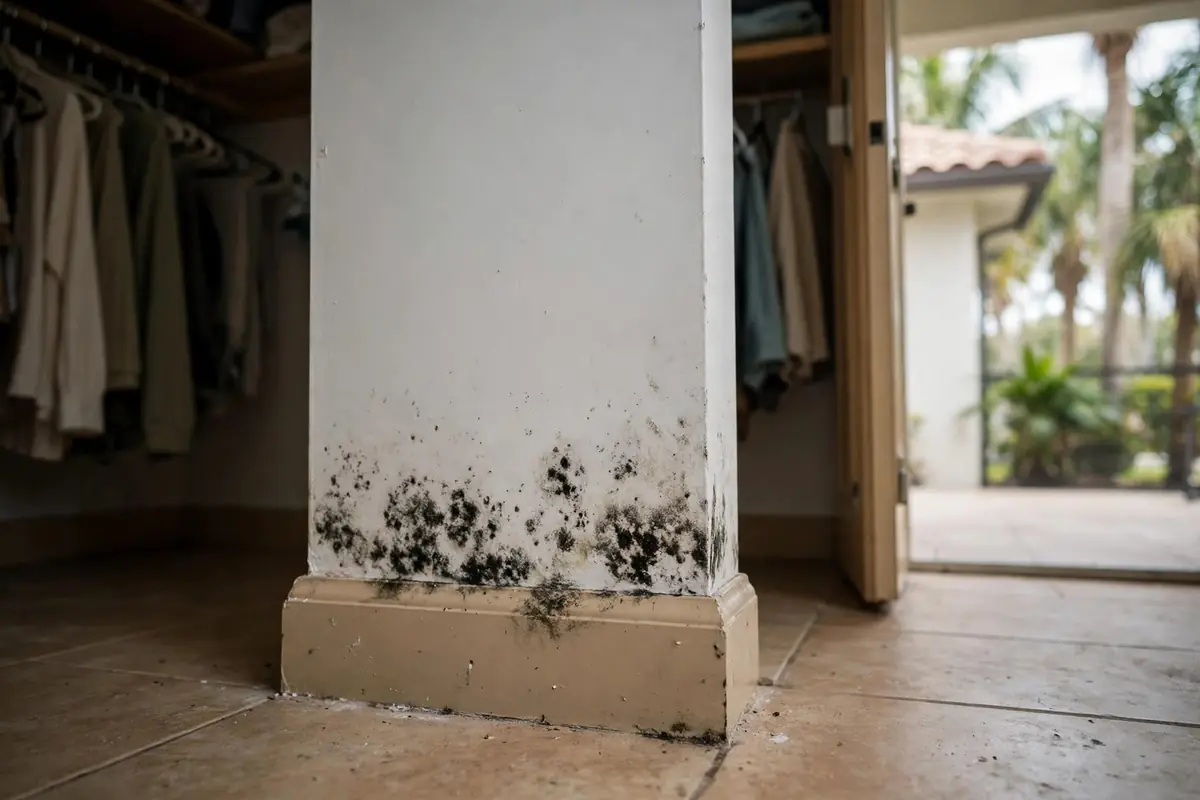
Fast. In the first few hours, water wicks up drywall and spreads under baseboards, tile and cabinets. Within a day or two, laminate swells, particleboard cabinets soften, and the EPA notes that mold can start to grow on materials that stay wet for 24 to 48 hours.
That clock runs faster here. Venice averages 51.27 inches of rain a year, and the June to September wet season brings about 60% of it (NOAA normals). Summer indoor air is humid, so wet materials dry slowly unless dehumidifiers run. In homes that sit empty for the summer, a small supply-line leak can run for weeks. The city of Venice alone has about 4,700 seasonally vacant homes (Census ACS).
What does a water damage company actually do?
- Inspection and moisture mapping. Moisture meters and often a thermal camera show how far the water travelled, including behind baseboards, under cabinets and into the next room.
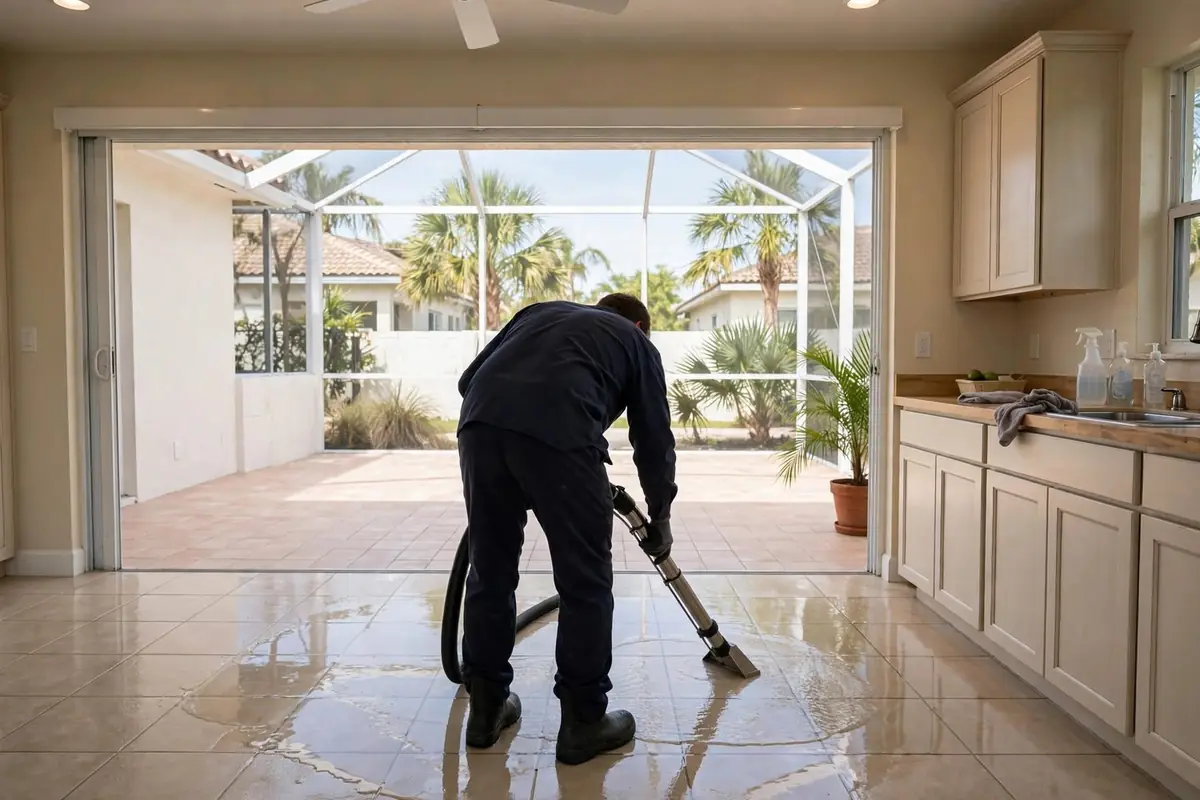
- Extraction. Truck-mounted or portable extractors pull standing water out of tile grout, carpet and pad.
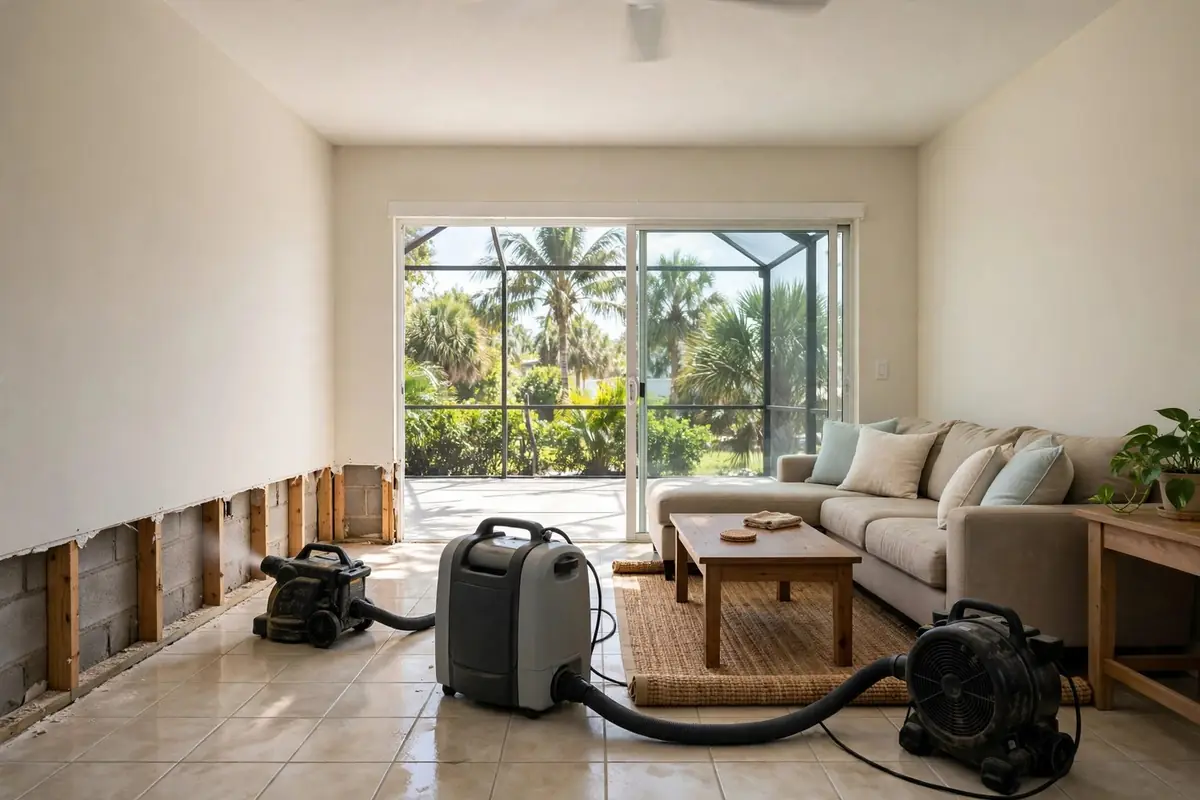
- Removal of what can't be saved. Wet carpet pad, swollen baseboards, saturated insulation and the bottom of soaked drywall are usually cut out so the wall cavity can dry.
- Drying. Air movers and dehumidifiers run for several days. Concrete block and slab hold water longer than wood framing.
- Monitoring. The technician returns to take readings until materials reach dry standard, and records them for your insurer.
- Repairs. Drywall, paint, flooring and cabinets are rebuilt once everything is dry, by the same company or a separate contractor.
Clean water, grey water or black water?
Restoration companies sort water by how contaminated it is, because that changes what can be saved:
- Clean water: a burst supply line, a water heater or rain through a window. Most materials can be dried in place if work starts quickly.
- Grey water: a washing machine, dishwasher or AC condensate. It can carry bacteria, so carpet pad is usually replaced.
- Black water: storm surge, river or creek flooding, and sewage. Porous materials it touched are removed, and the area is cleaned and disinfected. Keep children and pets out.
Clean water left standing for days can turn grey, so a slow response raises the category.
Water damage and Florida homeowners insurance
Florida changed the rules in December 2022. For homeowners policies issued on or after January 1, 2023, you can no longer sign your post-loss insurance benefits over to a contractor (s. 627.7152(13), Florida Statutes). You file the claim, deal with the adjuster, and pay the company you hire.
- Report the claim promptly. SB 2-A cut the deadline for new or reopened claims to 1 year after the loss.
- Take photos and video before cleanup, and keep damaged items until the adjuster has seen them or says otherwise.
- Ask the restoration company for moisture readings and drying logs. Adjusters rely on them.
- Flood damage from surge or rising water is usually covered only by a separate flood policy, not by homeowners insurance.
This is general information, not legal or insurance advice. Read your policy or ask your agent.
What affects the price of water damage restoration?
- How much area got wet, and how long it sat before drying started.
- The water category: clean supply water, grey water from appliances, or contaminated flood and sewage water.
- What has to come out: carpet pad, baseboards, drywall, insulation, cabinets.
- Materials: tile on slab dries differently from carpet, laminate or wood.
- Days of equipment on site and the number of monitoring visits.
- Whether mold has already started and needs separate remediation.
- After-hours and post-storm demand.
Ask for the scope of work and the price in writing before work starts, and confirm the company will send its moisture logs to your insurer.
How to check the company before work starts
- Ask for proof of liability insurance and workers' compensation coverage.
- If drywall, cabinets or structure will be rebuilt, ask which licensed contractor does that work.
- If mold covers more than about 10 square feet, Florida requires a licensed mold remediator. Ask for the license number and look it up on the DBPR licensee search.
- Get the scope and price in writing. Don't sign anything you haven't read.
Towns covered by the line
Venice, North Port, Nokomis, Osprey and Englewood. Town pages cover local housing, flood history and who to call for a water shutoff. Town water damage pages: Venice, North Port, Nokomis, Englewood.
Match it to what you're seeing
Step-by-step pages for the most common situations:
- Water stain on the ceiling
- Wet drywall after a leak
- Wet carpet and pad
- Leaking water heater
- Signs of a slab leak
- Guide: the first 24 hours
- Guide: water damage vs flood insurance
More in the help library.
Sources
- U.S. EPA, A Brief Guide to Mold, Moisture and Your Home
- NOAA NCEI, U.S. Climate Normals 1991–2020, station Venice, FL (USC00089176)
- U.S. Census Bureau, American Community Survey 2020–2024 5-year (tables B11001, B25035, B25003, B25024, B25034, B01002), via Census Reporter
- Florida Statutes, s. 627.7152: assignment of post-loss benefits
- Florida Senate, bill summary SB 2-A (Special Session 2022A)
- Florida Statutes, Chapter 468 Part XVI: Mold-Related Services (s. 468.8411 definitions)
- Florida DBPR, Search for a Licensee
- Florida Department of Health, Mold and your health
Last checked 2026-11-16 by the AMR Water & Mold editorial team. Editorial policy.