First steps for a Venice leak
- Stop the water. In island and downtown block homes the main is usually near the front hose bib. In condos, look in the water heater closet or under the kitchen sink, or ask building staff to close the riser.
- Make it safe. Breaker off for wet rooms, but only from a dry spot.
- Notify neighbors. In a condo building, tell the unit below and the association right away.
- Document. Photos of the source, the water line on walls and every wet room.
- Call for drying. Start within 24 to 48 hours, before mold can begin (EPA).
Condo water damage in Venice
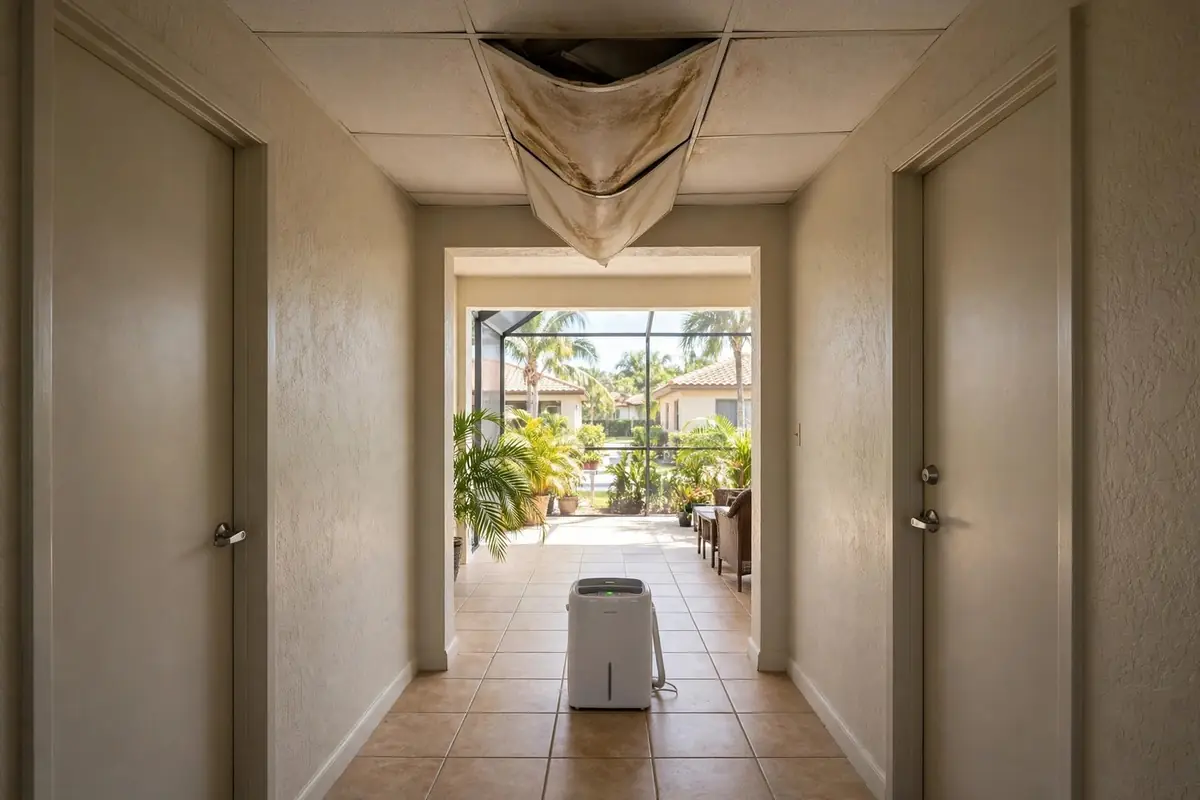
Venice has a lot of multi-unit housing: 16.8% of homes in the city are in buildings with 20 or more units (Census ACS). Water travels down through ceilings and along slab joints, so one failed water heater or AC pan can damage two or three units.
- Check your association's documents for who maintains what. Often the unit owner covers what's inside the walls of the unit, and the association covers common elements.
- Your HO-6 condo policy, the upstairs owner's policy and the association's master policy may each pay for part of the damage.
- The drying company may need access to more than one unit. Coordinate through the manager.
Seasonal homes: coming back to water damage
Venice's median resident age is 69.2, and the city has about 4,700 seasonally vacant homes (Census ACS). Owners returning in the fall often find a leak that ran for weeks, usually from a toilet supply line, a water heater or an AC drain line that clogged in August.
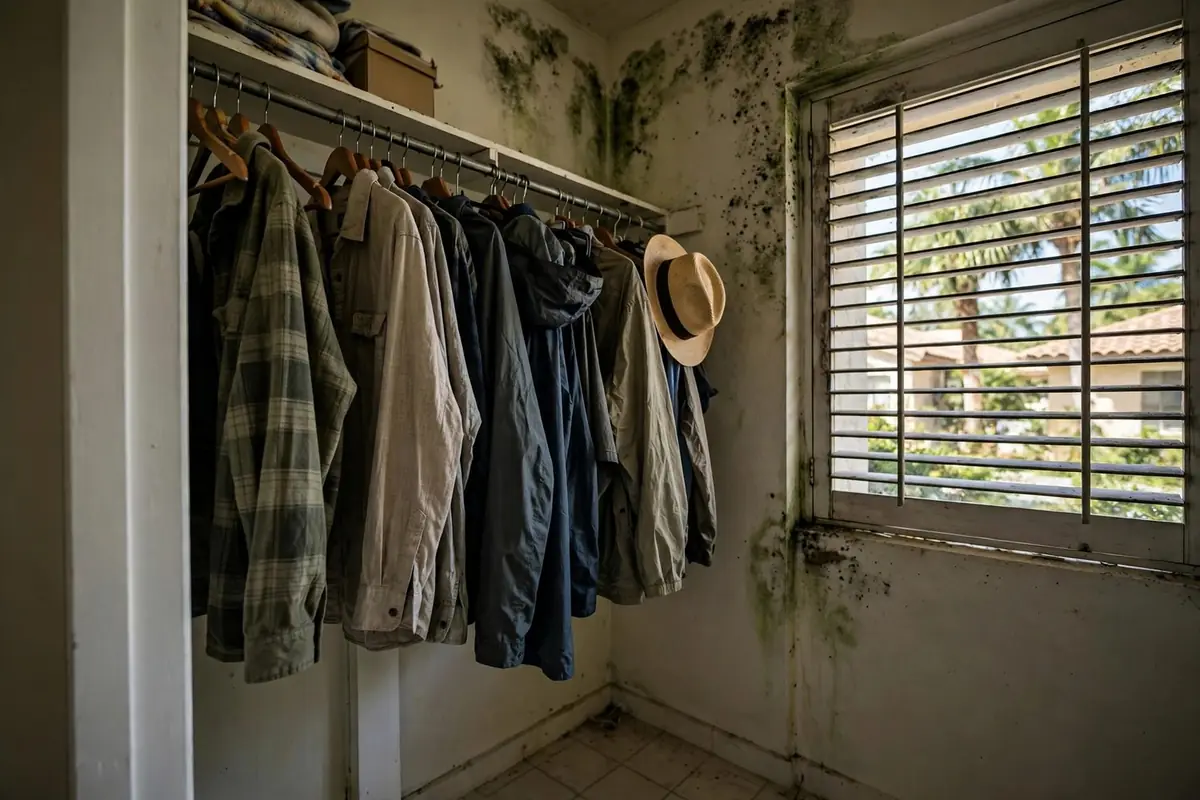
Damage found after weeks is almost always more than a surface problem: water has wicked up walls, swollen cabinets and often started mold. Expect wall openings and a mold check, and tell the insurer how long you were away.
How the drying works
- Moisture mapping with meters and a thermal camera.
- Extraction of standing water.
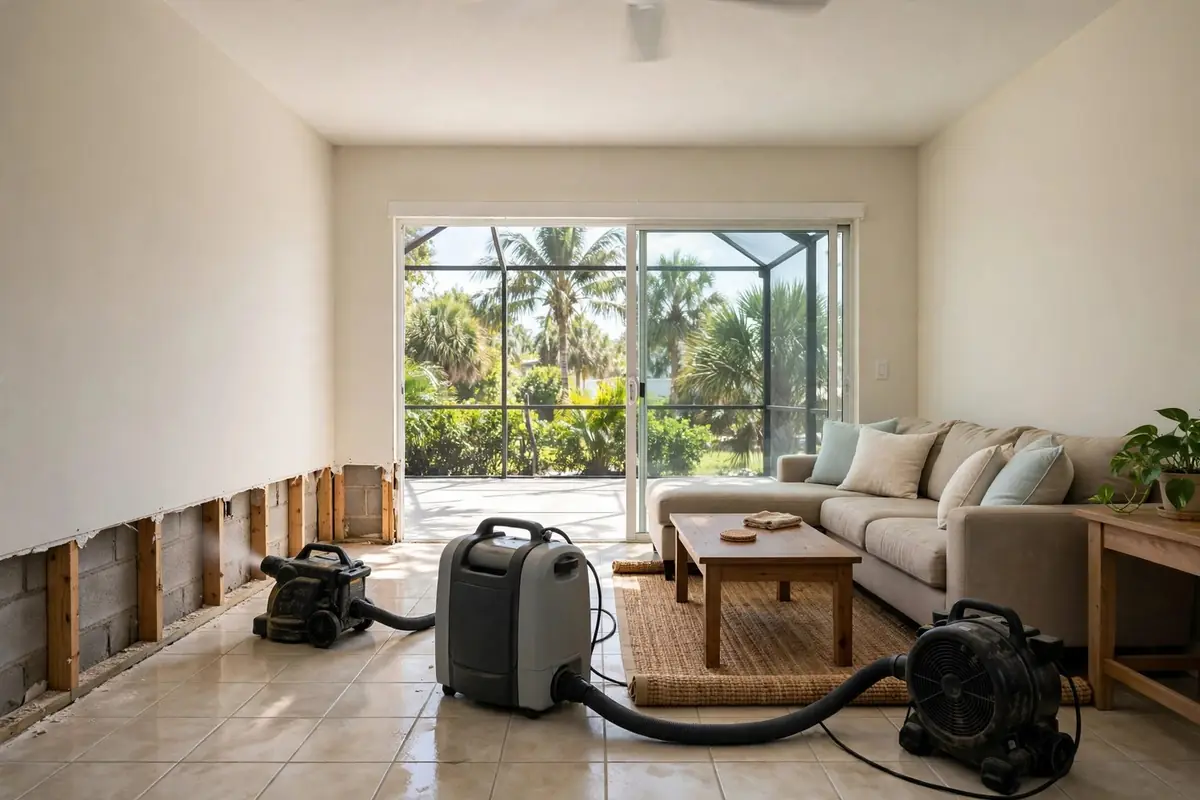
- Removal of wet pad, baseboards and the bottom of soaked drywall.
- Air movers and dehumidifiers for several days. Concrete block holds moisture, so walls are checked from both sides where possible.
- Daily or regular readings until dry, logged for your insurer.
- Repairs, with permits from City of Venice Building and Code where needed.
Venice storm and surge water
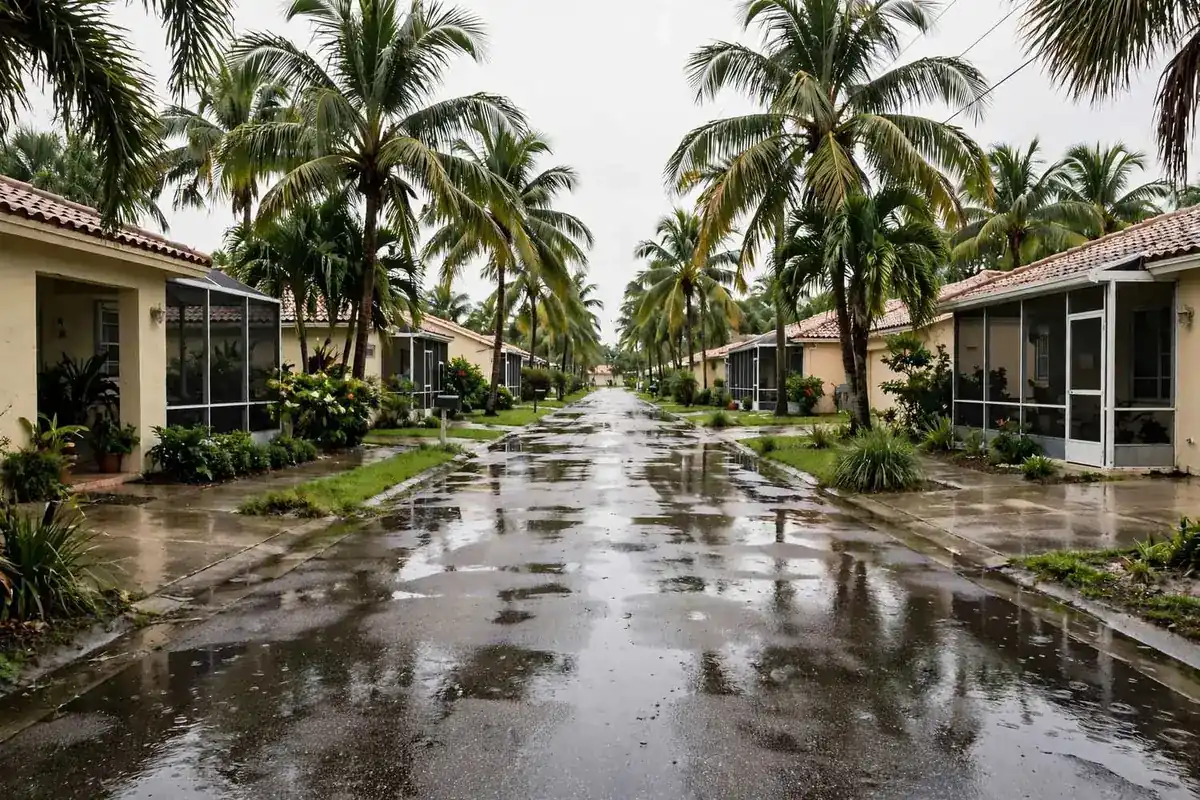
Venice took surge from two storms in two weeks in 2024. A sensor near the Venice Fishing Pier measured 5.71 ft above MHHW during Helene and 6.74 ft during Milton (National Hurricane Center). Surge water is contaminated, so drywall, insulation and flooring it touched usually come out. Flood damage needs a flood policy; see storm and flood damage.
Florida insurance rules that apply
For homeowners policies issued on or after January 1, 2023, you can't assign your post-loss benefits to the contractor (s. 627.7152). You file the claim and pay the company. New and reopened claims must be reported within 1 year (SB 2-A). Keep the moisture logs and photos. This is general information, not legal advice.
Before you hire
- Proof of liability insurance and workers' compensation.
- For mold over about 10 square feet: the Florida mold remediator license number of the person doing the work, checked on the DBPR licensee search.
- A written scope and price before work starts.
- Moisture readings and photos you can give your insurer.
Match it to what you're seeing
Venice has many condos and seasonal homes. These pages fit those situations:
More in the help library.
Sources
- U.S. Census Bureau, American Community Survey 2020–2024 5-year (tables B11001, B25035, B25003, B25024, B25034, B01002), via Census Reporter
- U.S. EPA, A Brief Guide to Mold, Moisture and Your Home
- National Hurricane Center, Tropical Cyclone Report: Hurricane Helene (AL092024)
- National Hurricane Center, Tropical Cyclone Report: Hurricane Milton (AL142024)
- Florida Statutes, s. 627.7152: assignment of post-loss benefits
- Florida Senate, bill summary SB 2-A (Special Session 2022A)
- City of Venice Utilities
- City of Venice, Building and Code
Last checked 2026-11-16 by the AMR Water & Mold editorial team. Editorial policy.