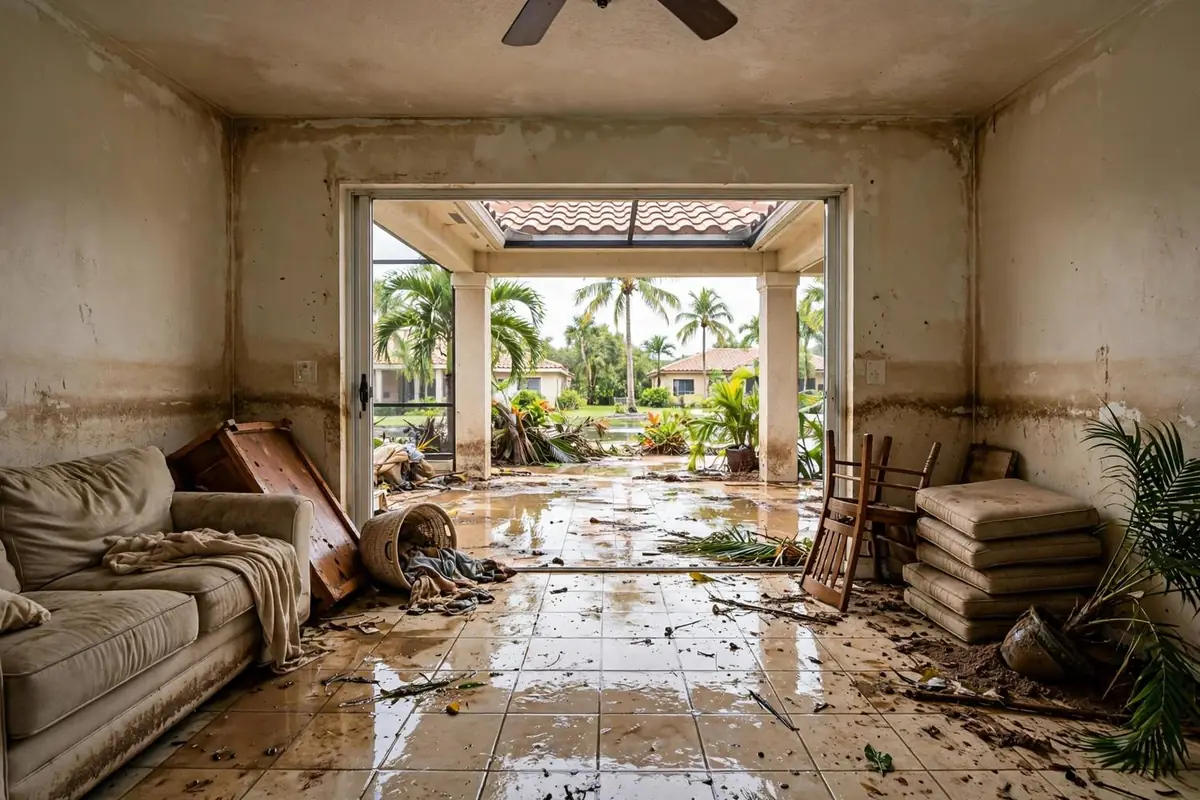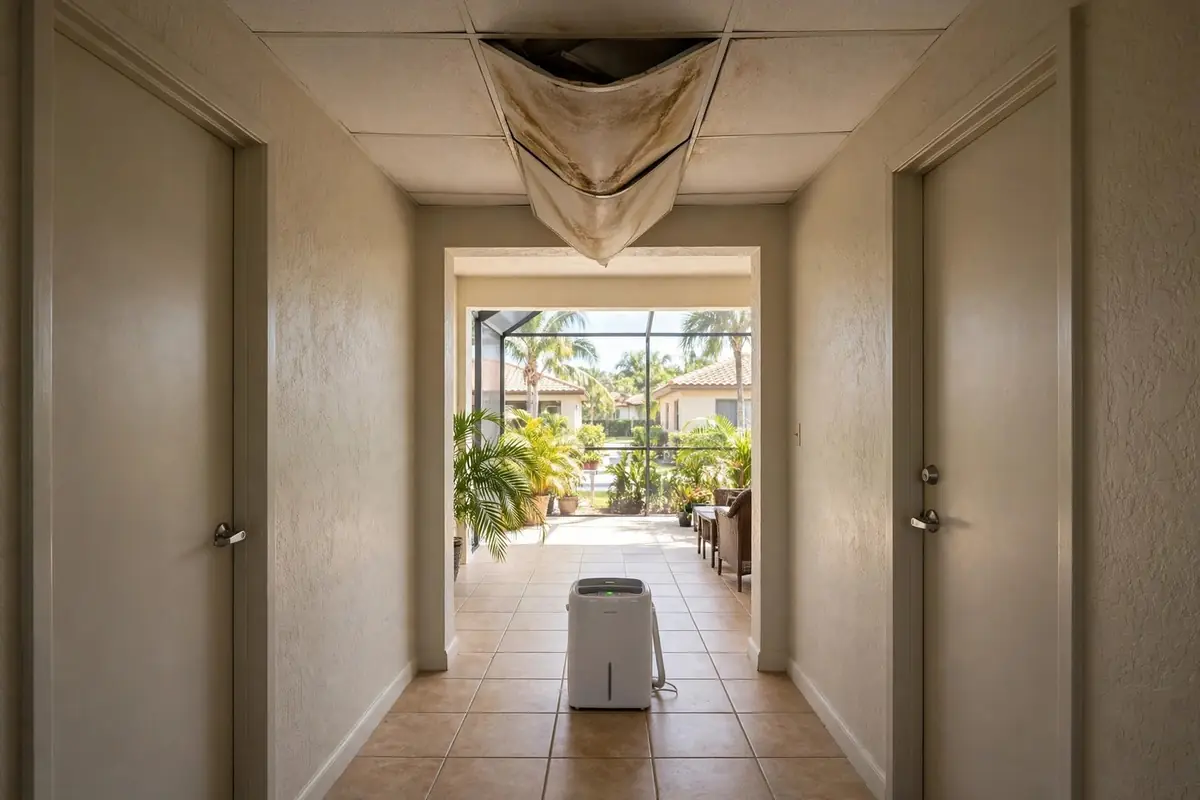
First steps when water comes from above or next door
- Tell the unit owner (or tenant) and the association or property manager right away. They may need to shut off water to a stack.
- Protect your belongings and keep people out from under sagging ceilings.
- Photograph and video the damage, with dates.
- Report it to your own HO-6 (condo unit owner) insurer.
- Start drying. Wet ceilings and walls between units dry slowly and grow mold if left.
Who insures what
Section 718.111(11)(f) says the association's property policy covers the condominium property as originally installed (or replaced with like kind and quality) and certain approved alterations. It excludes the unit owner's personal property and these items in the unit:
- Floor, wall and ceiling coverings
- Electrical fixtures, appliances, water heaters and water filters
- Built-in cabinets and countertops
- Window treatments
Under (11)(g), the unit owner is responsible for the cost of reconstructing the parts the owner is required to insure. In practice: the association's policy may cover the drywall and structure, while your HO-6 policy covers your flooring, paint, cabinets and contents.
When the leak is someone's fault
Section 718.111(11)(j) makes a unit owner responsible for repair costs not paid by insurance when the damage results from the intentional conduct, negligence, or failure to follow the declaration or rules of the owner, their family, tenants, guests or invitees. That covers damage to condominium property and, under (j)2, personal property of other owners or the association. It's tied to fault: an unforeseeable equipment failure isn't automatically the owner's responsibility. The building's declaration and bylaws also matter.
Condos in the area
In the city of Venice, about one housing unit in six (16.8%) is in a building with 20 or more units (ACS). In those buildings, water from one unit's AC drain, water heater or washer can reach several units below. Leak alarms in AC closets and under water heaters, and shut-off valves owners can find quickly, help limit damage.
Drying across units
Drying a condo leak usually means coordinating access to more than one unit, sometimes the ceiling space between them, and the association's manager. Ask the restoration company to share moisture readings with each affected owner and the association, so each insurer can see its share.
This guide is general information, not legal or insurance advice. Policies differ; read yours and ask your agent or an attorney about your situation.
Sources
- Florida Statutes, s. 718.111(11): condominium association insurance
- U.S. Census Bureau, American Community Survey 2020–2024 5-year (tables B11001, B25035, B25003, B25024, B25034, B01002), via Census Reporter
- Florida Statutes, s. 627.70132: notice of property insurance claims
Last checked 2026-11-17 by the AMR Water & Mold editorial team. Editorial policy.