Is the leak still active?
An old, dry stain and a live leak look alike from below. A few checks tell them apart:
- Trace the edge of the ring in pencil and look again in a few hours. A growing ring is an active leak.
- Touch it. Damp drywall feels cool and soft; dry drywall feels firm.
- Note when it appears. A stain that darkens after the AC runs points to the condensate system; one that darkens after rain points to the roof or a window.
- A moisture meter (sold at hardware stores) gives a quick yes or no.
Where is the water coming from?
| Where the stain is | Likely source |
|---|---|
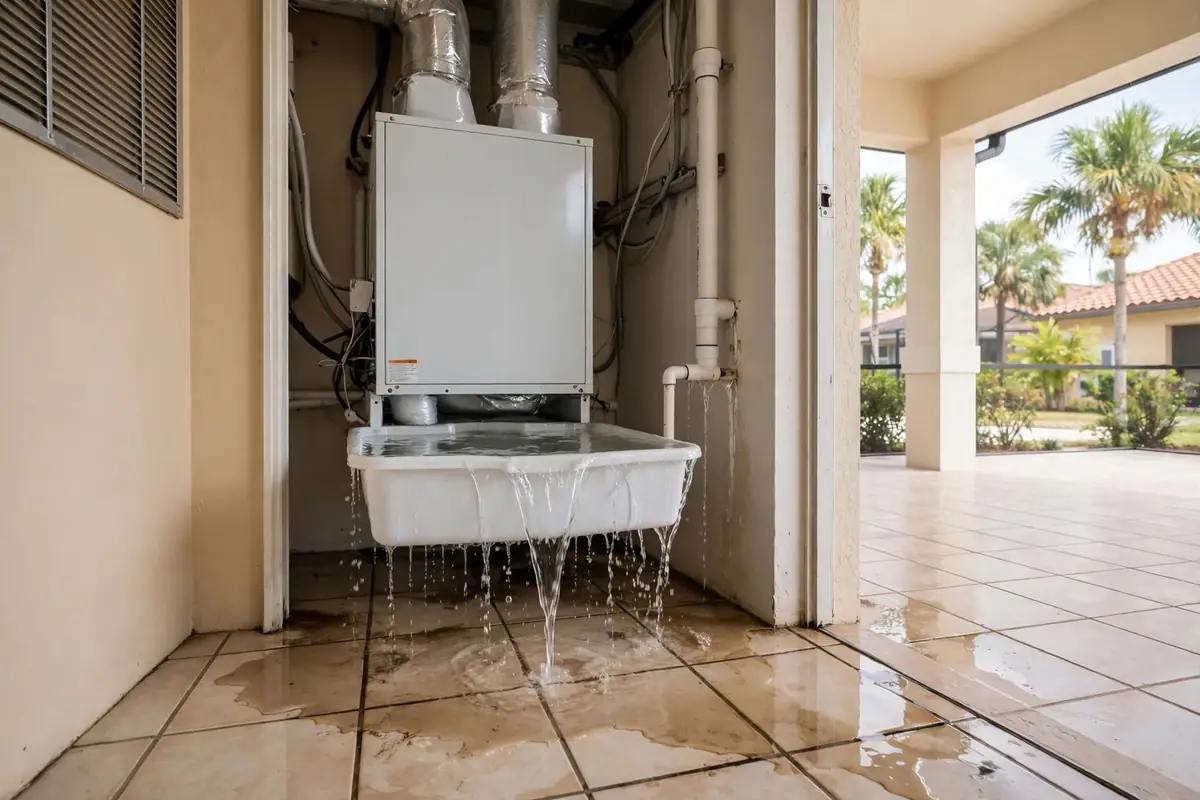
| Under or near the AC closet, or below an attic air handler | Full condensate pan or clogged drain line |
| Under a bathroom | Toilet wax ring, shower pan, supply line |
| Near an exterior wall after rain | Roof flashing, a cracked tile, a window or stucco crack |
| Condo, any room | The unit above: plumbing, appliance or AC |
| Ceiling in a single-story home, no bathroom above | Roof, attic ductwork sweating, or the air handler |
Ductwork in a hot attic can also "sweat" and drip when cold air runs through poorly insulated ducts. That shows up as several small stains along a duct line rather than one ring.
When a ceiling stain becomes dangerous
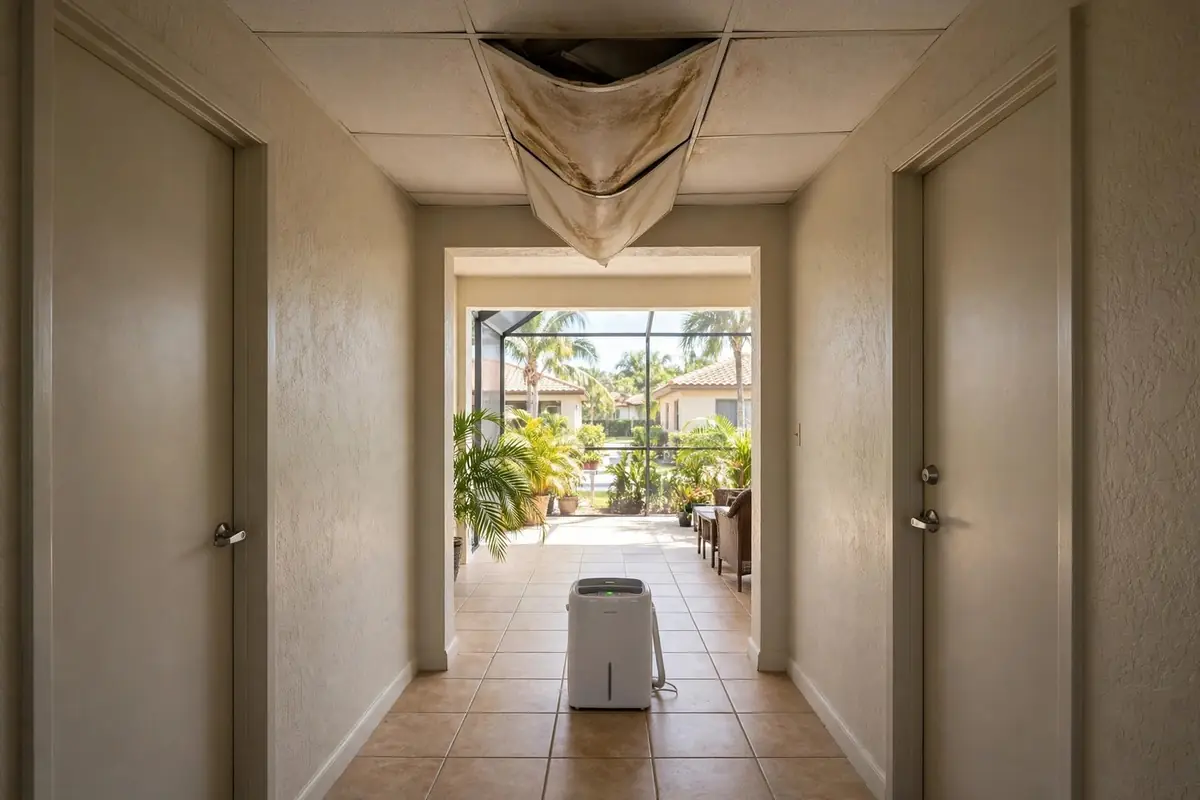
A sagging bulge is holding water. Drywall can give way without much warning, and wet ceiling insulation is heavy. Keep people and pets out of the room, move furniture, and put a bucket under the low point. Some restoration technicians poke a small hole at the lowest spot to drain it in a controlled way; don't do this if a light fixture or wiring is near the sag.
Turn off the breaker for any light or fan in the wet area, but only from a dry spot.
What drying a ceiling involves
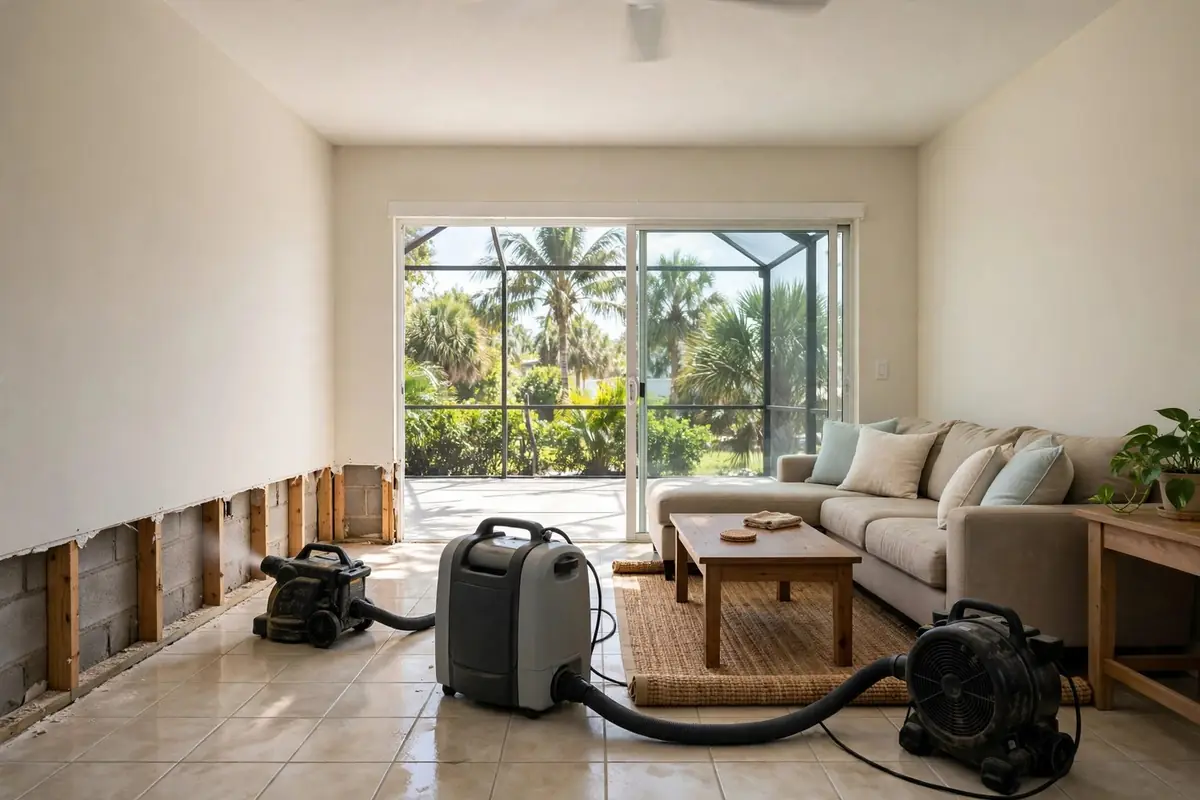
The technician checks the attic or the space above, measures how far the moisture spread, and decides whether the drywall can be dried in place. Wet insulation above the ceiling usually comes out, because it holds water against the drywall for days. Stained but sound drywall can often be dried, sealed with a stain-blocking primer and repainted. Sagging or crumbling sections get cut out and replaced after the framing is dry.
Condo ceilings
In Venice, about one housing unit in six sits in a building of 20 or more units (ACS). If the stain comes from the unit above, tell the association and the neighbor right away and photograph the ceiling. Who pays depends on where the leak started, the building's documents and Florida's condo statute; see the condo water damage guide.
Sources
- U.S. Census Bureau, American Community Survey 2020–2024 5-year (tables B11001, B25035, B25003, B25024, B25034, B01002), via Census Reporter
- U.S. EPA, A Brief Guide to Mold, Moisture and Your Home
- Florida Department of Health, Mold and your health
Last checked 2026-11-17 by the AMR Water & Mold editorial team. Editorial policy.