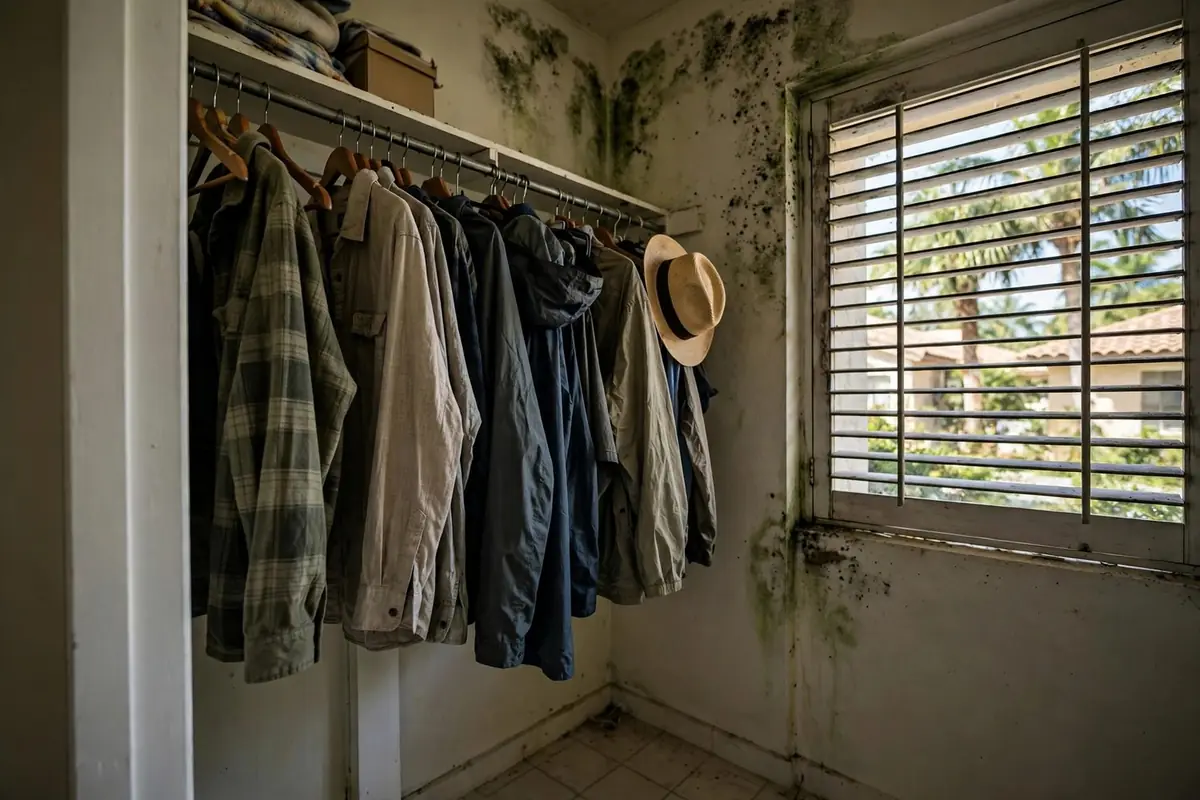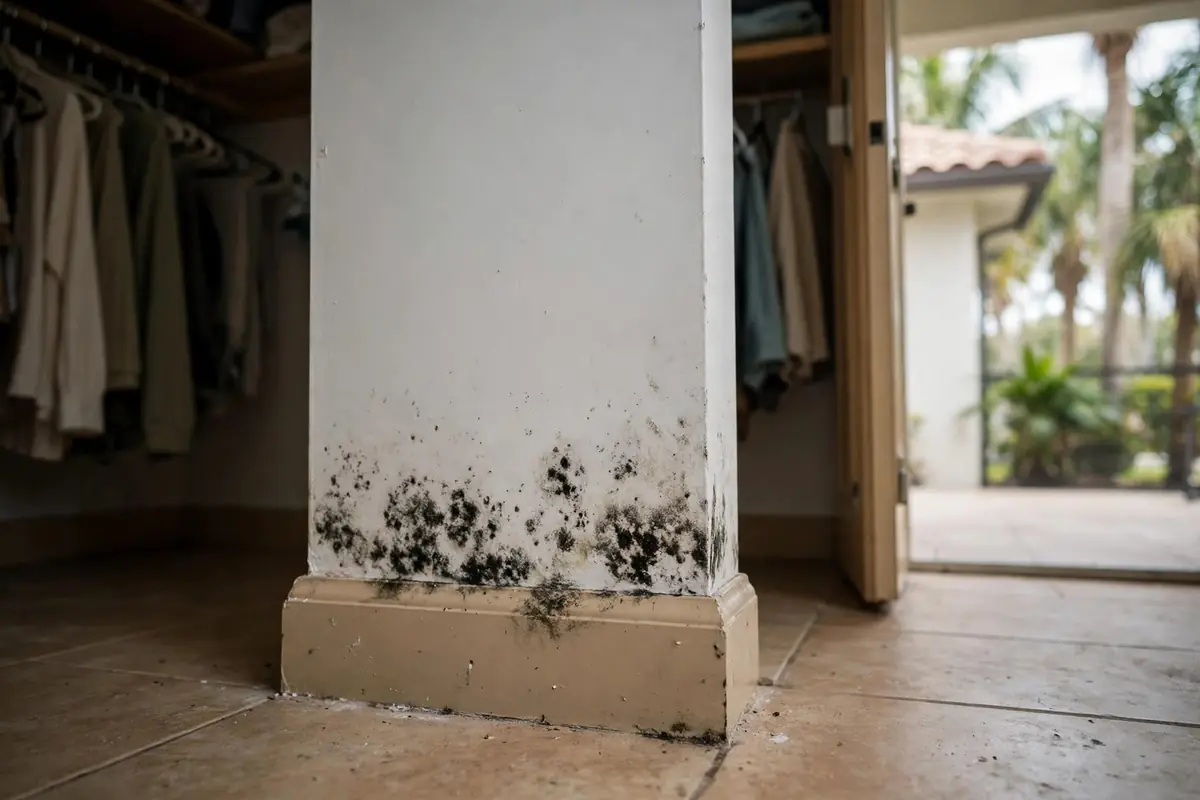
Is the mold small enough to clean yourself?
The EPA's guidance is that you can generally handle mold covering less than about 10 square feet, roughly a 3 ft by 3 ft patch, on hard surfaces. Florida law draws the same line: licensing for mold assessment and remediation applies to mold growth of more than 10 square feet (s. 468.8411).
- Fix the leak or moisture source first.
- Wear an N-95 respirator, gloves and goggles.
- Scrub hard surfaces with detergent and water, then dry them completely.
- Throw out porous items that stay moldy: ceiling tiles, carpet pad, soaked drywall.
- Don't paint over mold. It grows through.
Call a professional for larger areas, mold inside walls or ductwork, mold after sewage or flood water, or if anyone in the home has asthma, allergies or a weak immune system.
Florida's mold license rules, in plain language
Florida licenses individuals, not companies, under Chapter 468, Part XVI of the Florida Statutes:
- Mold assessor: inspects, samples and writes the protocol for what needs removing.
- Mold remediator: removes and cleans mold growth larger than 10 square feet.
- Both must carry at least one million in general liability insurance; assessors also need errors and omissions coverage, and a remediator's policy must cover mold (s. 468.8421).
- An assessor generally can't remediate a building it assessed in the last 12 months, and a remediator can't assess one it remediated in that window (s. 468.8419).
- Nobody may call themselves a mold assessor or mold remediator without the license.
Ask for the individual's license number and check it on the DBPR licensee search. AMR Water & Mold is a referral service. It is not a mold assessor or remediator, and it doesn't inspect or test homes.
Why mold grows so easily in Venice and North Port homes
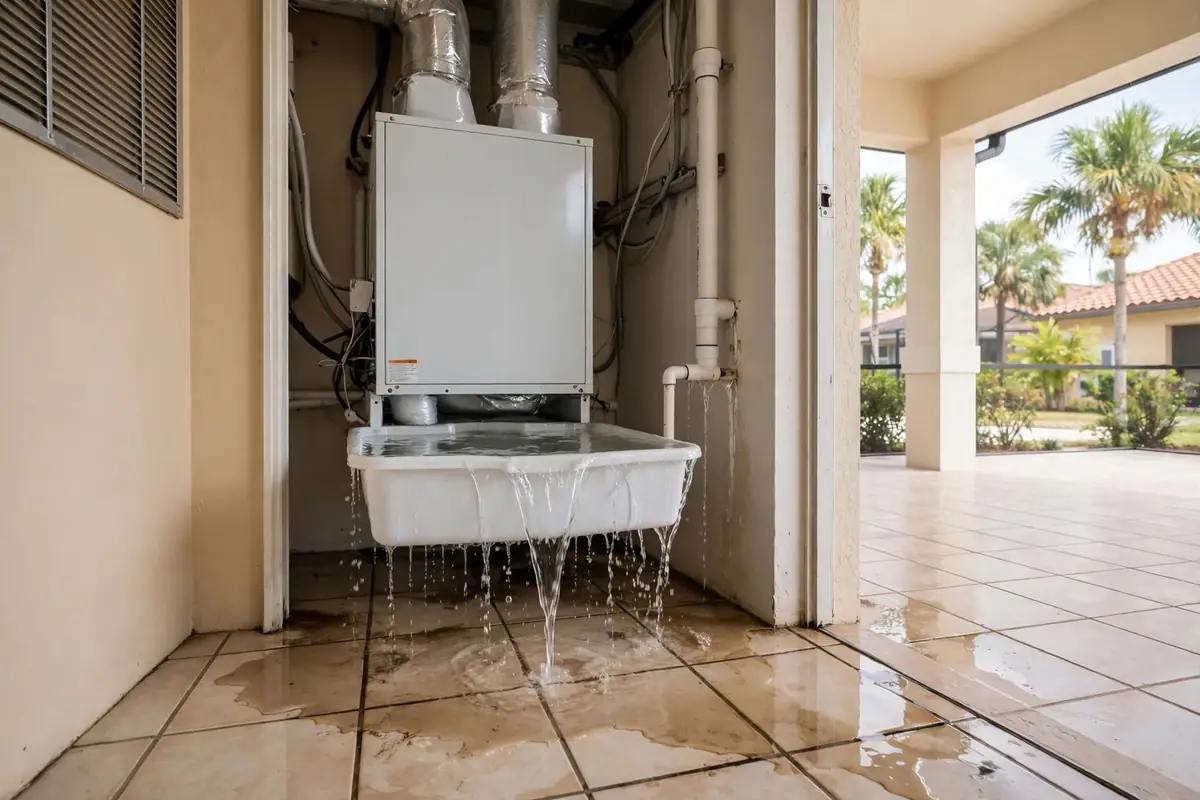
Mold needs moisture and a few days. South Sarasota County supplies both. About 60% of the year's rain falls June through September (NOAA normals for Venice), and summer indoor humidity runs high unless the air conditioner keeps up. The Florida Department of Health recommends keeping indoor humidity below 60% and checking AC drain pans and lines, which it lists as a common source of indoor water.
Older housing matters too. About 42% of homes in Venice, 46% in Englewood and 56% in Nokomis were built before 1980 (Census ACS), and many have original windows, roofs patched after storms, and plumbing that's been repaired more than once. Seasonal homes closed up with the AC off or set high are a classic mold setup.
How mold remediation usually works
- Find the moisture. Moisture meters and thermal imaging locate wet framing and drywall. Mold without a moisture source is rare.
- Assessment. On bigger jobs, a licensed assessor may inspect and write a remediation protocol. Some homeowners hire the assessor separately so the person testing isn't the person removing.
- Containment. Plastic sheeting and negative air machines with HEPA filters keep spores from spreading to clean rooms.
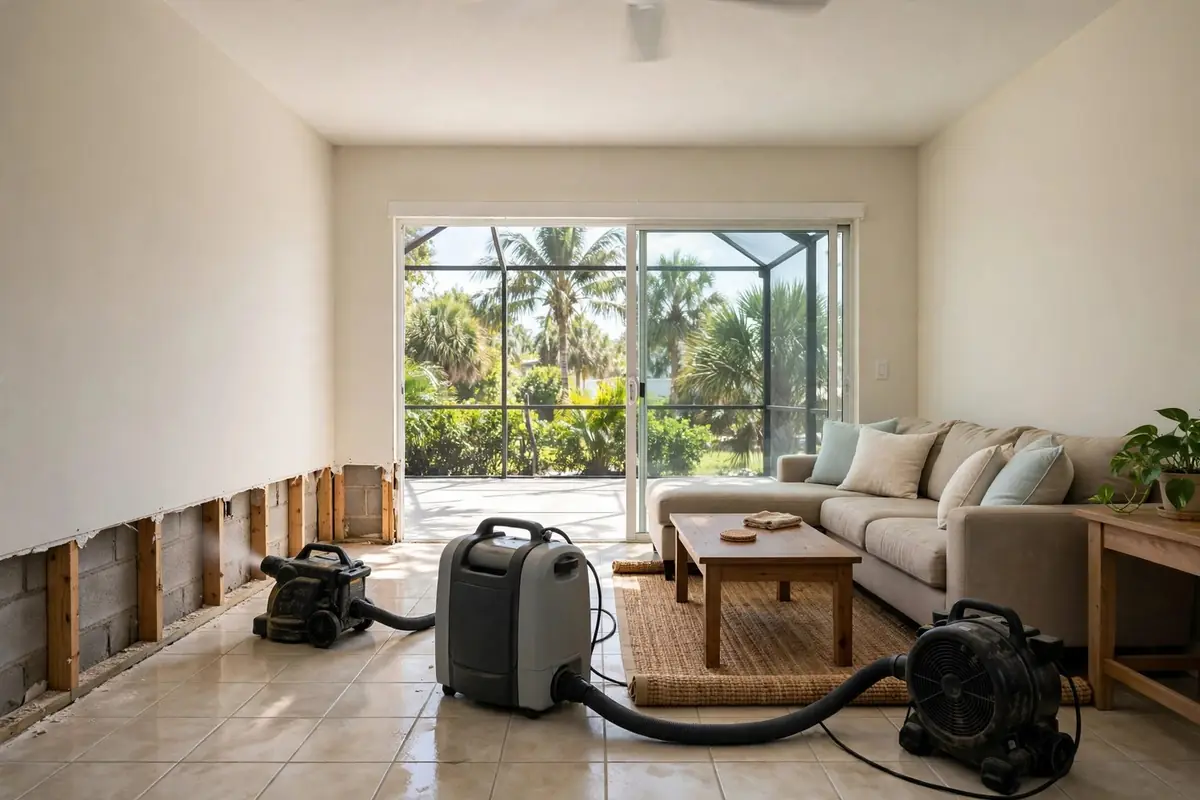
- Removal. Moldy drywall, insulation and carpet pad are cut out and bagged. Framing and hard surfaces are cleaned and HEPA-vacuumed.
- Drying and repair. The area is dried, the leak fixed, then walls and floors rebuilt.
- Post-remediation check. Many homeowners have an assessor confirm the area passed before walls are closed.
Signs of hidden mold
- A musty smell that's stronger when the AC first comes on, or in one closet or bathroom.
- Bubbling paint, peeling baseboards, or soft drywall near a tub, toilet or AC closet.
- Dark spots on the ceiling below an attic air handler.
- Mold on the back of furniture pushed against an exterior block wall.
- Recurring allergy symptoms that ease when you leave the house.
See AC leak water damage for the drain pan and condensate line causes behind many of these.
What affects the price of mold removal?
- The size of the affected area and how many rooms need containment.
- Where the mold is: open drywall is simpler than inside walls, attics or ducts.
- How much material has to be removed and rebuilt.
- Whether a separate assessment and clearance check is done.
- Whether the moisture source still needs repair.
Get the scope and price in writing, and ask what clearance standard the job will be judged against.
Mold help by town
Mold removal in Venice and mold removal in North Port cover local housing and causes. Other towns: Nokomis, Osprey, Englewood.
Match it to what you're seeing
If you're not sure how big the problem is, start here:
- Musty smell but no visible mold
- Mold on walls or ceiling
- Mold after a water leak
- Guide: how fast mold grows
- Guide: checking a Florida mold license
More in the help library.
Sources
- U.S. EPA, A Brief Guide to Mold, Moisture and Your Home
- Florida Department of Health, Mold and your health
- Florida Statutes, Chapter 468 Part XVI: Mold-Related Services (s. 468.8411 definitions)
- Florida Statutes, s. 468.8419: prohibitions (use of the titles mold assessor and mold remediator)
- Florida DBPR, Search for a Licensee
- NOAA NCEI, U.S. Climate Normals 1991–2020, station Venice, FL (USC00089176)
- U.S. Census Bureau, American Community Survey 2020–2024 5-year (tables B11001, B25035, B25003, B25024, B25034, B01002), via Census Reporter
- UF/IFAS Extension, condensate lines and indoor humidity
Last checked 2026-11-16 by the AMR Water & Mold editorial team. Editorial policy.