Where to look first
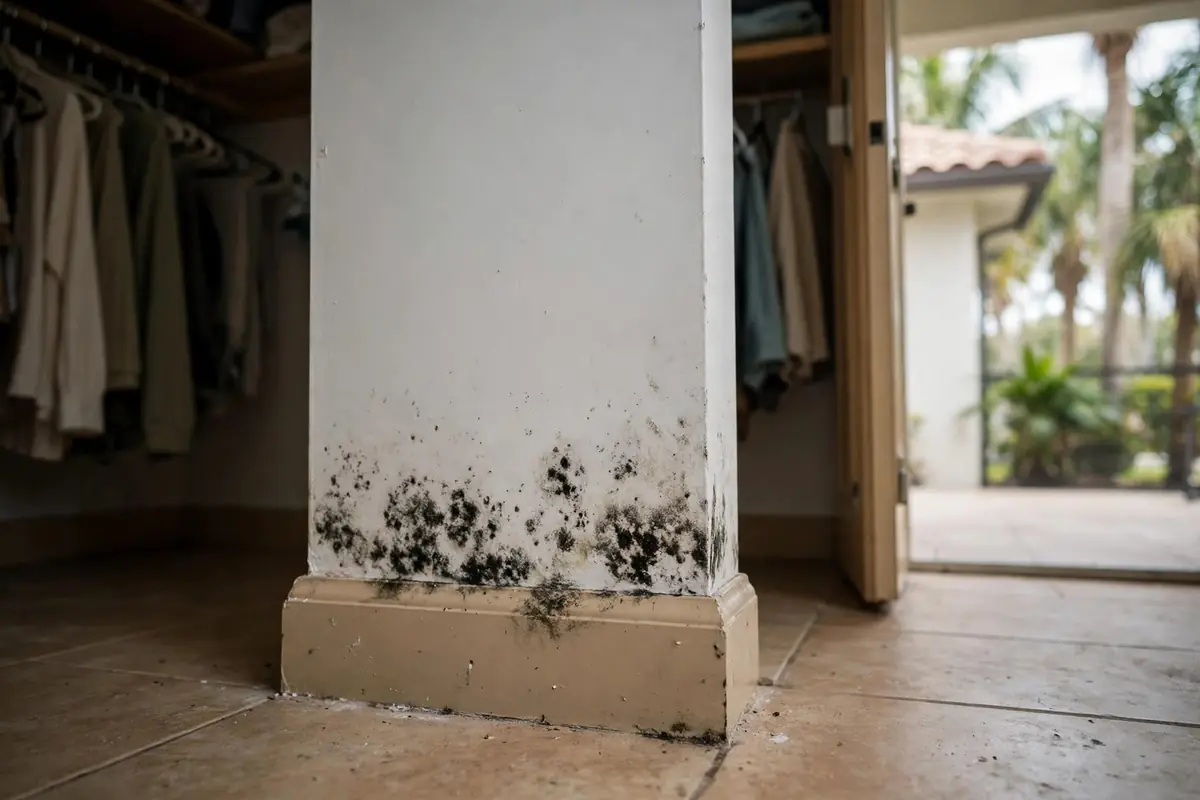
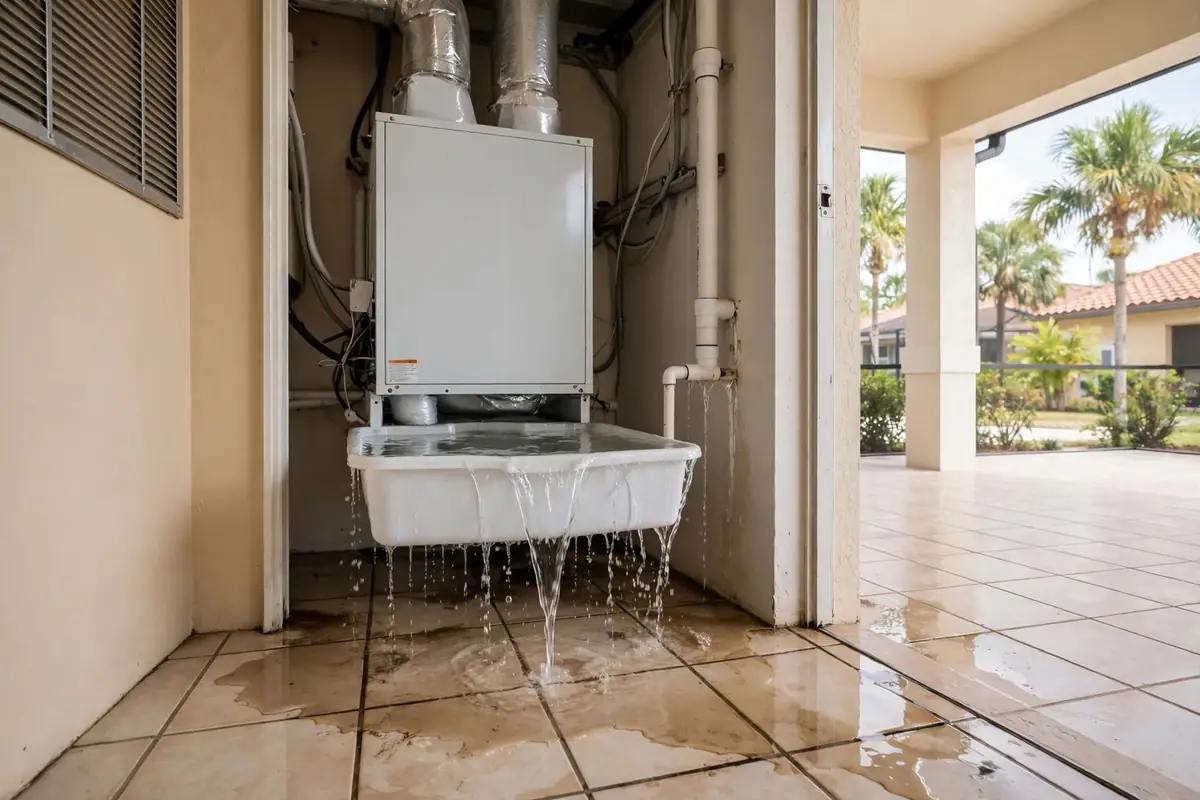
- The AC closet. A full drain pan, a damp closet floor or mold on the lower walls next to the air handler.
- Under sinks in the kitchen and bathrooms: slow drips at shut-off valves and drain joints.
- Behind the toilet and washer. Pull the washer out and look at the wall and floor.
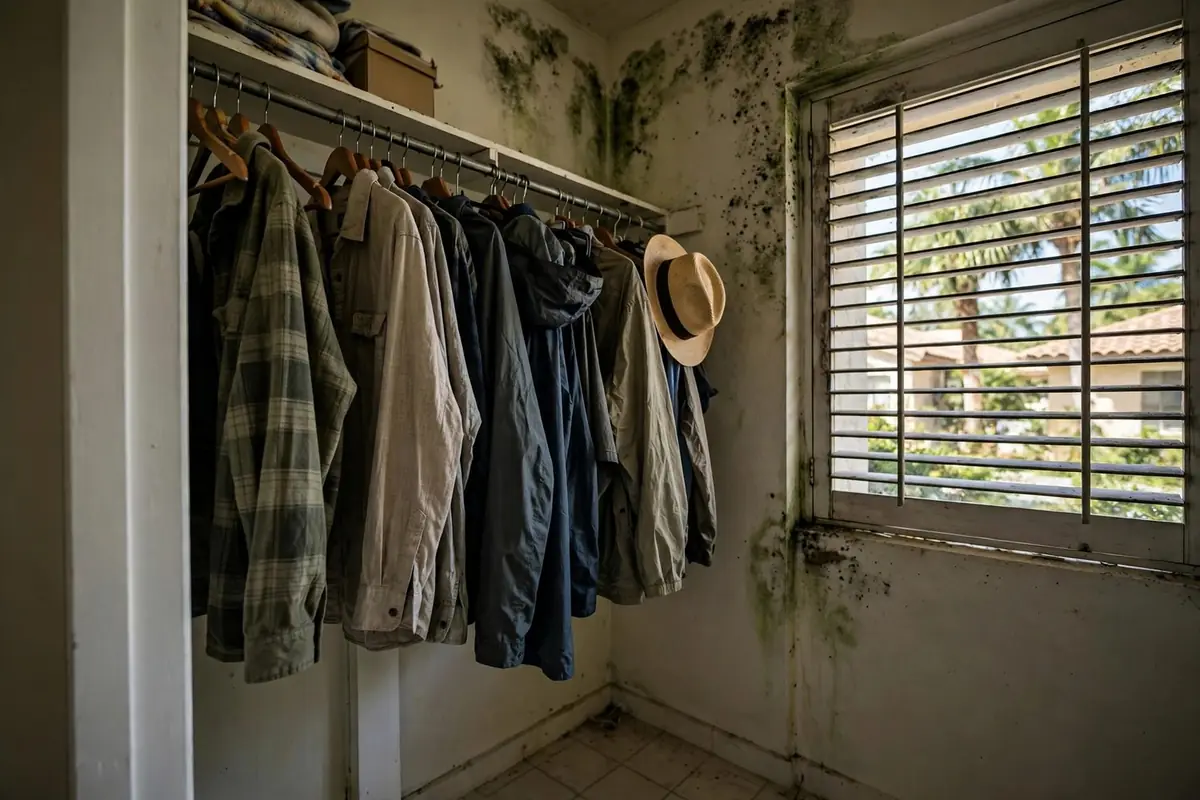
- Closets on exterior walls, especially ones that stay shut. Look behind clothes and at the bottom corners.
- Under the water heater and around its drain pan.
- Window sills and sliding-door tracks after heavy rain.
Seasonal homes are a special case
Venice's median resident age is 69 and Englewood's is 68 (ACS), and many homes in both towns sit closed for the summer. Turning the AC off or setting it very high while away is the classic recipe for a musty house in the fall: humidity climbs, closets and soft furnishings soak it up, and any small leak goes unnoticed for months.
The Florida Department of Health recommends keeping indoor humidity below 60%. For a closed-up home, that means leaving the AC on at a moderate setting, or using a dehumidifier, and having someone check the house after storms.
Is the smell harmful?
The Florida Department of Health notes that mold can cause stuffy nose, wheezing, and eye or skin irritation in sensitive people, and more serious reactions in people with allergies, asthma or weakened immune systems. The smell itself is a sign, not a diagnosis. Fixing the moisture is what makes it go away; air fresheners and ozone machines only mask it.
When to call in help
If the smell is strong, keeps coming back after you've cleaned, or you find a wet wall, ceiling or floor you can't explain, a water damage company can map moisture behind walls with meters and a thermal camera. If visible mold covers more than about 10 sq ft, Florida law treats the work as mold remediation, which requires a state-licensed mold remediator. See mold removal.
Sources
- Florida Department of Health, Mold and your health
- U.S. Census Bureau, American Community Survey 2020–2024 5-year (tables B11001, B25035, B25003, B25024, B25034, B01002), via Census Reporter
- Florida Statutes, Chapter 468 Part XVI: Mold-Related Services (s. 468.8411 definitions)
- U.S. EPA, A Brief Guide to Mold, Moisture and Your Home
Last checked 2026-11-17 by the AMR Water & Mold editorial team. Editorial policy.