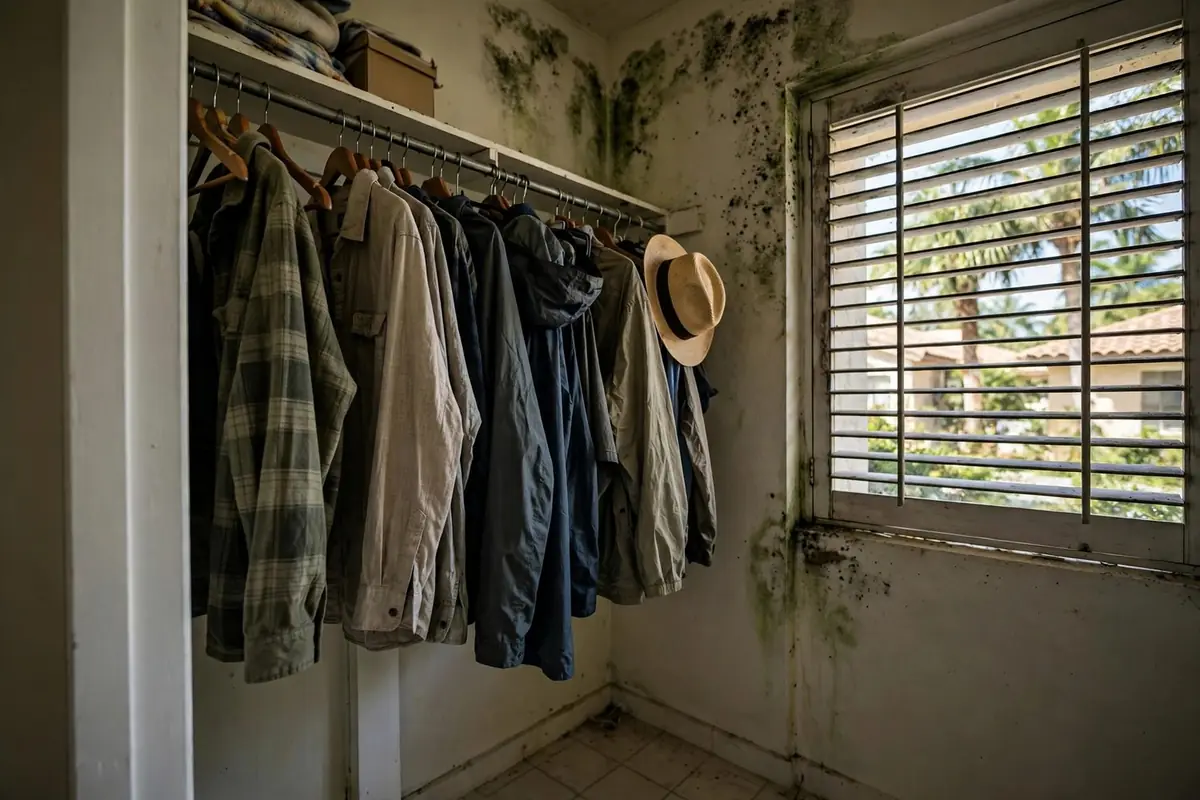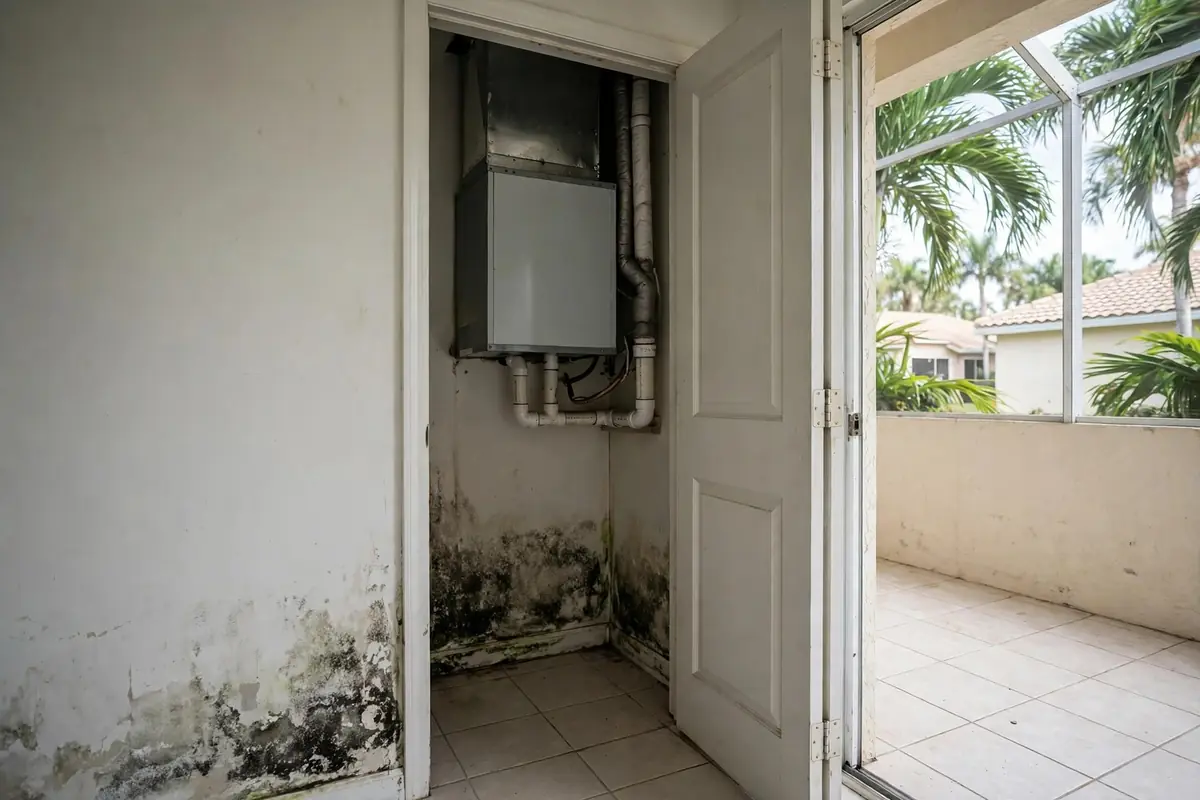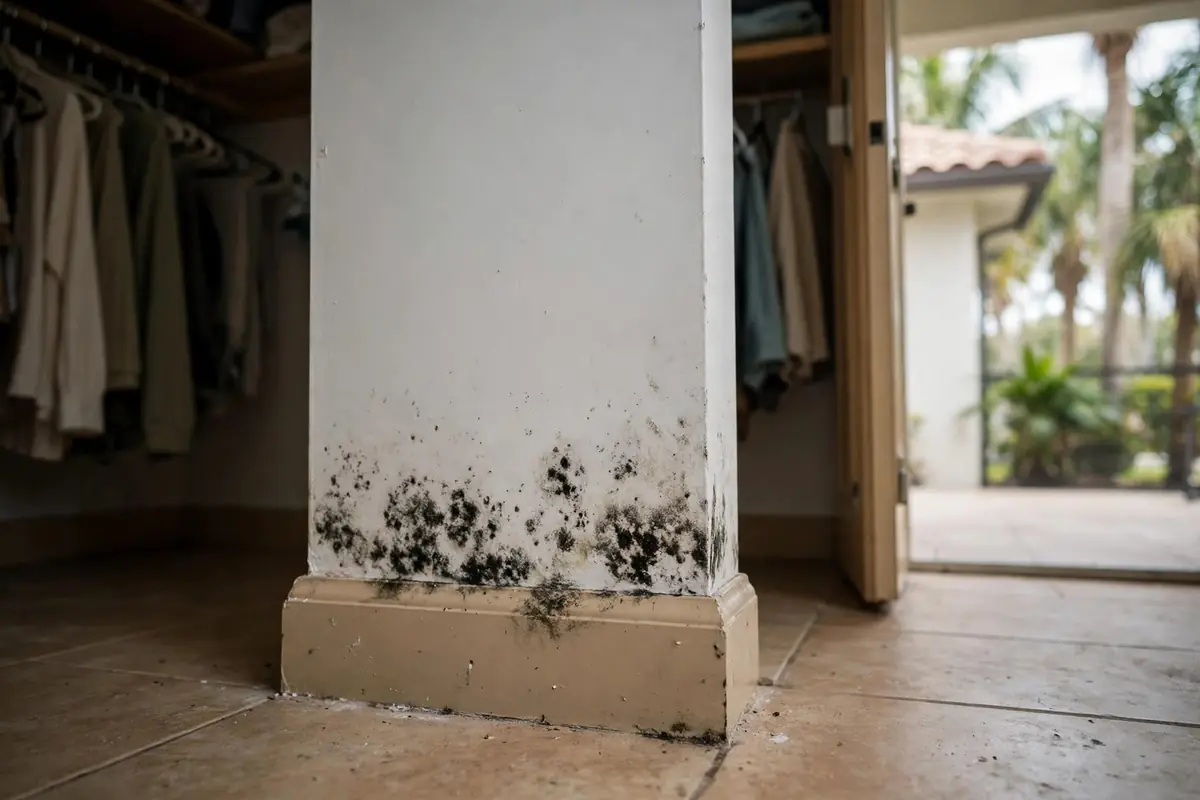
How big is it?
Measure roughly. A 10 sq ft area is about a 3 ft by 3 ft square. That number matters twice: the EPA says homeowners can usually handle cleanup of areas smaller than about 10 sq ft, and Florida's mold licensing law covers assessment and remediation of mold growth over 10 sq ft.
| What you see | Usual approach |
|---|---|
| A few spots on a painted bathroom ceiling | Improve ventilation, clean the surface, repaint with a mildew-resistant paint |
| Patch under 10 sq ft, cause known and fixed | Homeowner cleanup with gloves, eye protection and an N95 |
| Over 10 sq ft, or the drywall is soft or stained through | Licensed mold remediator; drywall usually cut out |
| Mold returns after cleaning | Hidden moisture; find the source first |
Cleaning small areas safely
- Fix the water source first, or it will come back.
- Wear gloves, eye protection and an N95 respirator.
- Scrub hard surfaces with detergent and water, then dry them completely.
- Don't mix bleach with ammonia or other cleaners.
- Porous items that are moldy (ceiling tiles, carpet, upholstered furniture) usually have to be thrown out.
- Don't paint over mold. Clean, dry, then prime and paint.
Why mold keeps coming back on the same wall
Repeat growth means moisture is still getting in. Common causes in local homes: a slow leak inside the wall, condensation on an exterior block wall behind furniture, a bathroom without a working exhaust fan, an AC closet with a leaking pan, or a closet that never gets air. A moisture meter or thermal camera can show wet areas behind the surface.
Florida's mold licensing rules
Florida Statutes Chapter 468, Part XVI, requires a state license from DBPR to perform mold assessment or mold remediation on more than 10 sq ft of mold growth. The license is held by individuals, so ask the company who holds it and look the name up on the DBPR licensee search. The license check guide walks through it. AMR Water & Mold is a referral service, not a mold assessor or remediator.
Sources
- U.S. EPA, A Brief Guide to Mold, Moisture and Your Home
- Florida Department of Health, Mold and your health
- Florida Statutes, Chapter 468 Part XVI: Mold-Related Services (s. 468.8411 definitions)
- Florida DBPR, Search for a Licensee
Last checked 2026-11-17 by the AMR Water & Mold editorial team. Editorial policy.