Is it safe to walk in the water?
Not if electricity could be involved. Water that touches outlets, power strips, extension cords, a water heater or a floor-standing appliance can be energized.
- If you can reach the breaker panel from a dry spot, switch off the circuits for the wet rooms.
- If the panel is in the wet area, leave and call your electric utility or 9-1-1.
- Storm or flood water can hide sharp debris, snakes and sewage. Wear boots and gloves, and keep children and pets out.
- If the ceiling is sagging with water, stay out of that room. It can come down.
What to do while you wait
- Shut off the water at the fixture or the main valve.
- Stay out of water that touches outlets, cords or appliances. Use the breaker only from a dry spot.
- Don't use a household vacuum on standing water.
- Photograph the water, the source and the damage before you move anything.
- Lift furniture legs onto foil, plastic lids or wood blocks to stop staining and wicking.
- Pull up area rugs and move electronics, papers and photos to a dry room.
- Open interior doors and run the AC to keep humidity down, unless water reached the air handler or ducts.
- Mop or towel small amounts. Leave large volumes to the extraction equipment.
How water extraction works
Extraction is the first and most important part of drying. Removing liquid water with equipment is much faster than evaporating it with fans.
- Source check. The technician confirms the water is off and identifies whether it's clean, grey or contaminated water.
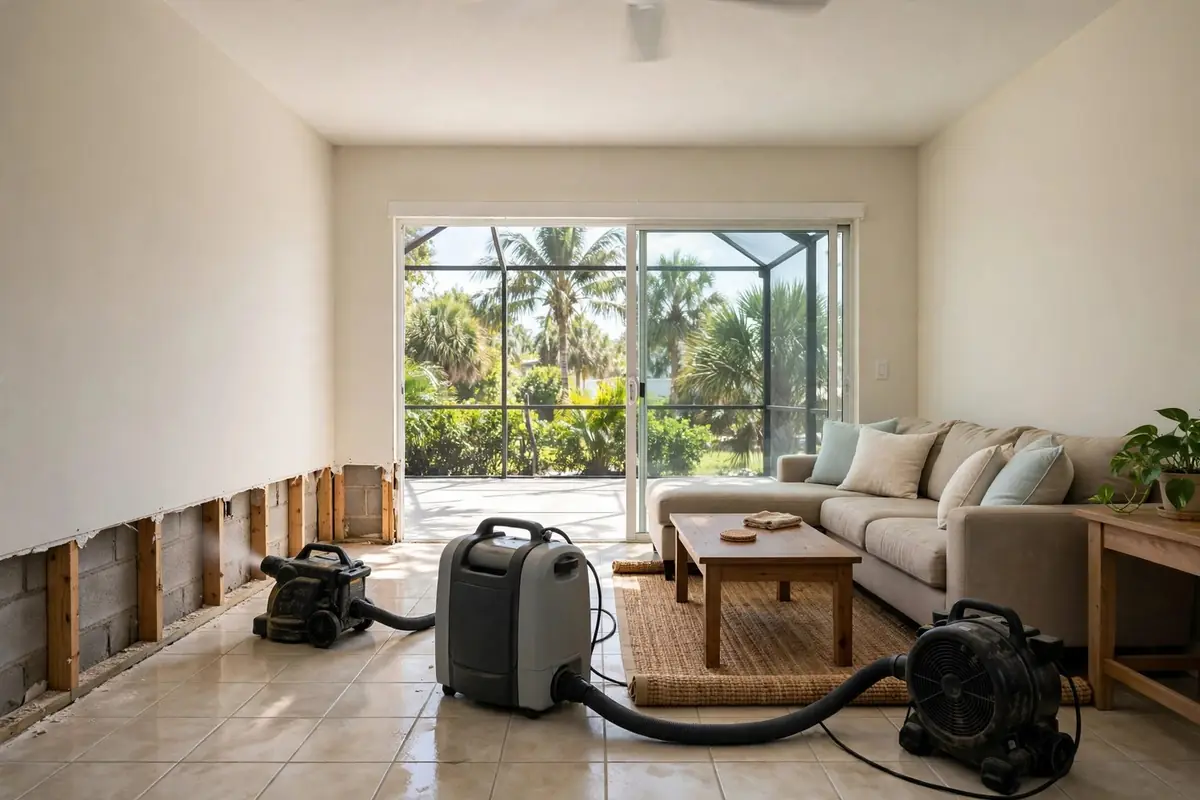
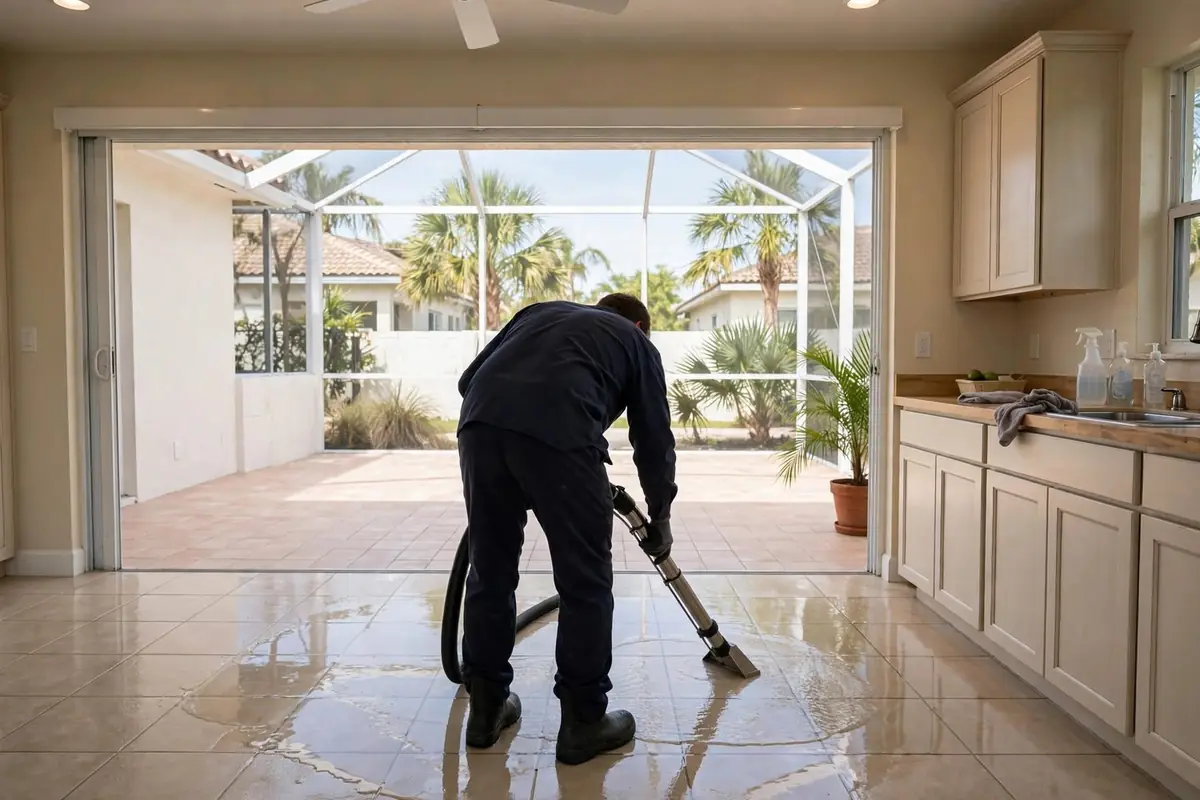
- Extraction. Truck-mounted or portable units with wands pull water from tile, grout lines and carpet. Weighted extraction tools squeeze water out of carpet pad.
- Moisture mapping. Meters show where water went under baseboards, behind cabinets and into adjoining rooms.
- Removal. Saturated pad, baseboards and the bottom of wet drywall may be cut out so walls can dry.
- Drying setup. Air movers and dehumidifiers are placed and left running, with return visits to check readings.
Common sources of standing water in local homes
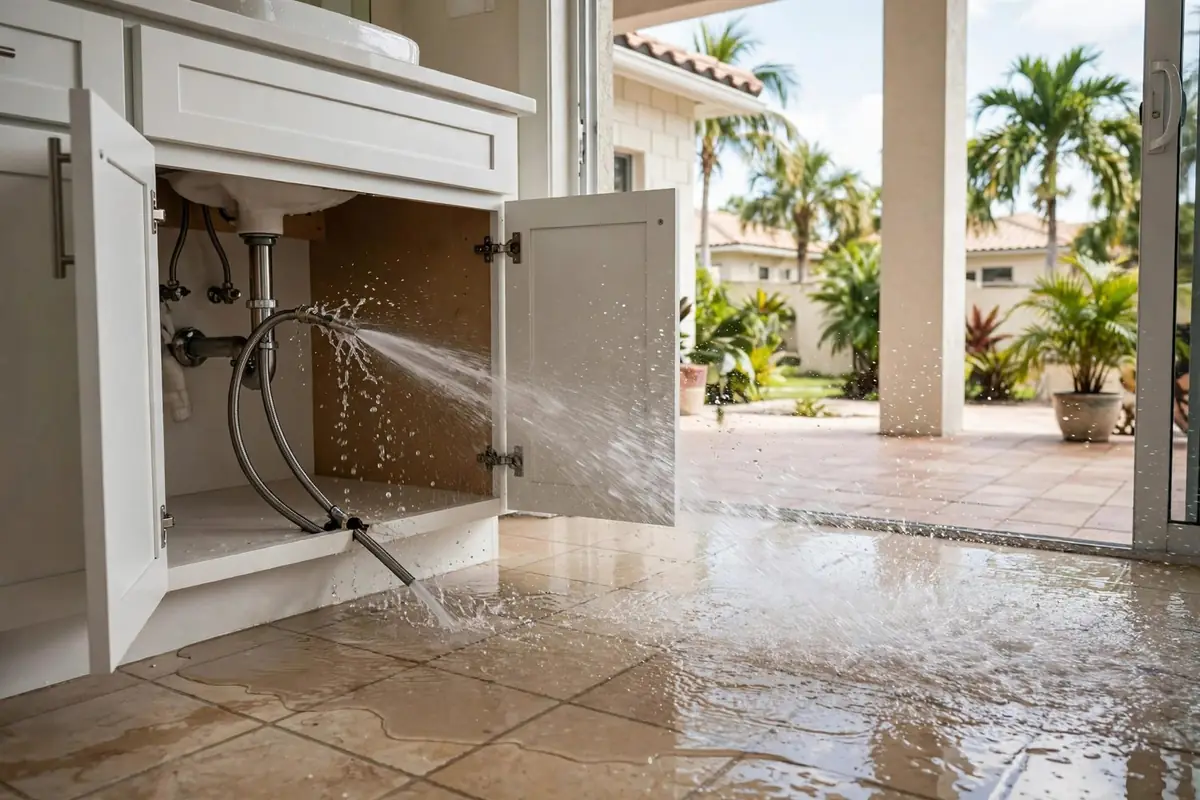
- Burst or split supply lines to toilets, sinks, ice makers and washing machines. See burst pipe water damage.
- Water heater failures in garages, closets and condo utility rooms.
- AC drain pan overflows from a clogged condensate line. See AC leak water damage.
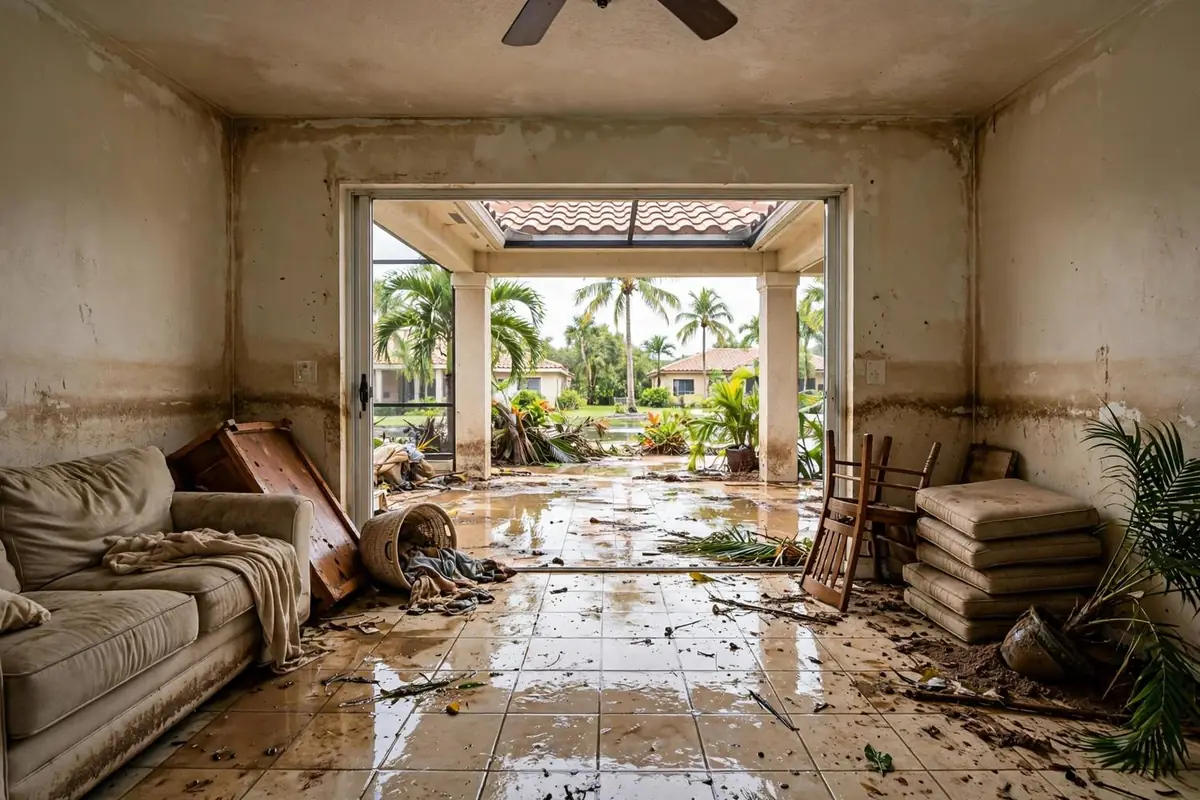
- Storm water and surge during tropical systems. See storm and flood damage.
- Upstairs condo leaks coming through the ceiling. In the city of Venice, 16.8% of homes are in buildings with 20 or more units (Census ACS).
Why same-day extraction matters
Water travels sideways under tile and baseboards and climbs drywall. The longer it sits, the more material has to come out, and the EPA notes mold can begin on wet materials within 24 to 48 hours. Florida summers make it worse: the Venice area's wettest months, June to September, are also its warmest, with average temperatures above 81°F (NOAA normals). Warm, humid air slows drying unless dehumidifiers run.
What affects the price of water extraction?
- How much area got wet, and how long it sat before drying started.
- The water category: clean supply water, grey water from appliances, or contaminated flood and sewage water.
- What has to come out: carpet pad, baseboards, drywall, insulation, cabinets.
- Materials: tile on slab dries differently from carpet, laminate or wood.
- Days of equipment on site and the number of monitoring visits.
- Whether mold has already started and needs separate remediation.
- After-hours and post-storm demand.
Ask for the scope of work and the price in writing before work starts, and confirm the company will send its moisture logs to your insurer.
Match it to what you're seeing
Pages for the overflow or flood in front of you:
More in the help library.
Sources
- U.S. EPA, A Brief Guide to Mold, Moisture and Your Home
- NOAA NCEI, U.S. Climate Normals 1991–2020, station Venice, FL (USC00089176)
- U.S. Census Bureau, American Community Survey 2020–2024 5-year (tables B11001, B25035, B25003, B25024, B25034, B01002), via Census Reporter
- Florida Department of Health, Mold and your health
Last checked 2026-11-16 by the AMR Water & Mold editorial team. Editorial policy.