Stop the water
- Toilet: lift the tank lid and push the flapper down, then turn the oval valve behind the toilet clockwise.
- Washer: turn off the machine, then the hot and cold valves behind it. If a hose burst, the valve is the only thing that stops it.
- If a valve won't move, shut the main water valve.
What kind of water is it?
| Source | How it's treated |
|---|---|
| Washer supply hose burst | Clean water at first |
| Washer drain or overflow, with detergent | Grey water: needs cleaning as well as drying |
| Toilet tank or clean bowl overflow | Grey water |
| Toilet bowl with waste, or a sewer backup | Black water: contaminated; porous materials discarded |
Even clean water becomes grey within a day or two as it sits on floors and picks up dirt. Speed matters. The first 24 hours guide covers the timeline.
If the toilet keeps overflowing
A toilet that backs up when you run the washer or shower, or several drains gurgling at once, points to a blocked sewer line rather than a single toilet clog. Stop using water in the house and call a plumber. In a city sewer system, the utility can tell you whether the blockage is on the city side: City of Venice Utilities at (941) 480-3333, North Port Utilities at (941) 240-8000.
Drying and cleanup
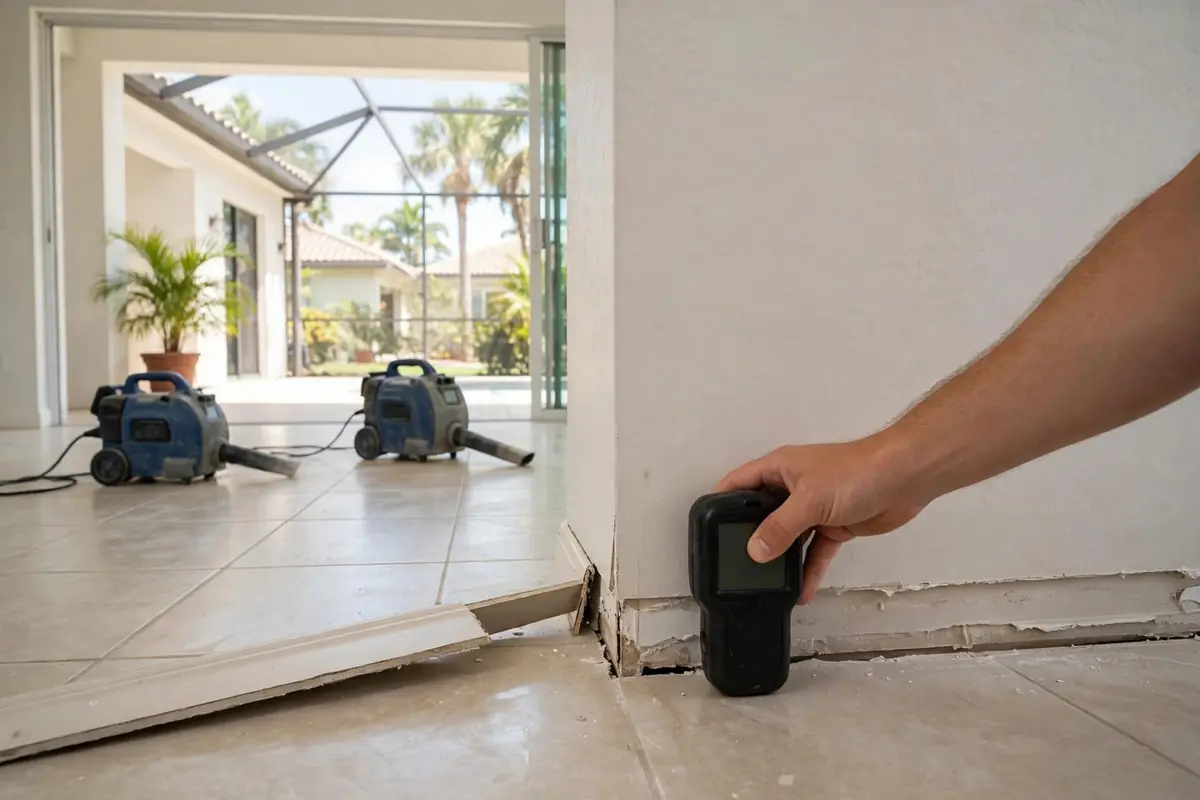
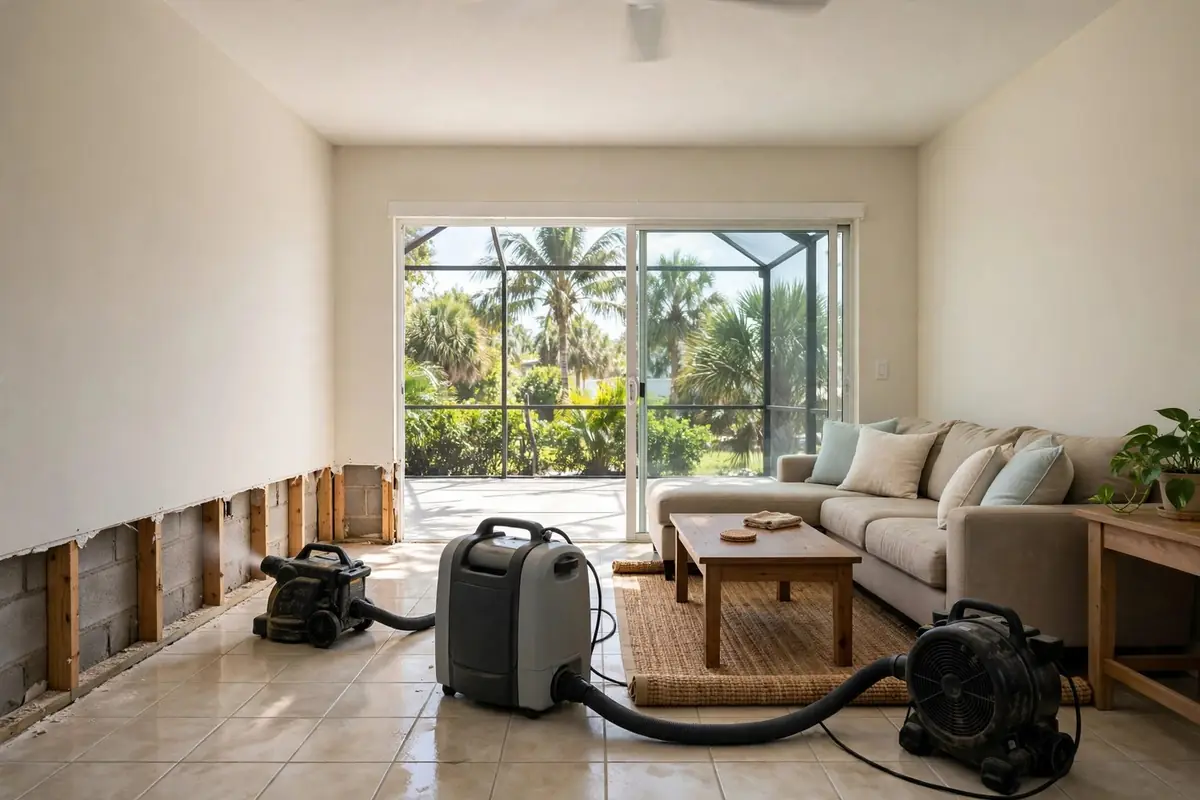
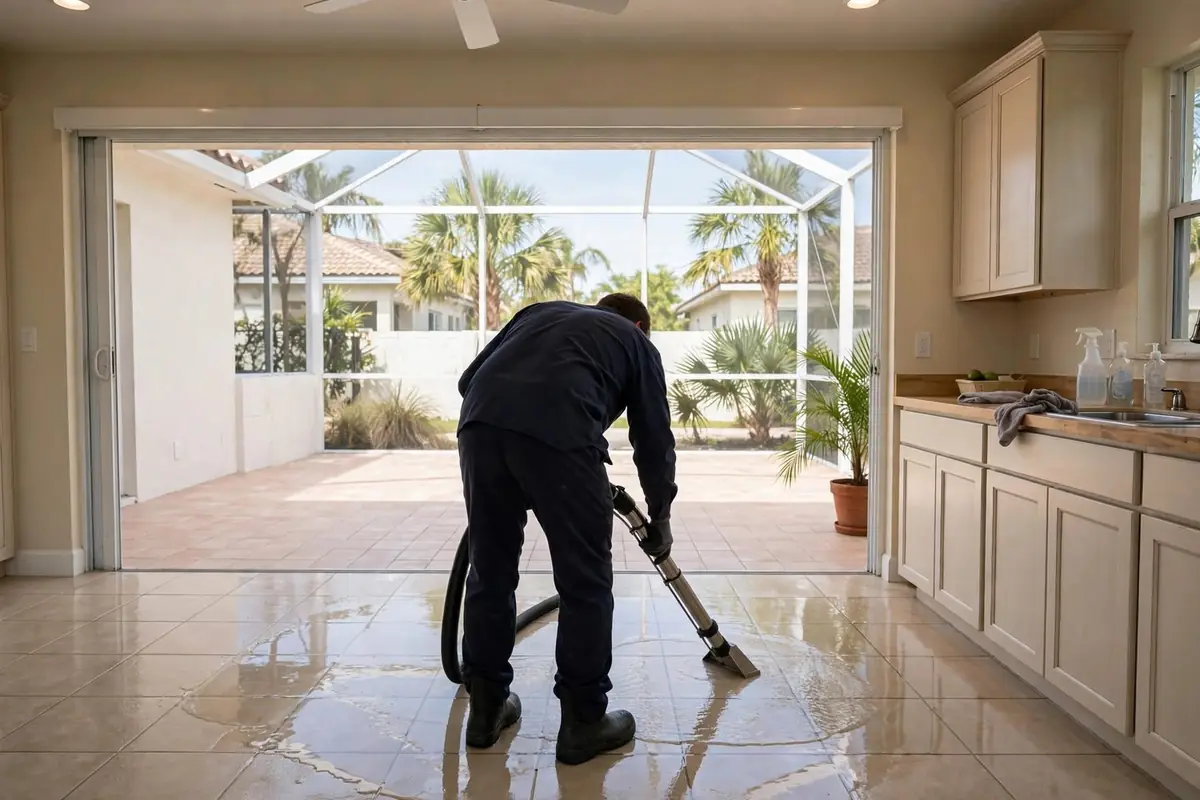
Laundry rooms often share a wall with a kitchen, garage or bedroom, so water spreads under cabinets and into the next room. A restoration technician extracts the water, checks the base of cabinets and drywall with a meter, cleans and disinfects where the water was contaminated, and sets up drying equipment. Laminate and vinyl plank over a slab often trap water underneath and may need to be lifted.
Sources
- City of Venice Utilities
- City of North Port, Utilities Department
- U.S. EPA, A Brief Guide to Mold, Moisture and Your Home
Last checked 2026-11-17 by the AMR Water & Mold editorial team. Editorial policy.