Why do AC drain lines overflow so often here?
An air conditioner cools by pulling moisture out of the air. In a humid Florida summer, that's a steady stream of water running from the coil into a drain pan and out through a PVC condensate line. Algae and sludge grow in that warm, wet line and slowly block it.
The Florida Department of Health lists AC drain pans as a source of indoor flooding and recommends routine checks of pans and lines. UF/IFAS Extension advises keeping condensate lines clean. Summer is the peak: the Venice area's June to September average temperatures run above 81°F (NOAA normals), so systems run nearly nonstop.
What to check right now
- Turn the system off at the thermostat.
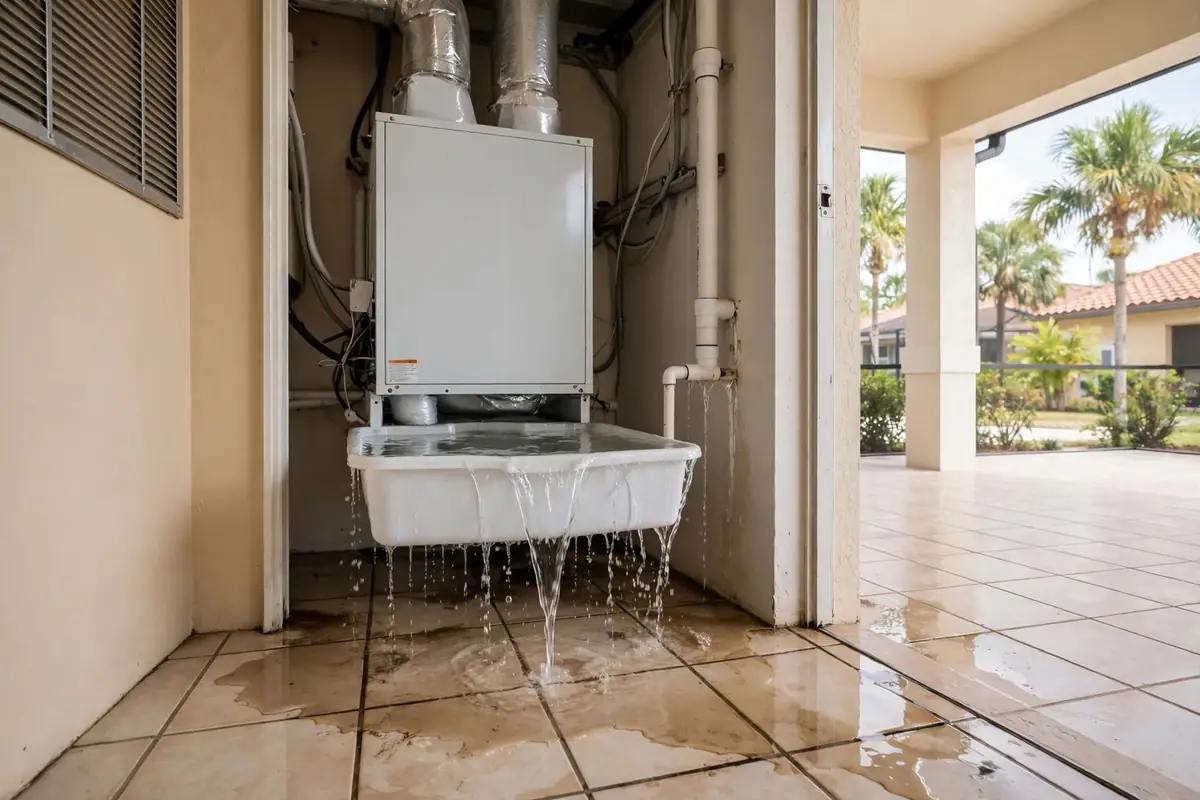
- Look at the air handler (in a closet, garage or attic). Is the pan under it full?
- Many systems have a float switch that shuts the AC off when the pan fills. If your AC stopped cooling and there's water in the pan, that's likely why.
- Find where the condensate line exits outside, usually a short PVC pipe near the outdoor unit. Is it dripping when the AC runs? If not, it's probably clogged.
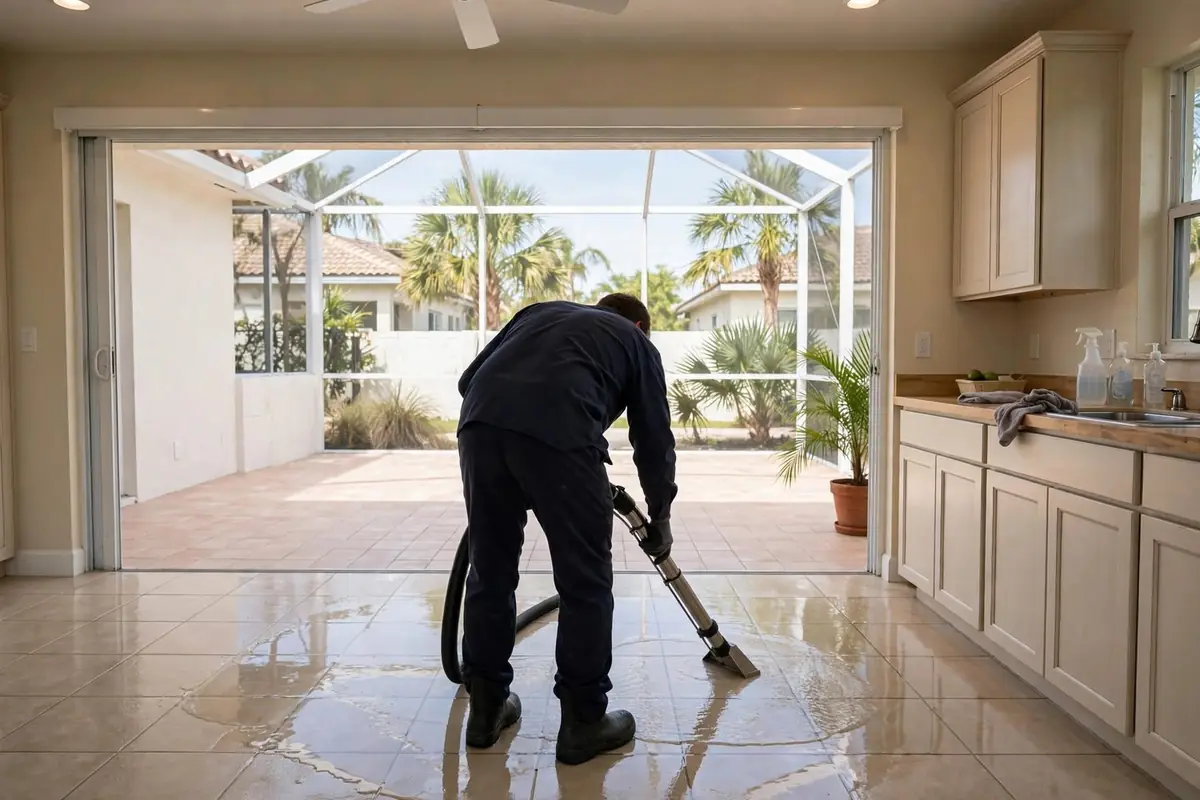
- Soak up water in the pan and around the unit with towels or a wet/dry vacuum.
Clearing the line is an HVAC task. A wet/dry vacuum on the outside end often pulls the clog out; otherwise call an HVAC technician. The water damage is a separate job.
Where AC water ends up
- Attic air handlers: the overflow soaks ceiling drywall below and often shows up as a brown ring or a sagging spot.
- Closet air handlers: water spreads under baseboards into the hallway and bedrooms, and wicks up the closet walls.
- Garage units: less damage, but water can run under the wall into the house.
- Condos: an overflow can leak into the unit below. Tell the association right away.
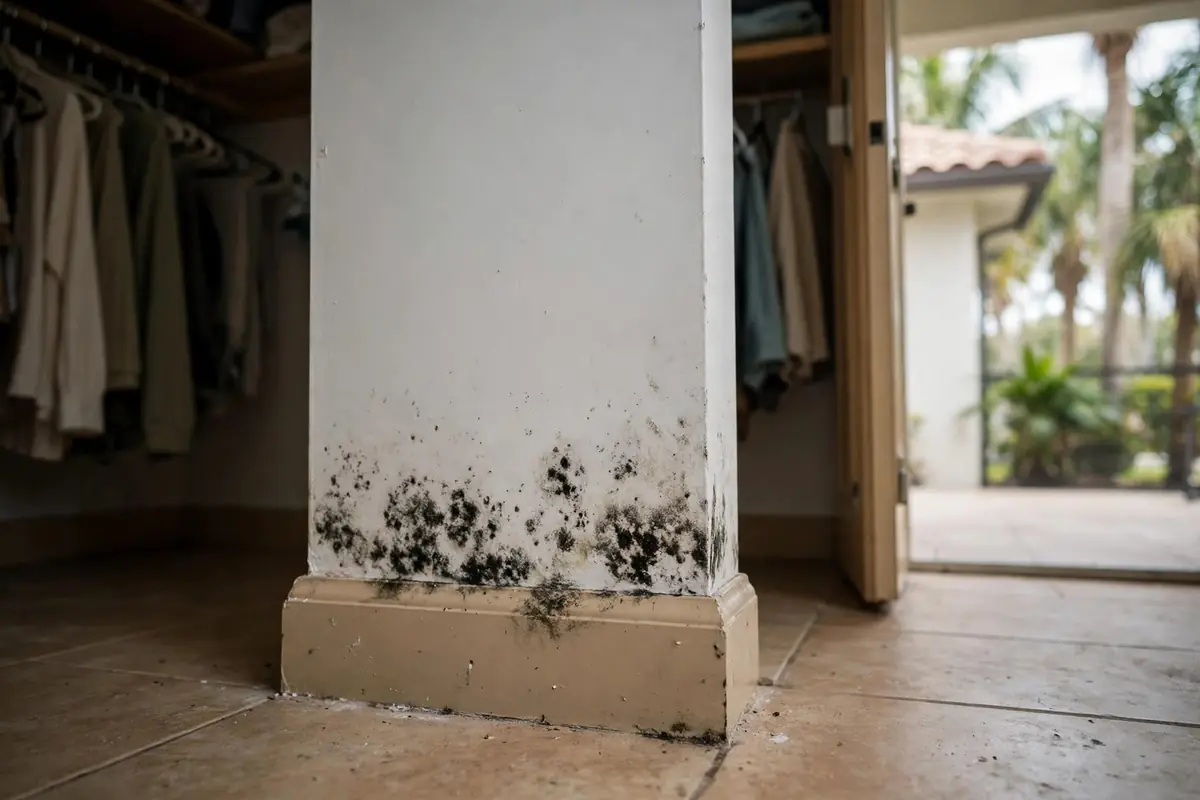
Slow AC leaks often go unnoticed until there's a musty smell or mold on the closet walls. See mold removal if that's what you're seeing.
How AC leak damage gets dried
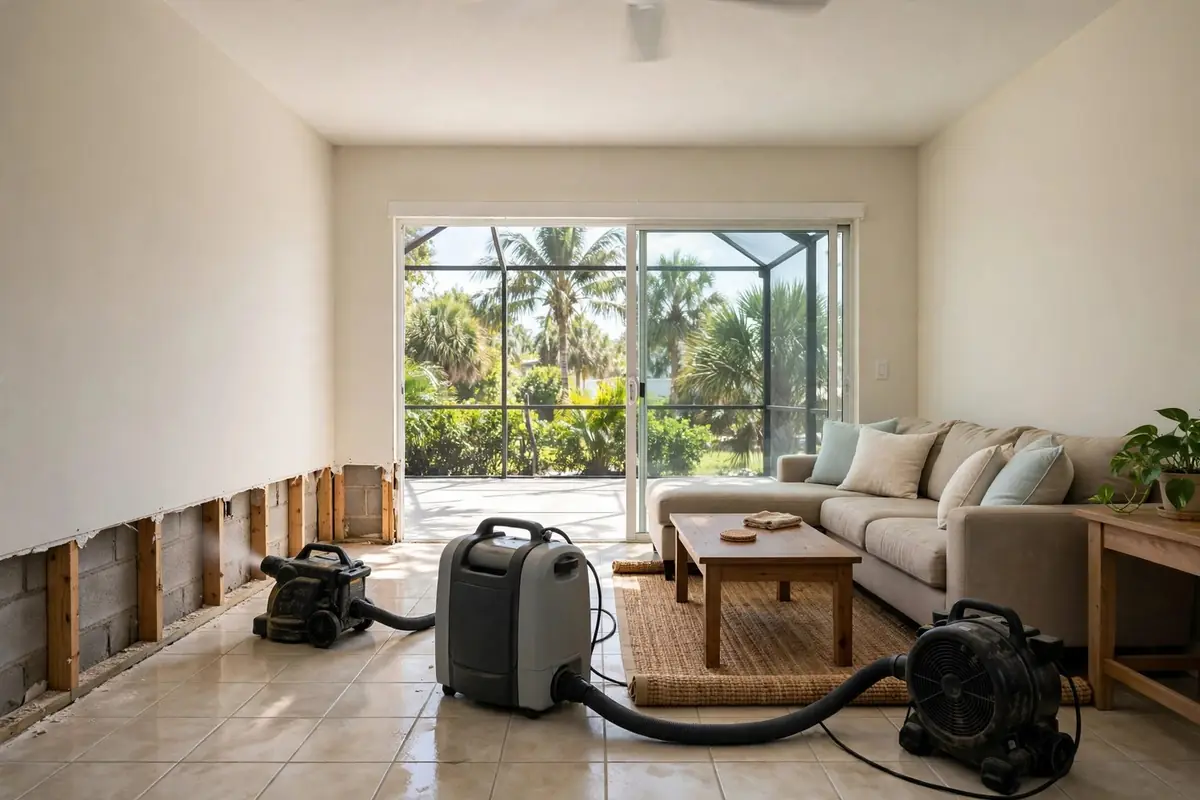
Condensate is often treated as grey water because of the algae and sludge that grow in the pan and line, so wet carpet pad near the closet is usually discarded rather than dried. The technician checks the closet floor, the bottom of the closet walls and the hallway beyond, and for an attic unit, the insulation and ceiling drywall below. Wet attic insulation generally comes out. Air movers and a dehumidifier then dry the closet and ceiling, with readings taken until they're dry. See water damage restoration for the full process.
Preventing the next AC overflow
- Have the condensate line flushed at every AC service, and pour a cup of white vinegar into the access port every few months if your technician recommends it.
- Confirm there's a working float or overflow switch. It shuts the AC off before the pan spills.
- Replace rusted or cracked drain pans.
- Keep indoor humidity under 60%, as the Florida Department of Health recommends, and don't switch the AC off entirely in a closed-up seasonal home.
- Put a leak sensor in the air handler closet or pan.
What affects the price?
AC leak jobs vary mostly by where the air handler sits and how long the leak went unnoticed. A closet overflow caught the same day may need little more than extraction and a dehumidifier. An attic unit that leaked for weeks can mean ceiling drywall, insulation and possibly mold remediation. The HVAC repair is a separate bill. Ask for the scope and price in writing; the general cost factors apply as well.
Match it to what you're seeing
Quick help for the AC closet:
More in the help library.
Sources
- Florida Department of Health, Mold and your health
- UF/IFAS Extension, condensate lines and indoor humidity
- NOAA NCEI, U.S. Climate Normals 1991–2020, station Venice, FL (USC00089176)
- U.S. EPA, A Brief Guide to Mold, Moisture and Your Home
Last checked 2026-11-16 by the AMR Water & Mold editorial team. Editorial policy.