Empty the pan and clear the line
- Thermostat off.
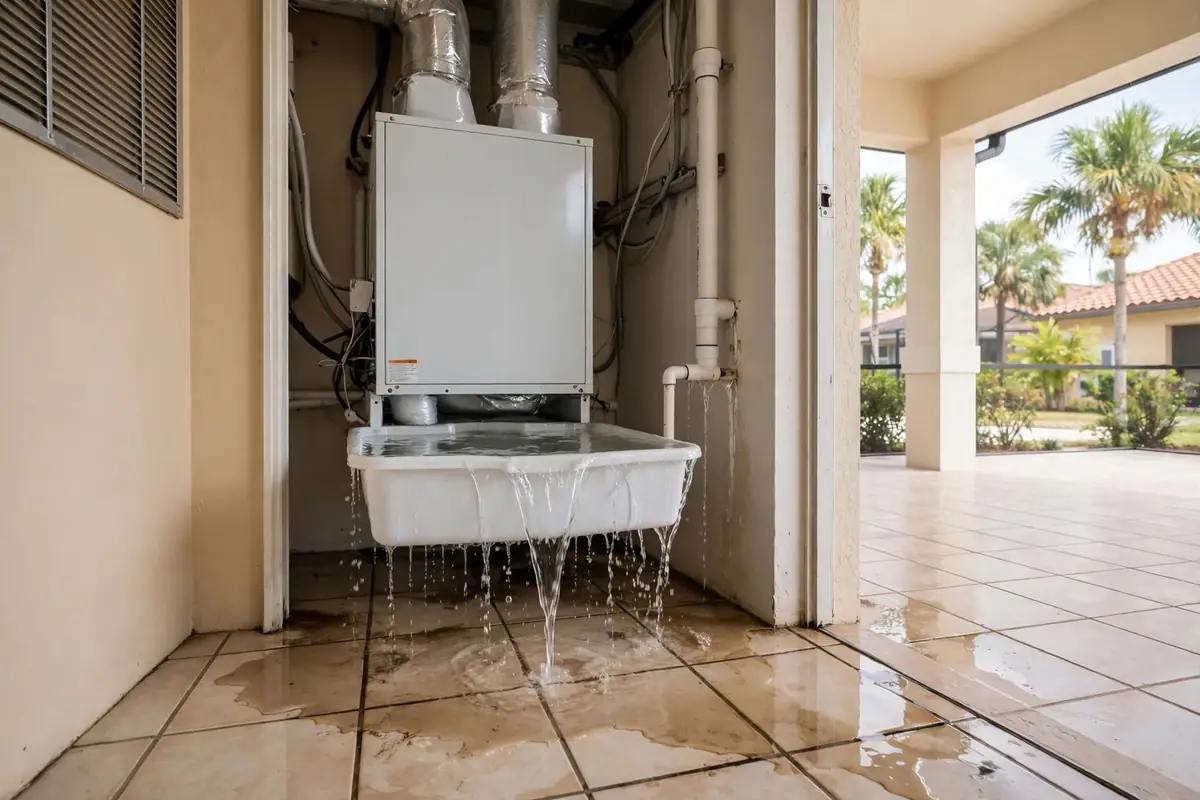
- Remove water from the pan with a wet/dry vacuum, a cup or towels.
- Find the condensate line outside, usually a PVC stub near the outdoor unit. Hold a wet/dry vacuum hose tight over the end (tape helps) and run it for a minute or two. You'll often hear the clog come out.
- If the system has an access port with a cap on the line near the air handler, a cup of white vinegar poured in can help keep it clear afterwards, if your HVAC technician recommends it.
- Turn the AC back on and watch the outside end. It should drip within 15–30 minutes of steady running.
If the line won't clear, or the pan is rusted or cracked, call an HVAC technician.
Primary pan vs secondary pan
Many air handlers have a primary drain built into the unit and a secondary (emergency) pan underneath. Water in the secondary pan means the primary drain is already blocked. In attics, some installers run the secondary drain to a spot above a window so you'll notice the drip; if you see water dripping from a soffit or above a window, that's the warning.
Check for damage you can't see
- Closet floor and the bottom of the closet walls: swollen baseboard, soft drywall, stains.
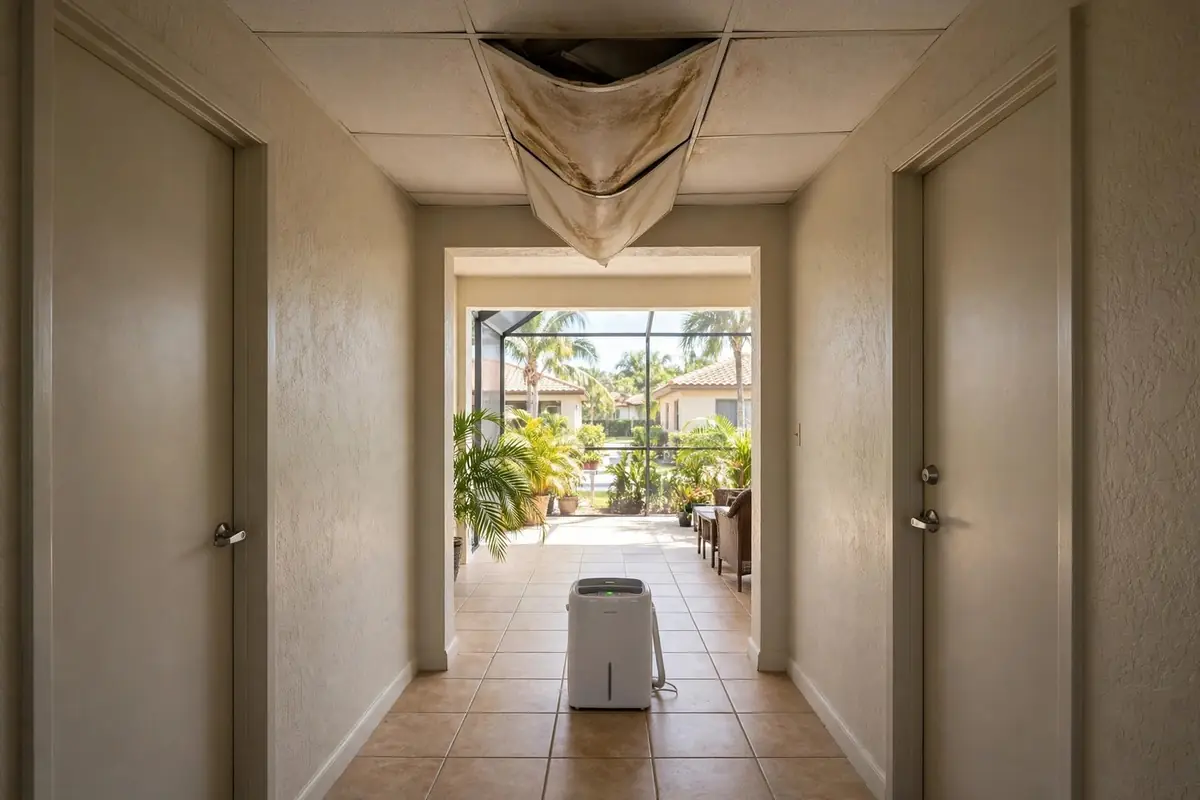
- The ceiling below an attic air handler: rings or a sag.
- Hallway carpet or flooring next to the closet.
- Musty smell after the AC runs.
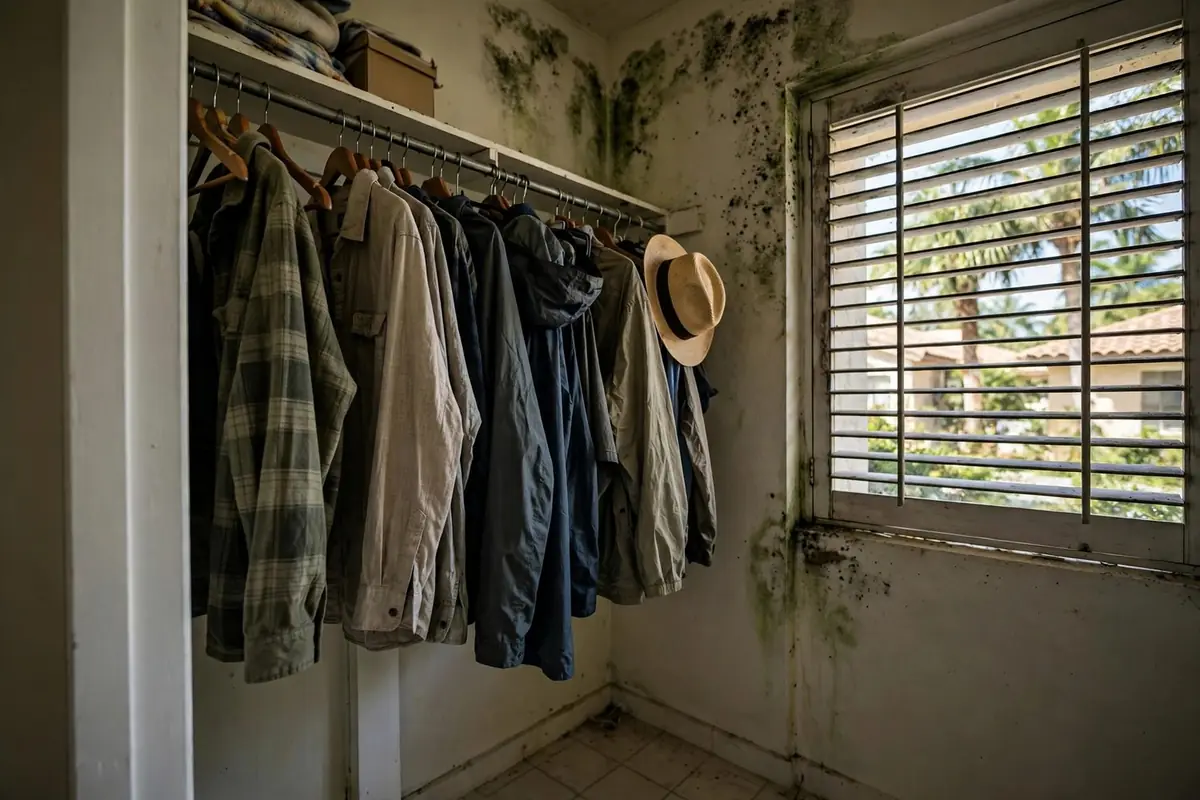
If anything is wet beyond the pan, it needs drying. In a humid closet with no airflow, mold can start on wet drywall within a couple of days.
Why this keeps happening in Florida
An AC in a humid climate pulls a lot of water out of the air, and the warm, wet condensate line is perfect for algae. NOAA normals put Venice's summer average temperatures above 81°F, so systems run almost nonstop from June to September. UF/IFAS Extension and the Florida Department of Health both recommend routine checks of drain pans and lines. More on the causes: AC leak water damage.
Sources
- NOAA NCEI, U.S. Climate Normals 1991–2020, station Venice, FL (USC00089176)
- UF/IFAS Extension, condensate lines and indoor humidity
- Florida Department of Health, Mold and your health
Last checked 2026-11-17 by the AMR Water & Mold editorial team. Editorial policy.