Can wet carpet be saved?
It depends on three things: what kind of water it was, how long it sat, and the backing.
- Clean water (supply line, rain through a window) caught within a day or two: carpet often saved, pad often replaced.
- Grey water (washer, dishwasher, toilet tank, AC condensate): sometimes cleaned and saved if handled fast.
- Black water (sewage, toilet bowl overflow with waste, storm or flood water): carpet and pad discarded.
Delamination is the other deal-breaker: if the backing separates from the face fibres, the carpet won't lie flat again.
Why the pad usually goes
Carpet pad is foam that holds many times its weight in water. On a concrete slab, it can't dry from below, and fans on top of the carpet barely reach it. Replacing a wet pad is cheaper and more reliable than trying to dry it, and it removes the most likely place for odor and mold to start.
What extraction and drying look like
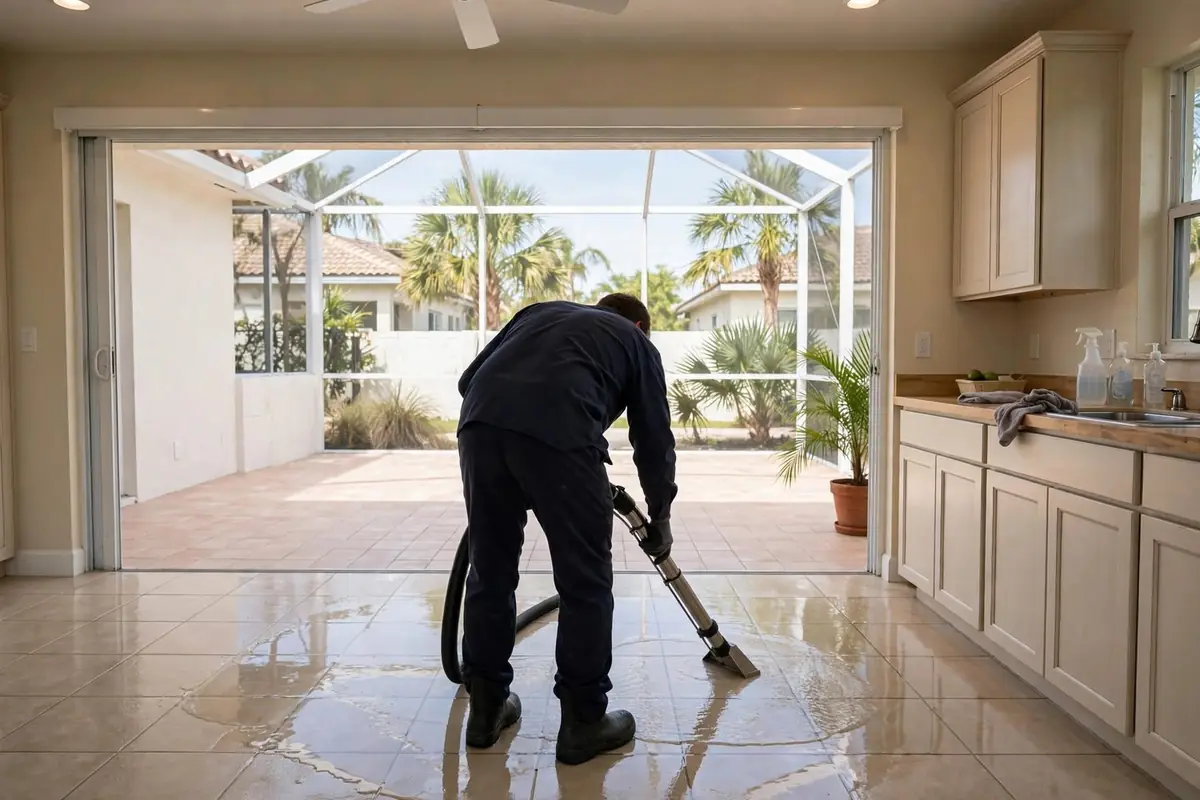
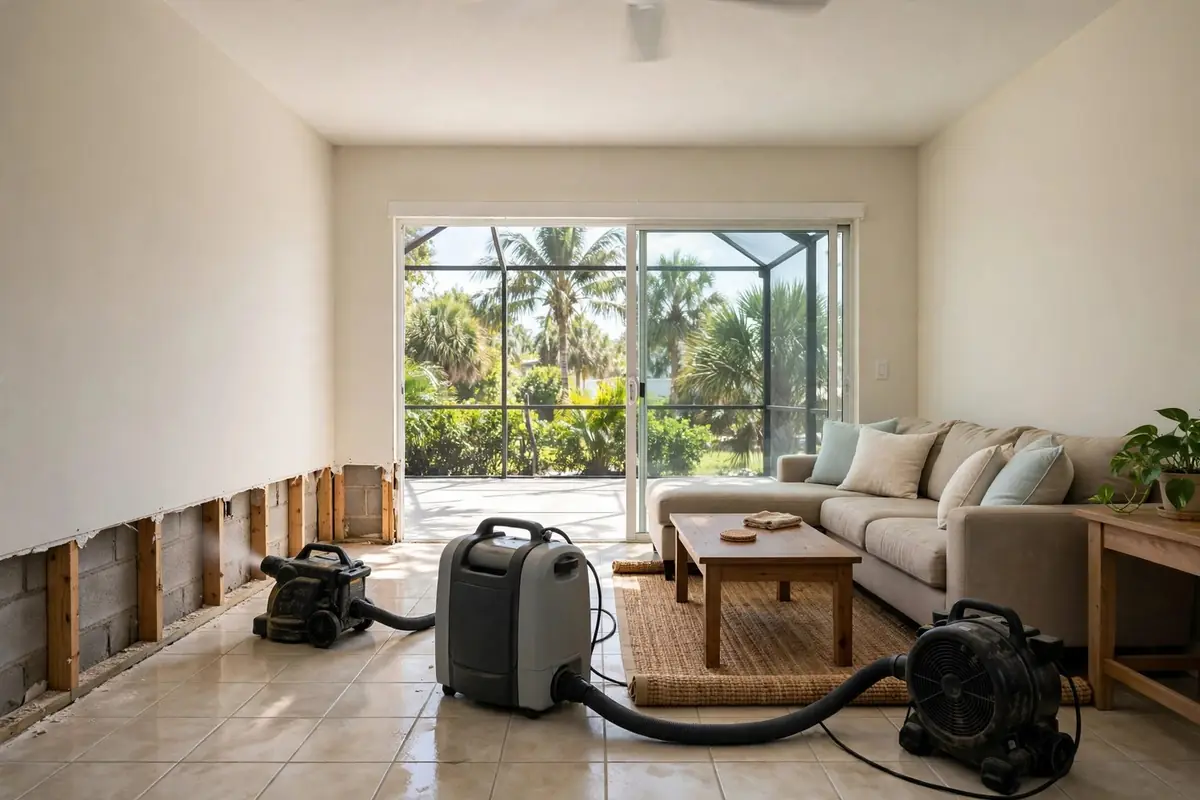
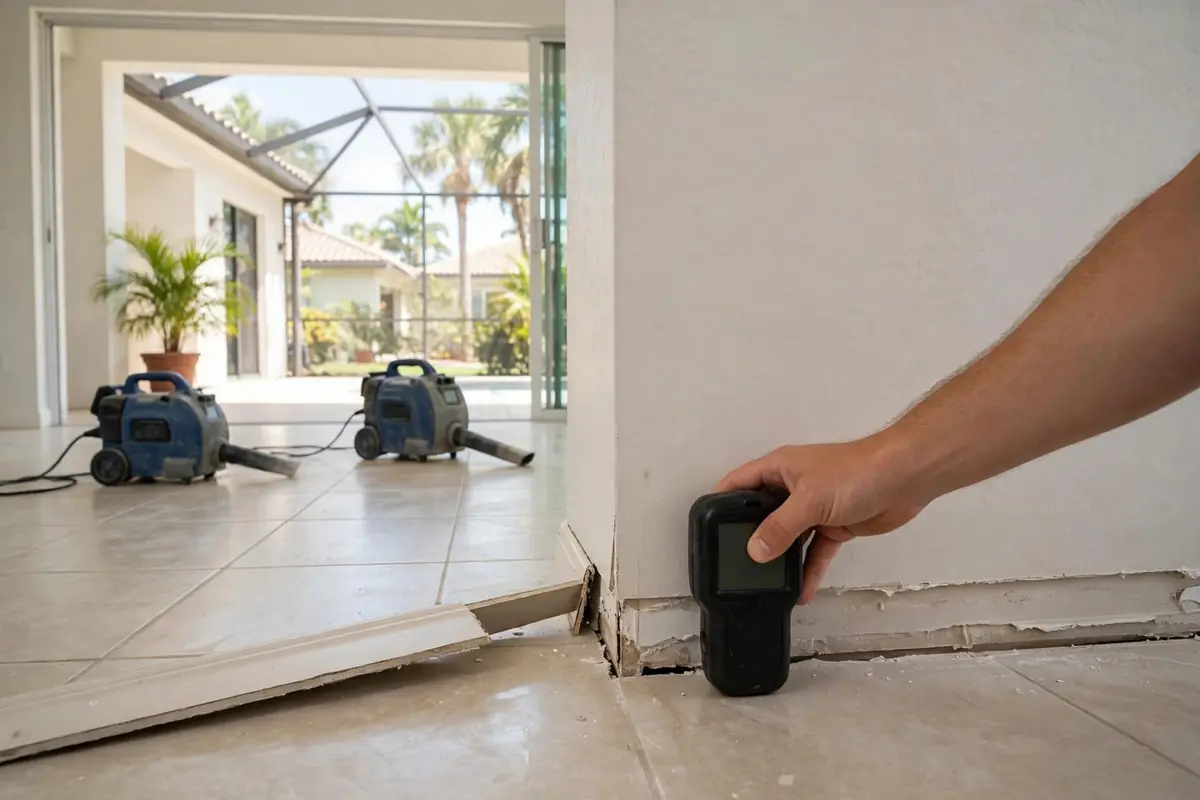
A technician uses a weighted extraction tool or a wand to pull water out of the carpet and pad, then often "floats" the carpet: it's lifted at a corner, the wet pad is cut out, and air movers blow under the carpet while dehumidifiers pull the moisture out of the room. Baseboards and the bottom of the drywall get checked too, because water wicks up walls from wet carpet.
First steps
- Shut off the water at the fixture or the main valve.
- Stay out of water that touches outlets, cords or appliances. Use the breaker only from a dry spot.
- Don't use a household vacuum on standing water.
- Photograph the water, the source and the damage before you move anything.
- Lift furniture off the carpet or put foil or plastic under the legs to stop stains and rust marks.
- Don't use a household vacuum. A wet/dry shop vac is fine for small areas.
- Don't walk on it more than necessary; it pushes water deeper into the pad.
- Run the AC to keep humidity down.
Sources
Last checked 2026-11-17 by the AMR Water & Mold editorial team. Editorial policy.