Hour 0–1: safety and stopping the water
- Shut off the water at the fixture or the main valve.
- Stay out of water that touches outlets, cords or appliances. Use the breaker only from a dry spot.
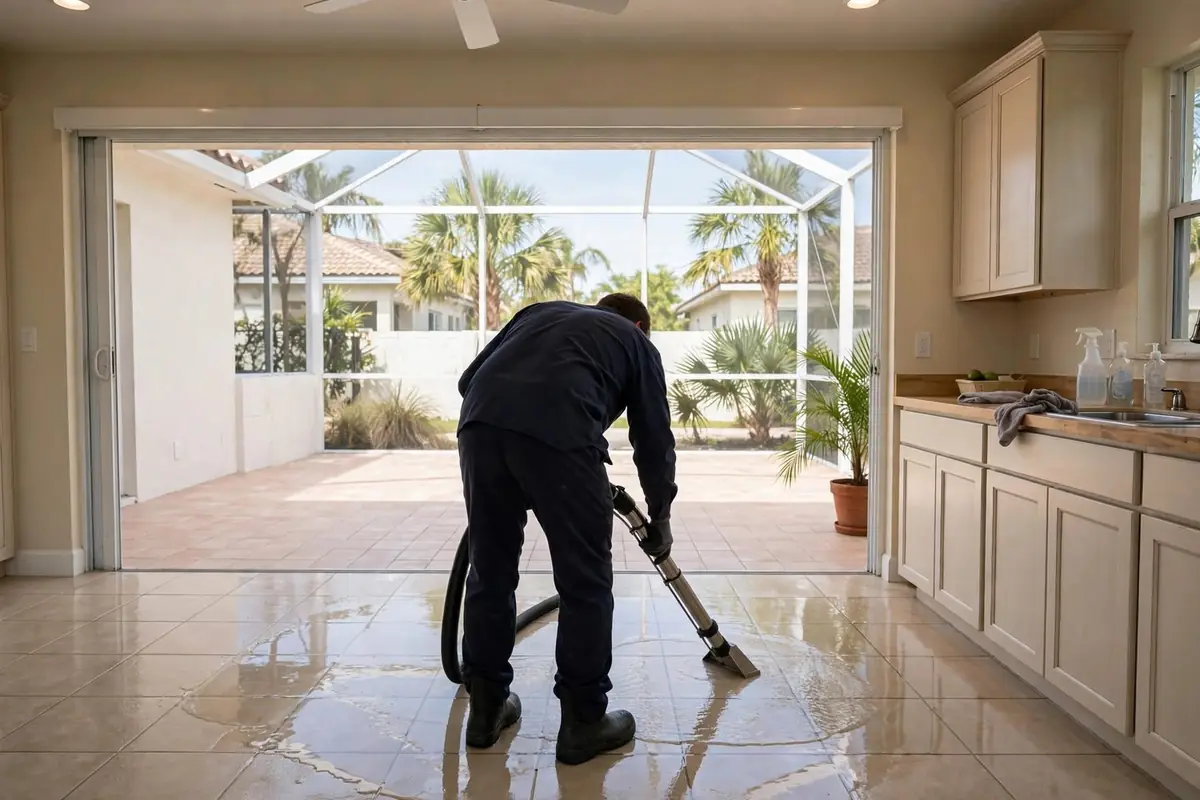
- Don't use a household vacuum on standing water.
- Photograph the water, the source and the damage before you move anything.
Know where your main shut-off is before you need it. In most local homes it's on the pipe where water enters the house, often near the front hose bib or in the garage; there's also a valve at the meter box by the street. If water came from outside (storm surge, rising flood water), don't go back in until officials say it's safe.
Hour 1–2: document before you clean
- Wide photos of each room, then close-ups of the water line, the source and damaged items.
- A short video walking through the house.
- Photos of model and serial labels on damaged appliances.
- Keep the broken part (the split hose, the failed fitting). Insurers may ask for it.
Hour 2–6: notice and first cleanup
Call your insurer or agent to report the loss and ask what they need. Under s. 627.70132, Florida Statutes, notice of a new or reopened property claim must be given within 1 year of the date of loss (18 months for a supplemental claim), but there's no reason to wait: reporting early keeps options open.
Meanwhile:
- Move furniture, rugs, electronics and papers off wet floors.
- Put foil or blocks under furniture legs that can't be moved.
- Remove small amounts of standing water with a wet/dry vacuum or mops.
- Hang up wet curtains and lift skirted furniture.
Hour 6–24: get drying started
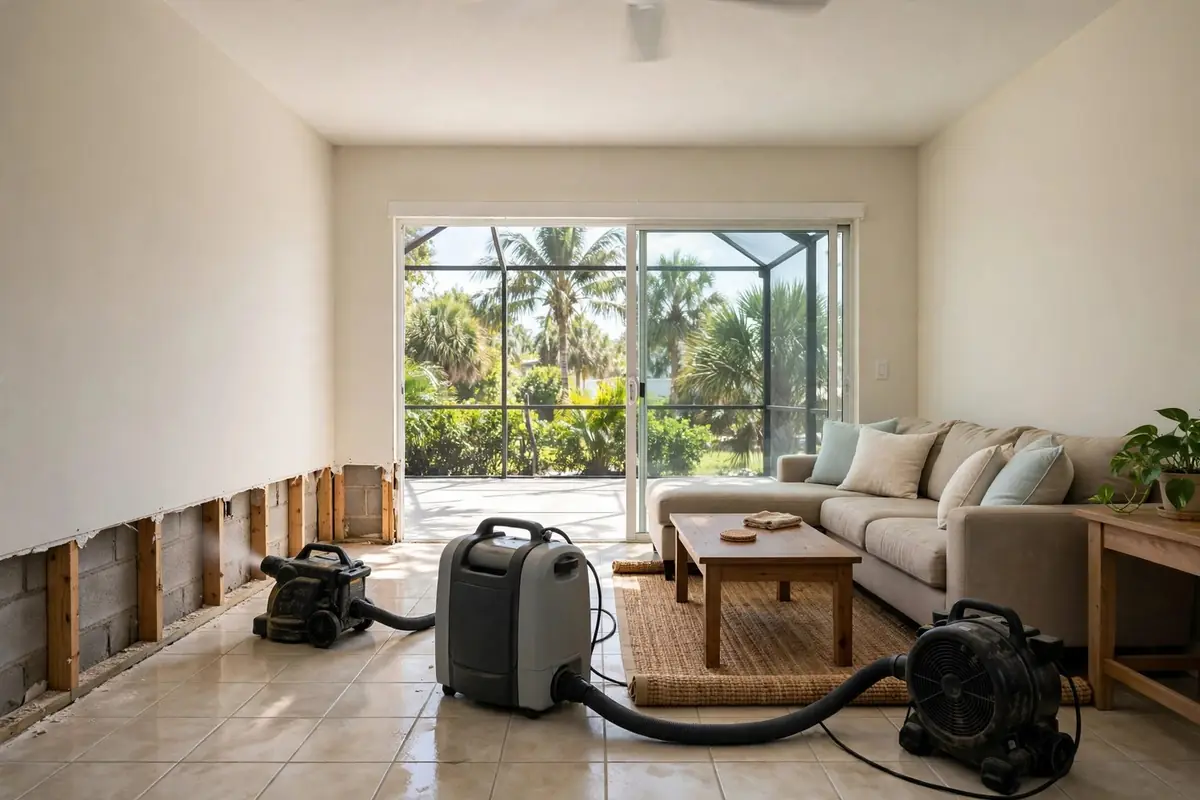
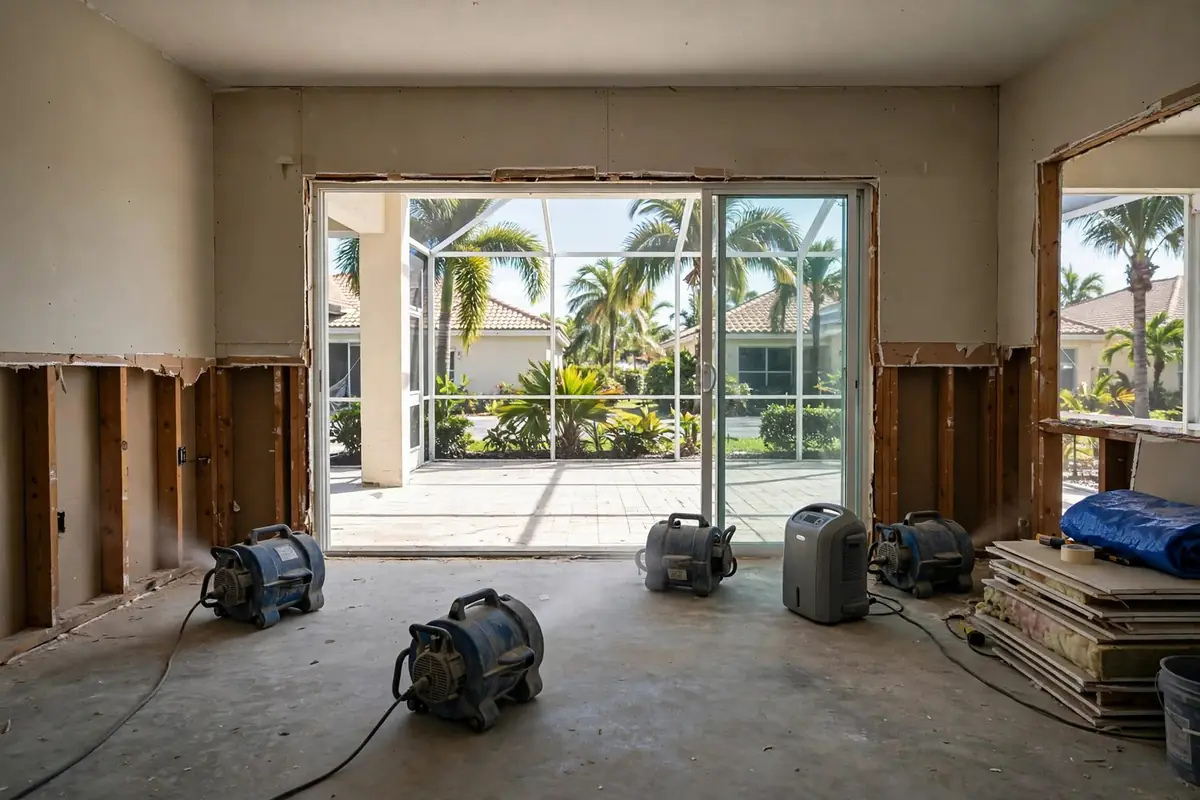
Professional drying uses extractors, air movers and dehumidifiers, with moisture readings to show progress. A reputable company will explain what has to come out (wet pad, swollen baseboards, the bottom of soaked drywall) and give the scope and price in writing before starting. Keep the AC running: in Florida's humidity, opening windows usually adds moisture instead of removing it.
Things to avoid on day one
- Don't use a household vacuum on water.
- Don't use ceiling fans or lights if the ceiling is wet.
- Don't sign anything you haven't read. Since 2023, post-loss insurance benefits under Florida residential policies can't be assigned to a contractor; see the assignment of benefits guide.
- Don't throw away damaged items before they're photographed, unless they're a health hazard.
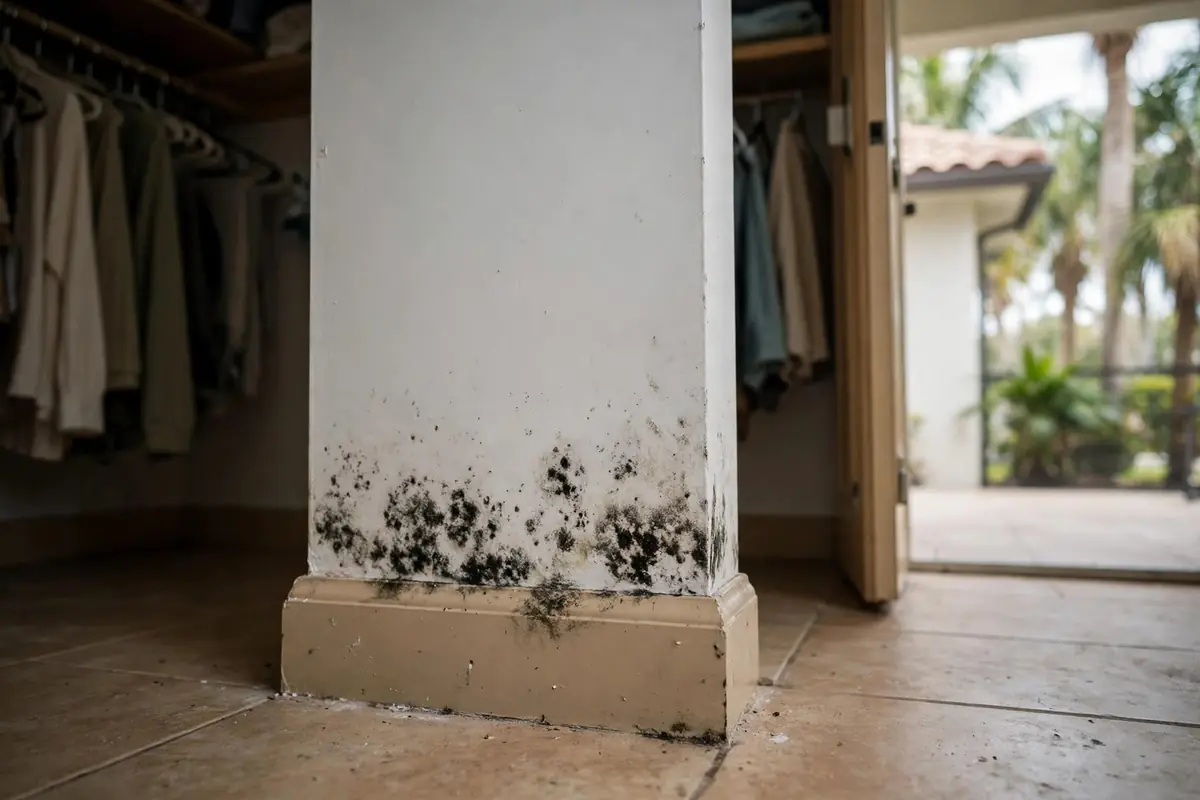
- Don't paint, patch or close up walls until readings say they're dry.
What changes when the water was contaminated
Clean water from a supply line is the simplest case. Water from a toilet with waste, a sewer backup, or flood and storm water from outside is contaminated: wear gloves and boots, keep children and pets away, and expect porous materials like carpet, pad and the bottom of drywall to be thrown out rather than dried. See storm and flood damage.
Sources
- U.S. EPA, A Brief Guide to Mold, Moisture and Your Home
- Florida Statutes, s. 627.70132: notice of property insurance claims
- Florida Statutes, s. 627.7152: assignment of post-loss benefits
- Florida Department of Health, Mold and your health
Last checked 2026-11-17 by the AMR Water & Mold editorial team. Editorial policy.