What mold needs
Mold needs four things: spores (always present indoors), food (paper, wood, dust, fabric), warmth, and moisture. Homes in south Sarasota County supply the first three year-round. A leak supplies the fourth. Remove the moisture fast enough and growth never gets going; leave it, and the clock starts.
The 24 to 48 hour window
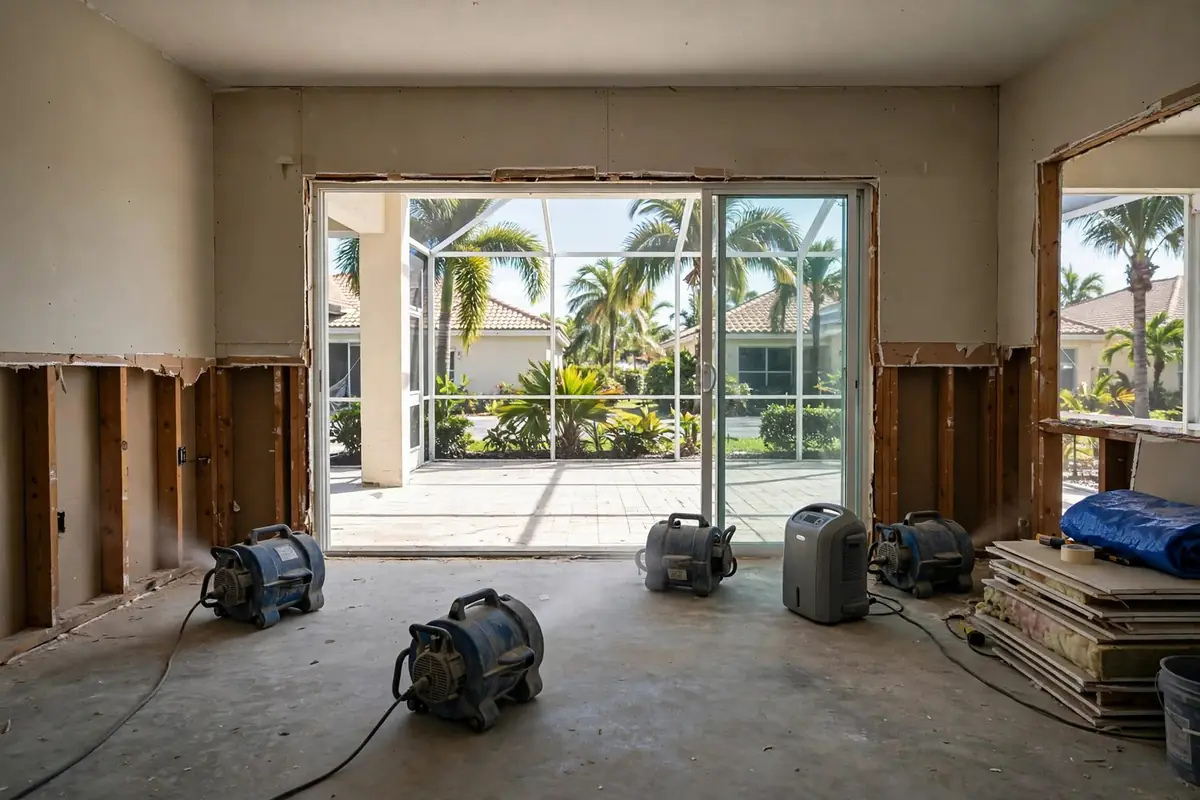
The EPA's guide to mold and moisture tells homeowners to dry water-damaged areas and items within 24 to 48 hours to prevent mold growth. That isn't a promise that nothing grows on hour 49. It's the point after which you should assume growth may have started on porous materials that are still wet.
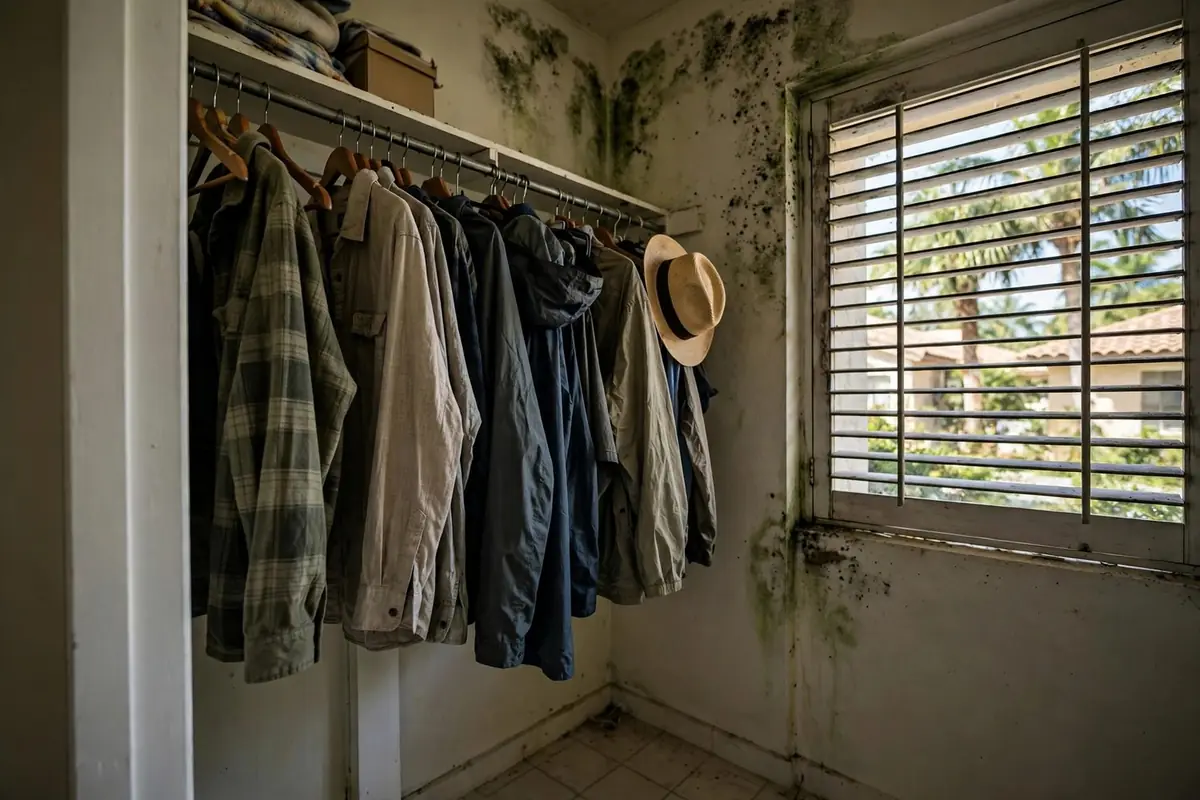
The Florida Department of Health recommends keeping indoor humidity under 60%. Above that, materials that got wet dry slowly, and surfaces that never got wet (closet walls, the backs of furniture against exterior walls) can grow mold on their own.
What grows mold first
| Fast | Slower | Rarely, if cleaned and dried |
|---|---|---|
| Drywall paper, carpet pad, cardboard boxes, ceiling tiles, insulation | Wood framing, cabinet bases (particleboard swells and fails first), upholstery | Tile, glass, metal, sealed concrete |
Particleboard cabinet bases and toe-kicks under sinks deserve a special look: they soak up water from below and often hide growth until the cabinet is pulled.
Signs it didn't dry in time
- A musty or earthy smell that wasn't there before.
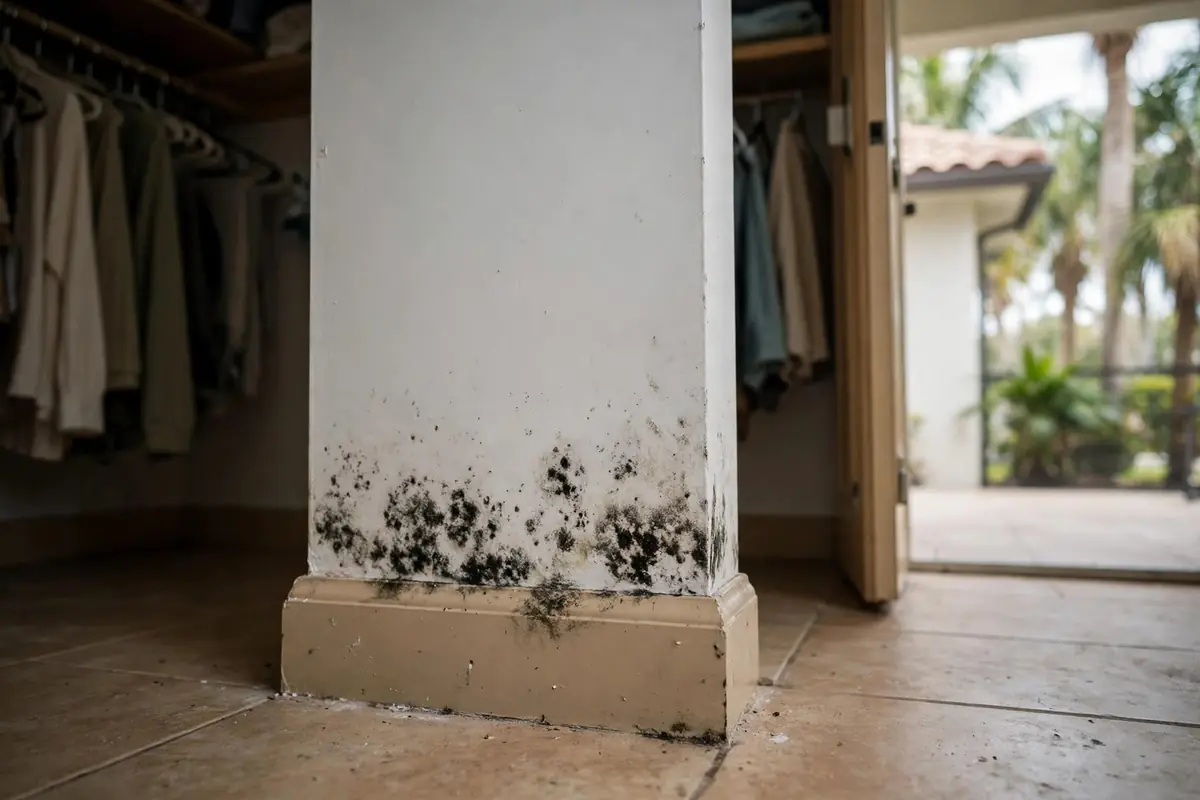
- Spots or staining at the bottom of walls or behind baseboards.
- Paint bubbling or peeling low on the wall.
- Moisture meter readings that stay high days later.
- Swollen, soft cabinet bases.
Seen any of these? The mold after a leak page covers next steps.
Florida homes that are most at risk
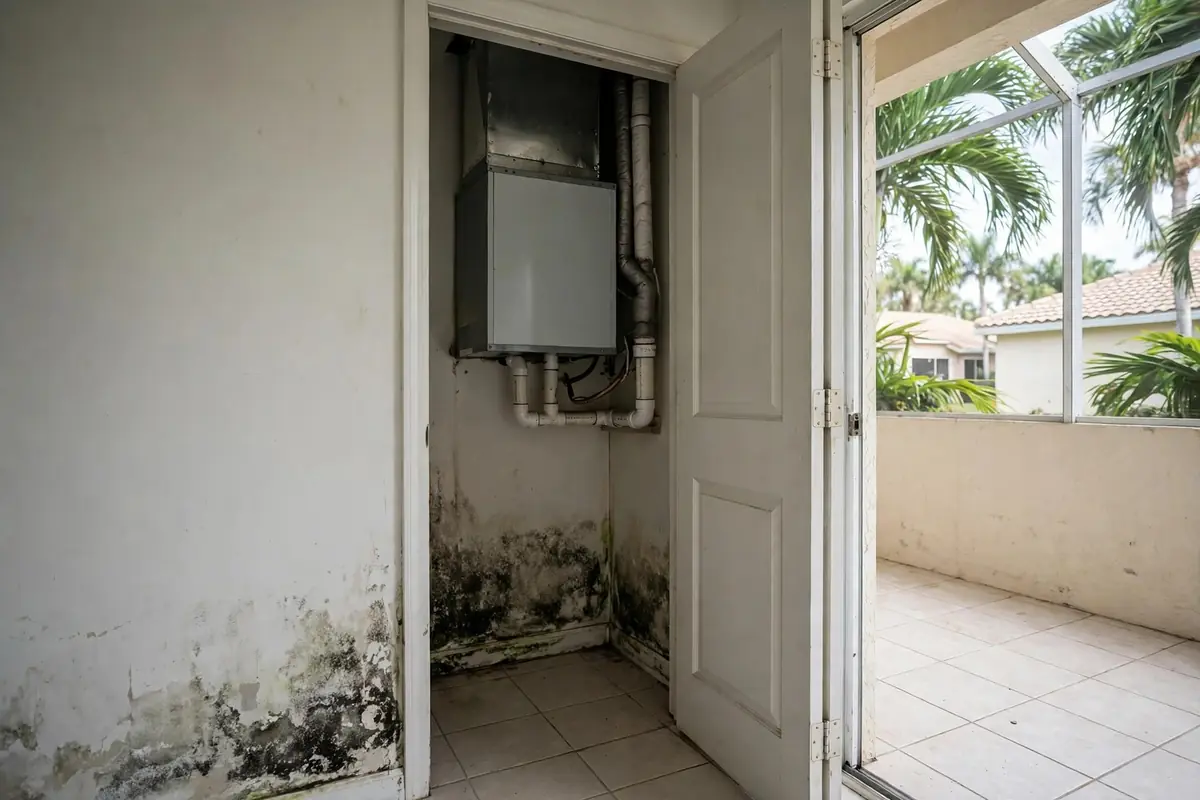
Closed-up seasonal homes, where the AC is off or set high for months, are the most common case: a small leak and summer humidity combine with nobody there to notice. Venice's median resident age is 69 and Englewood's is 68 (ACS), and both towns have many part-year residents. Homes with an air handler in an interior closet are another: an overflowing drain pan soaks the closet walls, which stay dark and warm.
When it's past do-it-yourself
The EPA says homeowners can usually handle mold cleanup of areas smaller than about 10 sq ft. In Florida, mold assessment and remediation of more than 10 sq ft of growth is licensed work under Chapter 468, Part XVI. If the area is larger, inside walls, or in the HVAC system, get a licensed professional. See mold removal.
Sources
- U.S. EPA, A Brief Guide to Mold, Moisture and Your Home
- Florida Department of Health, Mold and your health
- U.S. Census Bureau, American Community Survey 2020–2024 5-year (tables B11001, B25035, B25003, B25024, B25034, B01002), via Census Reporter
- Florida Statutes, Chapter 468 Part XVI: Mold-Related Services (s. 468.8411 definitions)
Last checked 2026-11-17 by the AMR Water & Mold editorial team. Editorial policy.