When a mold license is required
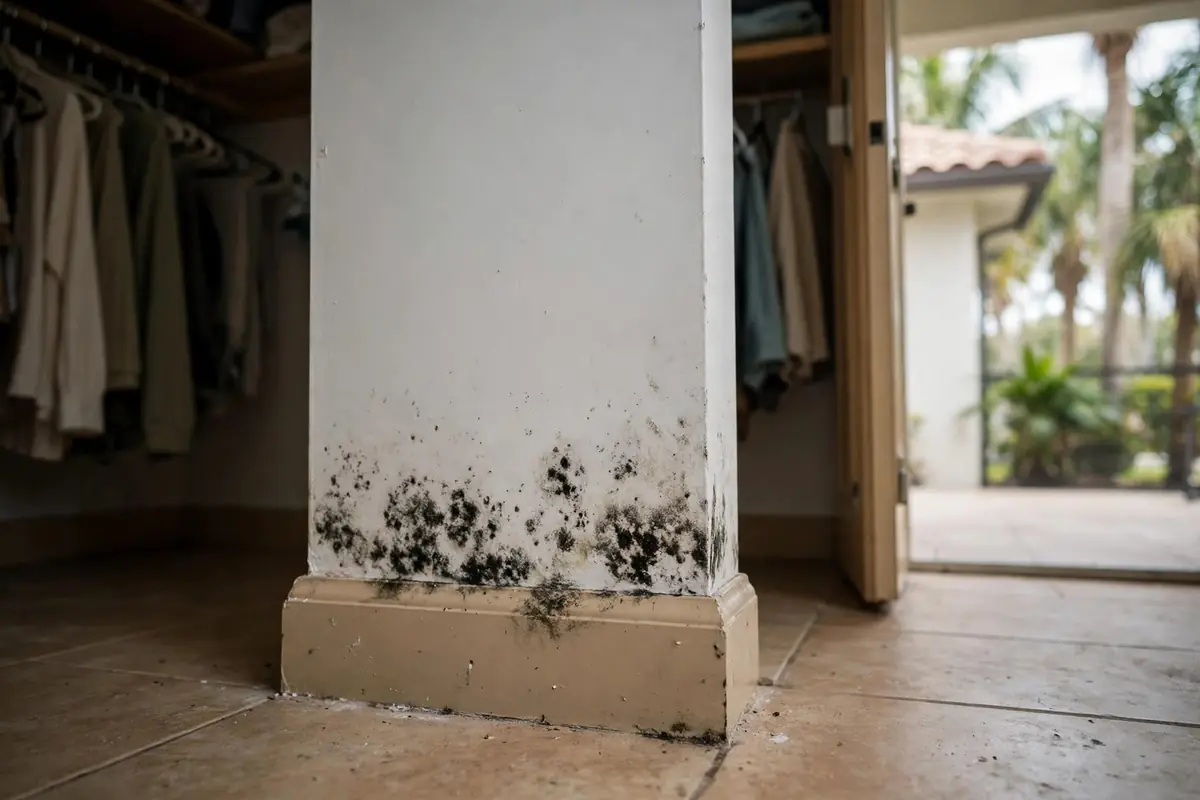
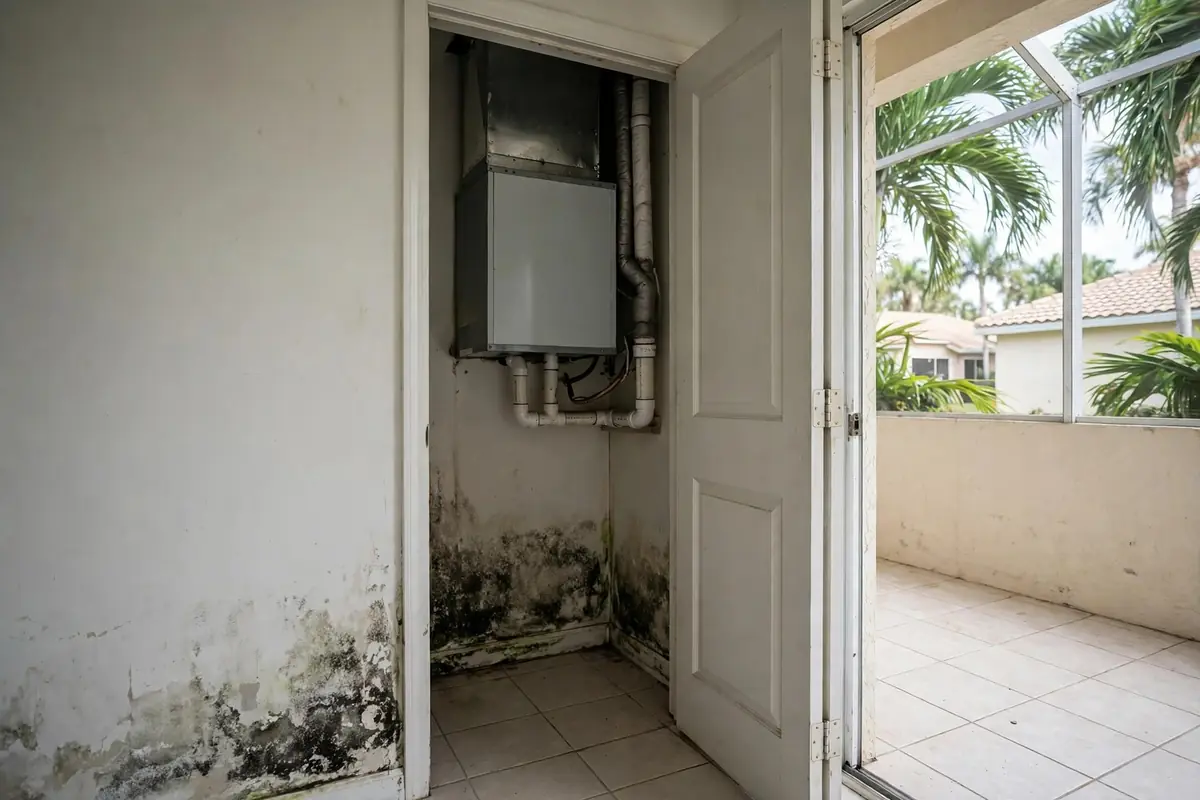
Section 468.8411 defines mold assessment and mold remediation as work on mold growth covering more than 10 sq ft. Below that, no mold license is required, though general contracting rules still apply. Work that needs a construction license under Chapter 489 (for example, rebuilding walls) still needs that license too.
Section 468.8419 makes it illegal to use the titles "mold assessor" or "mold remediator" without a license.
Assessor vs remediator
| Mold assessor | Mold remediator | |
|---|---|---|
| What they do | Inspects, samples and writes a protocol for removal | Removes, cleans and contains mold following a protocol |
| Insurance required by statute | General liability plus errors and omissions | General liability that covers mold claims |
| Conflict rule | Neither may do the other job on the same structure within 12 months (s. 468.8419) | |
The conflict rule exists so the person who finds the problem isn't also paid to fix it. Section 468.8419(1)(d) bars an assessor, or their company, from remediating a structure they assessed in the previous 12 months, with a narrow exception for certain certified contractors who disclose the homeowner's right to competitive bids. Section 468.8419(2)(d) bars the reverse.
How to look up a license
- Ask the company for the full name and license number of the person who will hold the license for your job. DBPR licenses individuals, not companies.
- Open the DBPR "Search for a Licensee" page.
- Search by name or license number. Choose the mold-related services board if a filter is offered.
- Check that the status is current and active, the name matches, and there's no discipline you're uncomfortable with.
- Save a screenshot with the date.
Other questions worth asking
- Who will be on site, and is the licensed person supervising?
- Will there be a written protocol and scope before work starts?
- How will the work area be contained, and how will they protect the rest of the house?
- What happens if more mold is found behind the wall?
- Will there be clearance testing, and by whom? (An independent assessor avoids the conflict above.)
- Can they provide a certificate of insurance?
The FTC's general advice on hiring a contractor also applies: get it in writing, don't pay everything up front, and check references.
Where this site fits
AMR Water & Mold is a referral service. It is not a mold assessor, not a mold remediator and not a contractor. The phone line connects callers with participating independent local companies, and homeowners should check each company's licenses and insurance before work starts, using the steps above.
Sources
- Florida Statutes, Chapter 468 Part XVI: Mold-Related Services (s. 468.8411 definitions)
- Florida Statutes, s. 468.8419: prohibitions (use of the titles mold assessor and mold remediator)
- Florida DBPR, Search for a Licensee
- FTC consumer advice: hiring a contractor
Last checked 2026-11-17 by the AMR Water & Mold editorial team. Editorial policy.