Why mold shows up in Venice homes
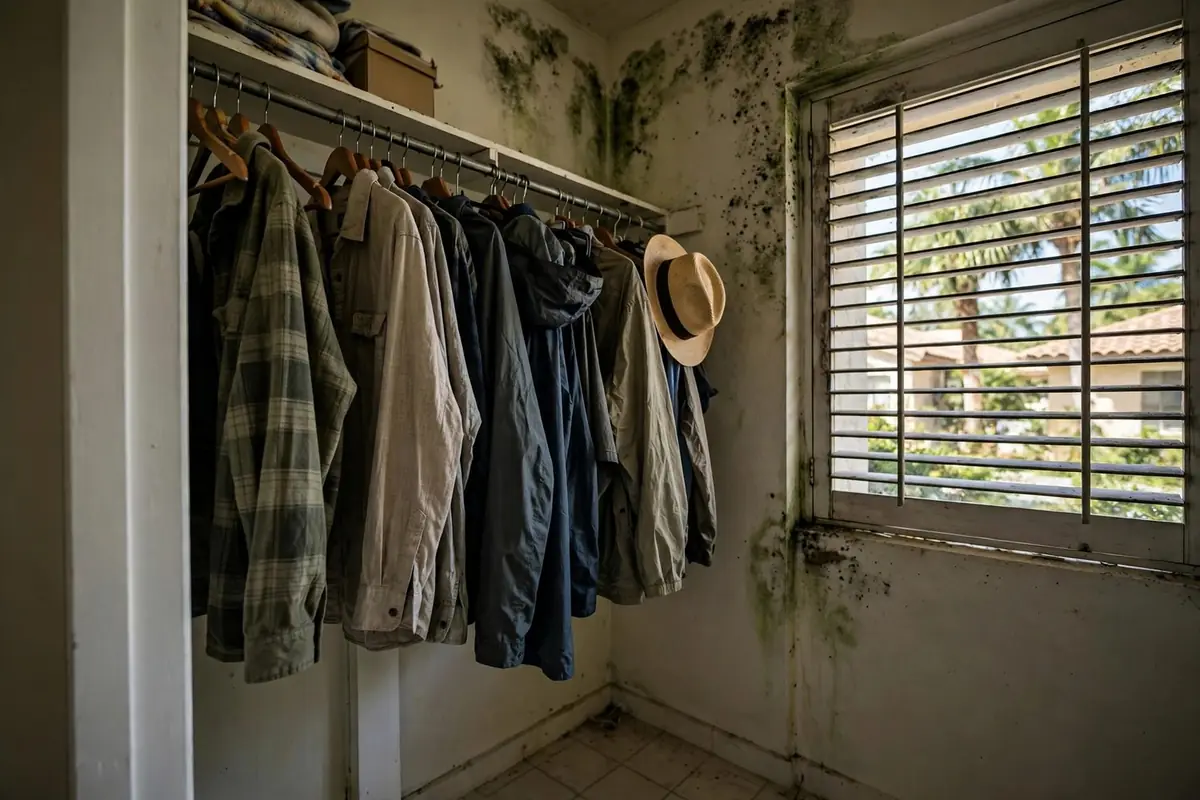
- Closed-up seasonal homes. With about 4,700 seasonally vacant homes in the city (Census ACS), many sit for months with the AC set high or off. The Florida Department of Health recommends keeping indoor humidity below 60%.
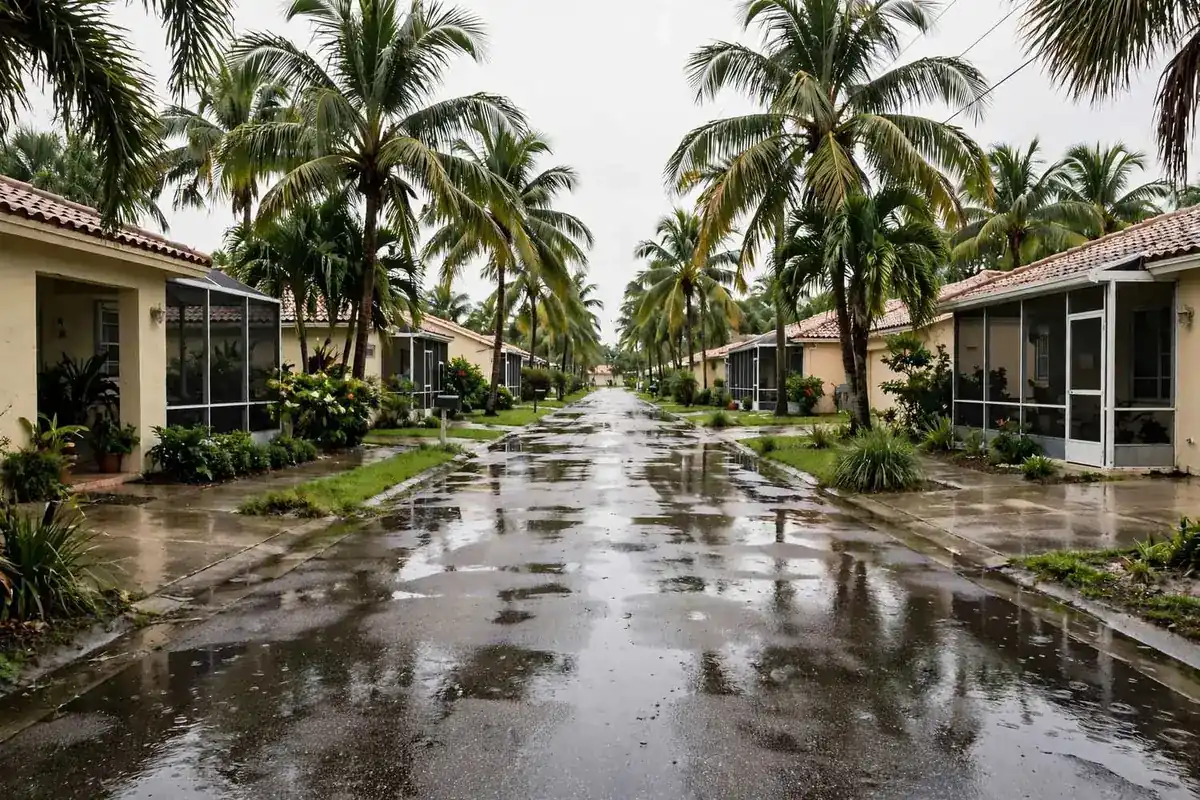
- Wet-season humidity. June to September brings about 60% of Venice's 51.27 inches of yearly rain (NOAA normals), and the air stays humid.
- Older homes. 41.7% of the city's homes were built before 1980, many with original windows and repaired plumbing.
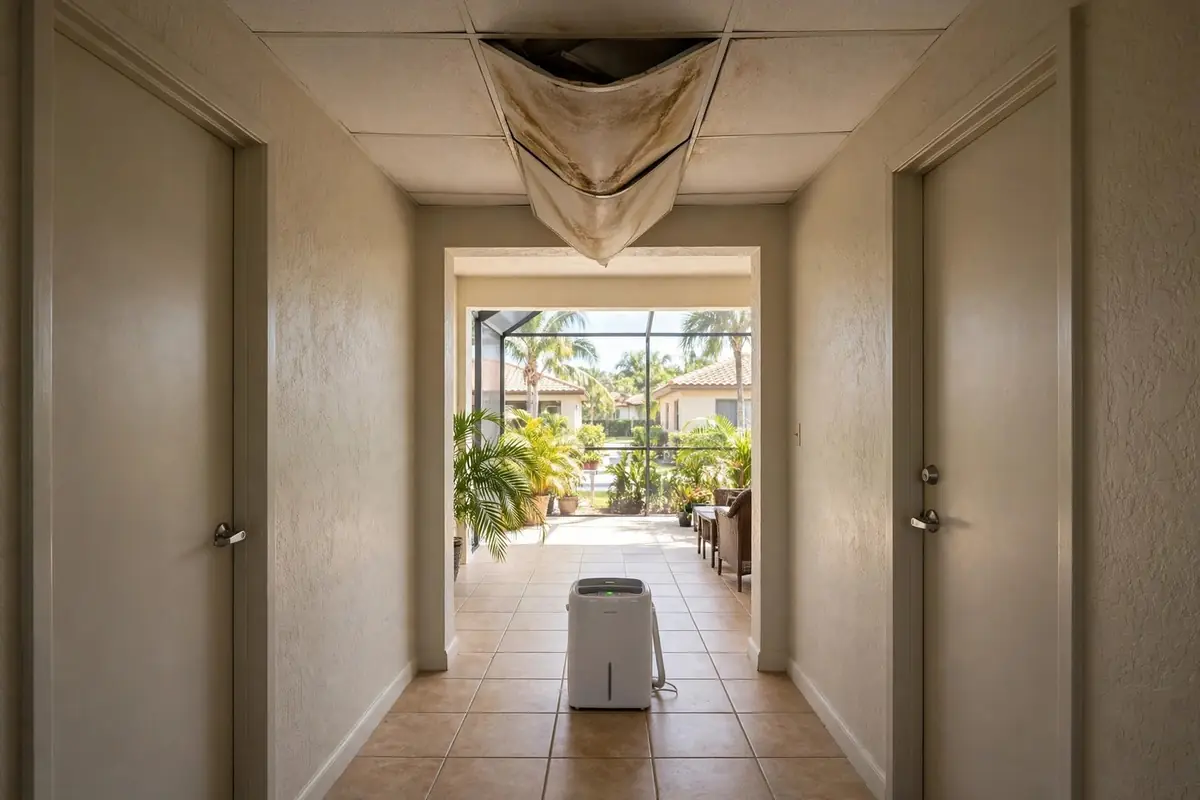
- AC closets and attic air handlers where condensate pans overflow.
- After the 2024 storms. Homes that took on surge or roof water from Helene and Milton and weren't fully dried can grow mold months later.
Coming back to mold after the summer
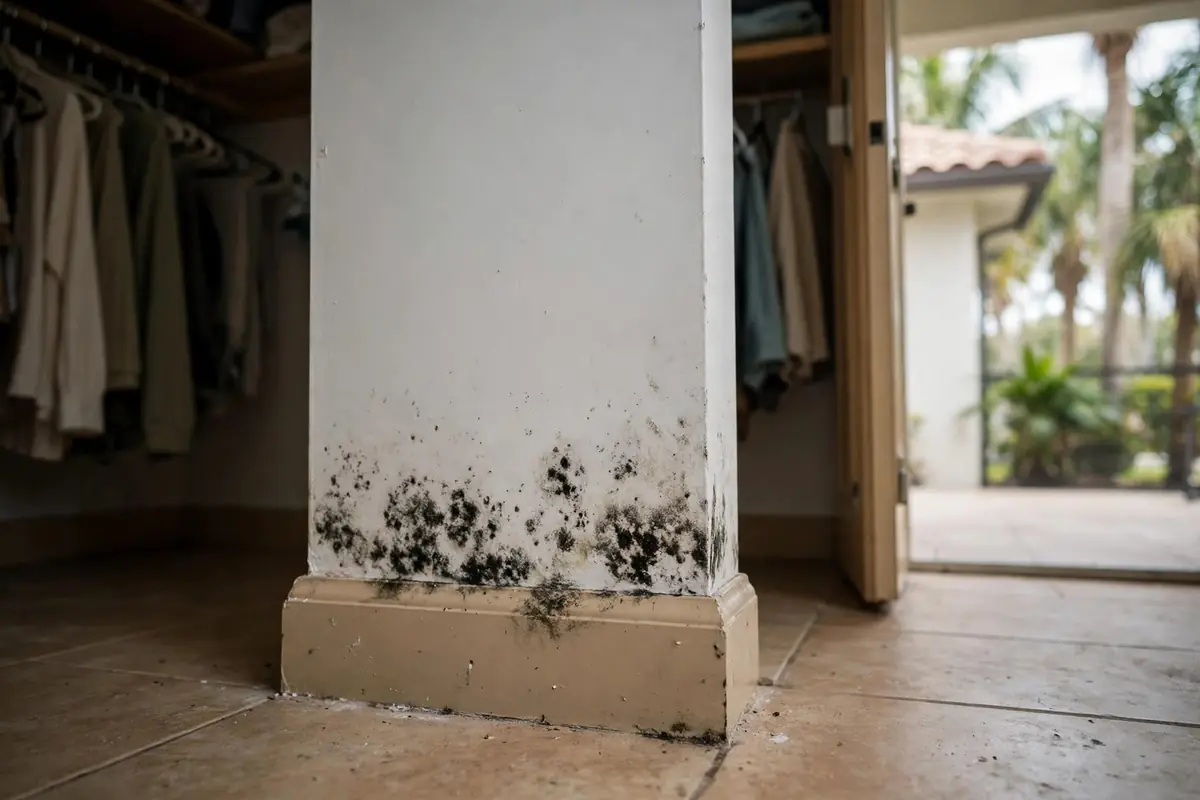
If you open the house and smell mold or see it on walls, furniture or clothing:
- Open windows and run the AC to start lowering humidity.
- Look for a water source: under sinks, around toilets, at the AC closet and the ceiling under the air handler.
- Photograph everything before cleaning.
- Don't run a household vacuum or a fan across moldy areas. It spreads spores.
- If the growth is larger than about 3 ft by 3 ft, or in more than one room, call a professional.
Florida's mold license rules
Mold assessment and remediation of more than 10 square feet is licensed in Florida under Chapter 468, Part XVI. DBPR licenses individuals, so ask for the license number of the person doing the work and check it on the DBPR site. An assessor generally can't remediate a building it assessed within 12 months, and a remediator can't assess one it remediated (s. 468.8419). Some Venice homeowners hire an independent assessor to write the plan and confirm clearance. AMR Water & Mold is a referral service, not a mold assessor or remediator.
Mold in Venice condos
16.8% of Venice homes are in buildings with 20 or more units (Census ACS). Mold in a condo often starts from a neighbor's leak or a shared wall, and remediation may need the association's approval and access to the unit next door. Check who is responsible in the association documents before work starts, and tell the manager.
How mold removal usually works
- Moisture source found and fixed.
- Containment with plastic and HEPA negative air.
- Removal of moldy drywall, insulation and carpet pad.
- Cleaning and HEPA vacuuming of framing and hard surfaces.
- Drying, then rebuilding.
- Optional clearance check by an independent assessor.
Before you hire
- Proof of liability insurance and workers' compensation.
- For mold over about 10 square feet: the Florida mold remediator license number of the person doing the work, checked on the DBPR licensee search.
- A written scope and price before work starts.
- Moisture readings and photos you can give your insurer.
Sources
- U.S. Census Bureau, American Community Survey 2020–2024 5-year (tables B11001, B25035, B25003, B25024, B25034, B01002), via Census Reporter
- NOAA NCEI, U.S. Climate Normals 1991–2020, station Venice, FL (USC00089176)
- Florida Department of Health, Mold and your health
- U.S. EPA, A Brief Guide to Mold, Moisture and Your Home
- Florida Statutes, Chapter 468 Part XVI: Mold-Related Services (s. 468.8411 definitions)
- Florida Statutes, s. 468.8419: prohibitions (use of the titles mold assessor and mold remediator)
- Florida DBPR, Search for a Licensee
Last checked 2026-11-16 by the AMR Water & Mold editorial team. Editorial policy.