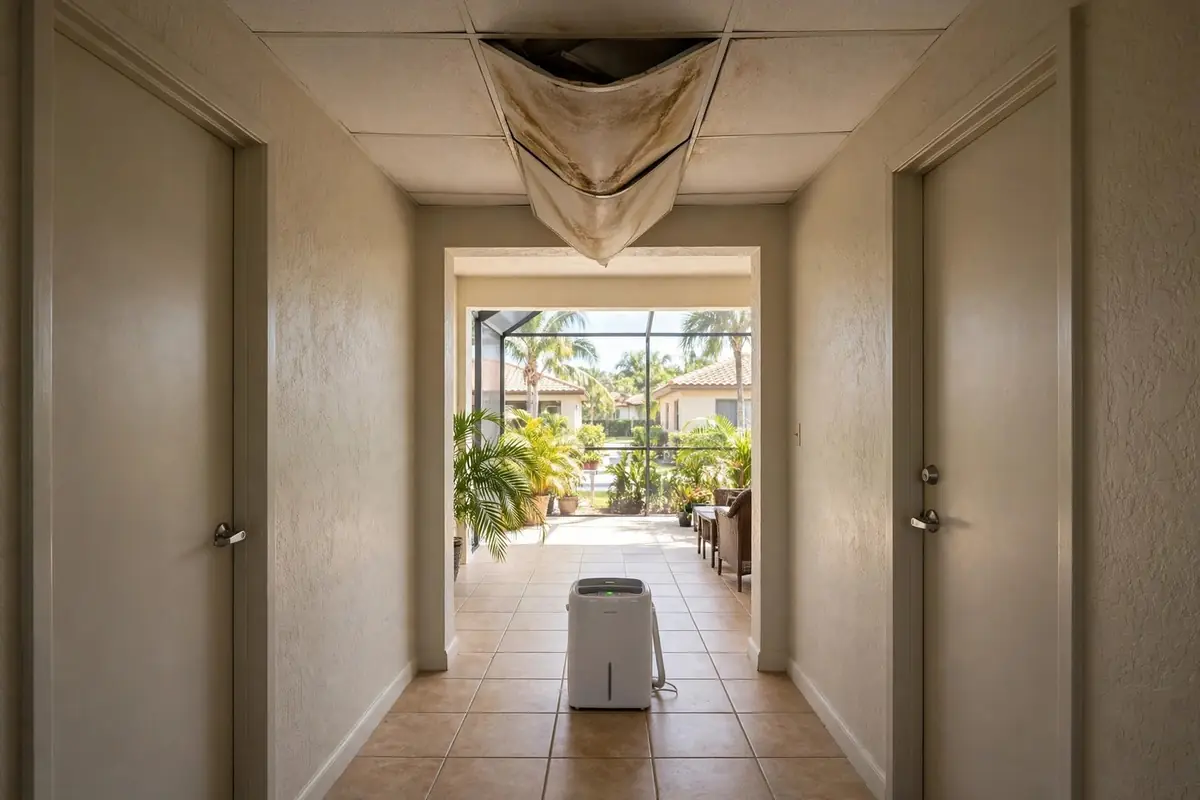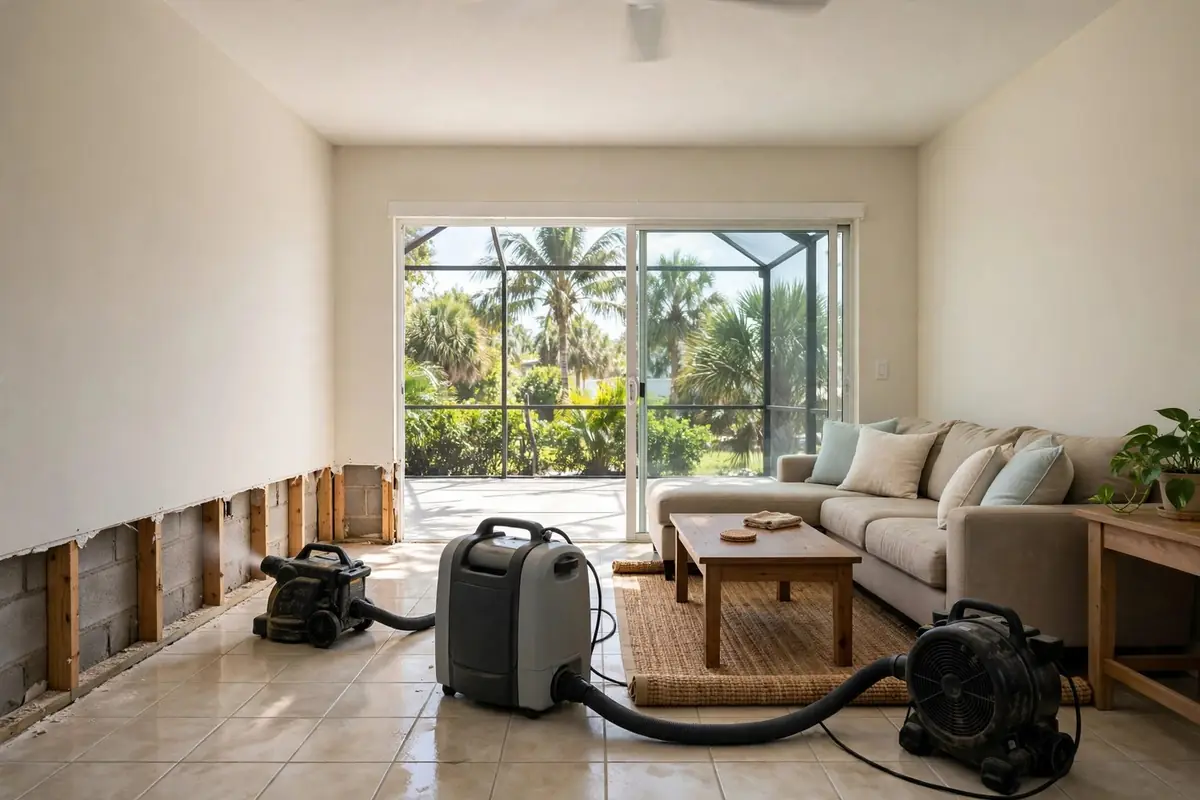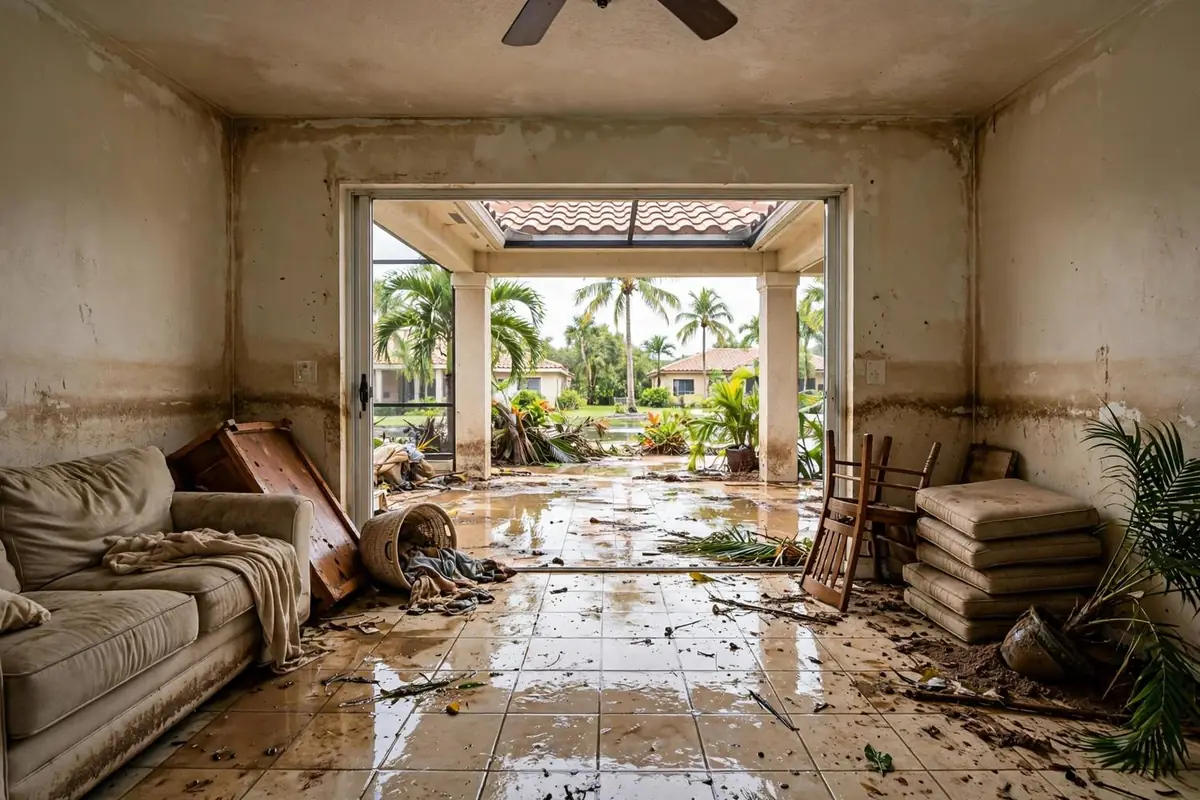
Inside the house, right now
- Buckets and towels under every drip. Tarps or plastic over furniture you can't move.
- Turn off breakers for any ceiling lights or fans near the leak, from a dry spot.
- If a ceiling is bulging, keep everyone out of that room.
- If you can safely get into the attic, put a container under the drip and pull soaked insulation away from the ceiling drywall.
- Photograph and video the ceiling, the attic and the outside of the roof from the ground.
Getting the roof covered
Don't go on the roof during or right after a storm. Tile and metal roofs are slippery when wet, and many local roofs are tile. A roofer or restoration company can install a tarp to stop further water while the repair is scheduled. Keep receipts; reasonable emergency repairs to prevent more damage are usually part of a claim. After a major storm, roofers are booked out, so get on a list early.
Why storm leaks show up days later
Water can sit in attic insulation or travel along a rafter before it reaches drywall. A stain that appears two days after the storm is still storm damage. About 60% of Venice's yearly rain falls from June to September (NOAA normals), and repeated heavy afternoon storms keep feeding a small leak that wasn't fixed. Note the date of the storm in your records.
Drying the inside
Wet attic insulation usually gets removed, because it holds water against the ceiling. Ceiling drywall is dried or replaced depending on how wet and how soft it is. Walls below the leak are checked for water running down inside the cavity. After a hurricane, the same steps apply, but if surge or flood water came in from outside, it's treated as contaminated. See storm and flood damage.
Insurance basics
Wind-driven rain through a damaged roof is usually a homeowners claim; rising water from outside is flood, covered only by flood insurance. Under s. 627.70132, Florida Statutes, notice of a new or reopened property claim must be given within 1 year of the date of loss, so report storm damage promptly and keep every photo and receipt. The water damage vs flood guide explains the difference.
Sources
- NOAA NCEI, U.S. Climate Normals 1991–2020, station Venice, FL (USC00089176)
- National Hurricane Center, Tropical Cyclone Report: Hurricane Ian (AL092022)
- National Hurricane Center, Tropical Cyclone Report: Hurricane Milton (AL142024)
- Florida Statutes, s. 627.70132: notice of property insurance claims
Last checked 2026-11-17 by the AMR Water & Mold editorial team. Editorial policy.