The usual split
| What happened | Usually |
|---|---|
| Burst or split supply line, failed water heater, washer hose | Homeowners policy (sudden and accidental discharge) |
| Slow leak over weeks or months | Often excluded or limited |
| Wind tears off roof covering, rain gets in | Homeowners policy (wind/hurricane, with the hurricane deductible) |
| Storm surge, rising water, overflowing canal or pond | Flood policy only |
| Sewer or drain backup | Often needs a specific endorsement |
| Mold | Usually limited, and tied to a covered water loss |
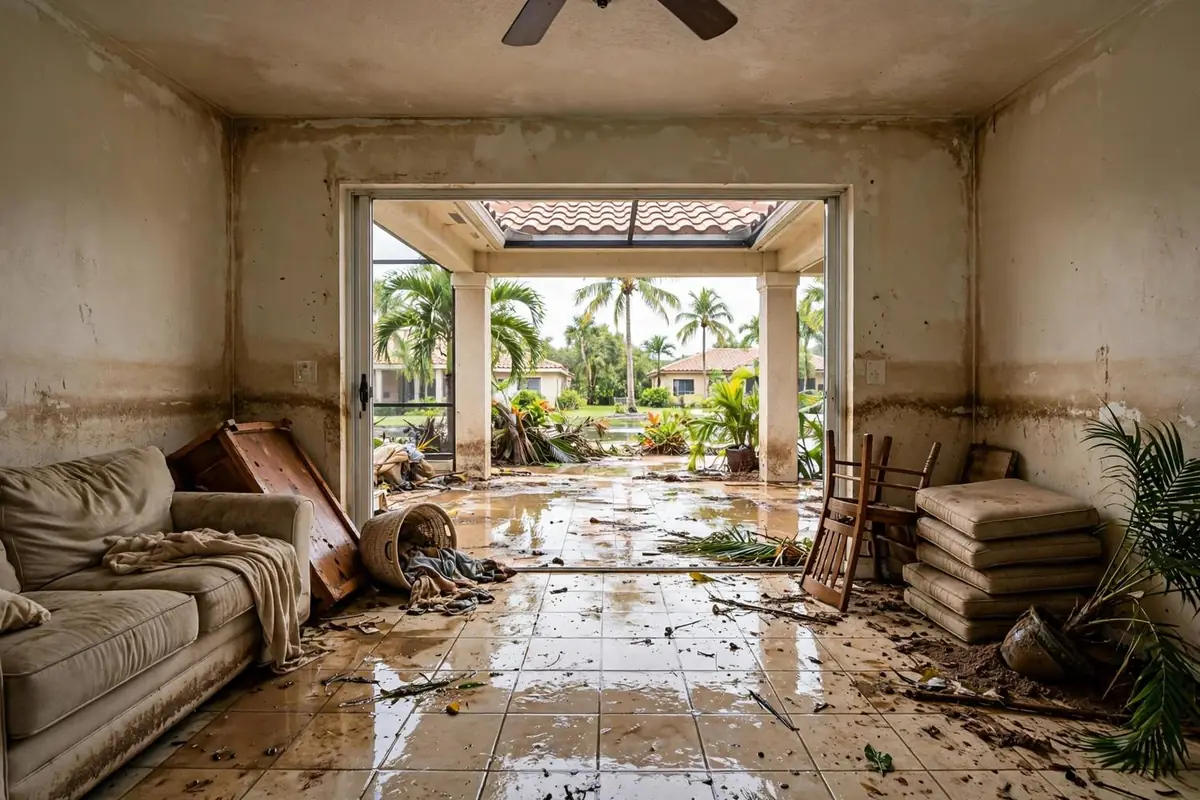
The same storm can produce both: wind damage to the roof under the homeowners policy and surge damage on the ground floor under the flood policy. Document them separately.
Flood insurance basics
FEMA notes that most homeowners policies don't cover flood damage. The National Flood Insurance Program (NFIP) sells flood policies through insurance agents, and private flood insurers also write coverage in Florida. A new NFIP policy typically has a 30-day waiting period before it takes effect, with some exceptions (for example, when coverage is required for a loan or after a flood map change). That means buying a policy when a storm is already forecast usually doesn't help for that storm.
Flood policies split building and contents coverage, and coverage below the lowest elevated floor of an elevated home is limited. Check the details in your policy's summary of coverage.
Flood zones changed in 2024
New FEMA flood maps for Sarasota County took effect on March 27, 2024, replacing the 2016 maps. Some properties moved into or out of special flood hazard areas, and a Coastal A Zone was added. Look up your address on the county's flood map tool. Being outside a high-risk zone doesn't mean a home can't flood: Ian, Helene and Milton flooded homes across the region.
Deadlines to know
Under s. 627.70132, Florida Statutes, notice of a new or reopened claim under a residential property policy must be given within 1 year of the date of loss, and a supplemental claim within 18 months. Flood policies have their own proof-of-loss deadlines, set in the policy. Report early either way.
Practical steps after water gets in
- Photograph the water line on walls and the source (the pipe, the roof, the street).
- Note the date and the weather. Save NWS warnings or news reports for storm events.
- Report to your homeowners insurer, and to your flood insurer if water came from outside.
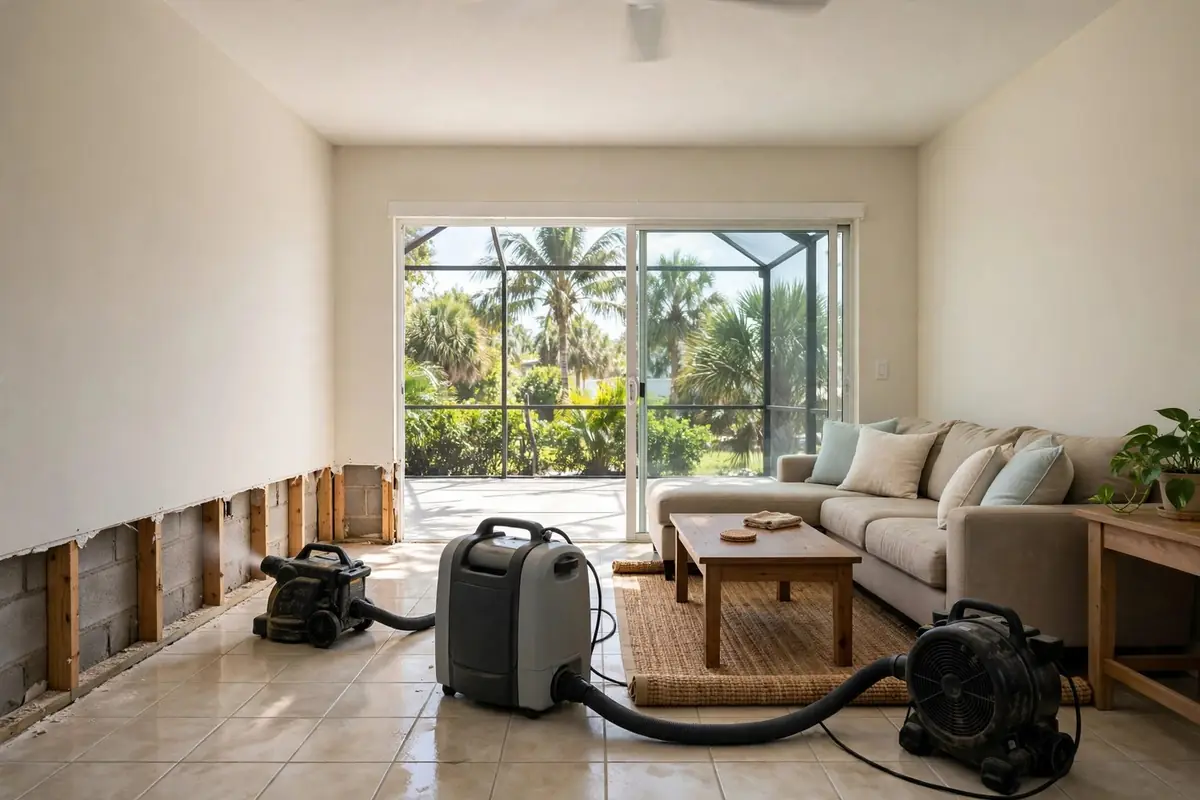
- Take reasonable steps to prevent more damage: stopping the water and starting drying. Keep receipts.
- Ask each adjuster which damage they're treating as theirs.
This guide is general information, not legal or insurance advice. Policies differ; read yours and ask your agent or an attorney about your situation.
Sources
- FEMA, Flood insurance (National Flood Insurance Program)
- Sarasota County, new FEMA flood maps effective March 27, 2024
- Florida Statutes, s. 627.70132: notice of property insurance claims
- National Hurricane Center, Tropical Cyclone Report: Hurricane Ian (AL092022)
- National Hurricane Center, Tropical Cyclone Report: Hurricane Milton (AL142024)
Last checked 2026-11-17 by the AMR Water & Mold editorial team. Editorial policy.