The signs
- A water bill that jumps without a change in use.
- A warm or hot patch on tile or under bare feet (a leaking hot-water line).
- Damp carpet, cupping wood or lifting vinyl plank with no obvious source.
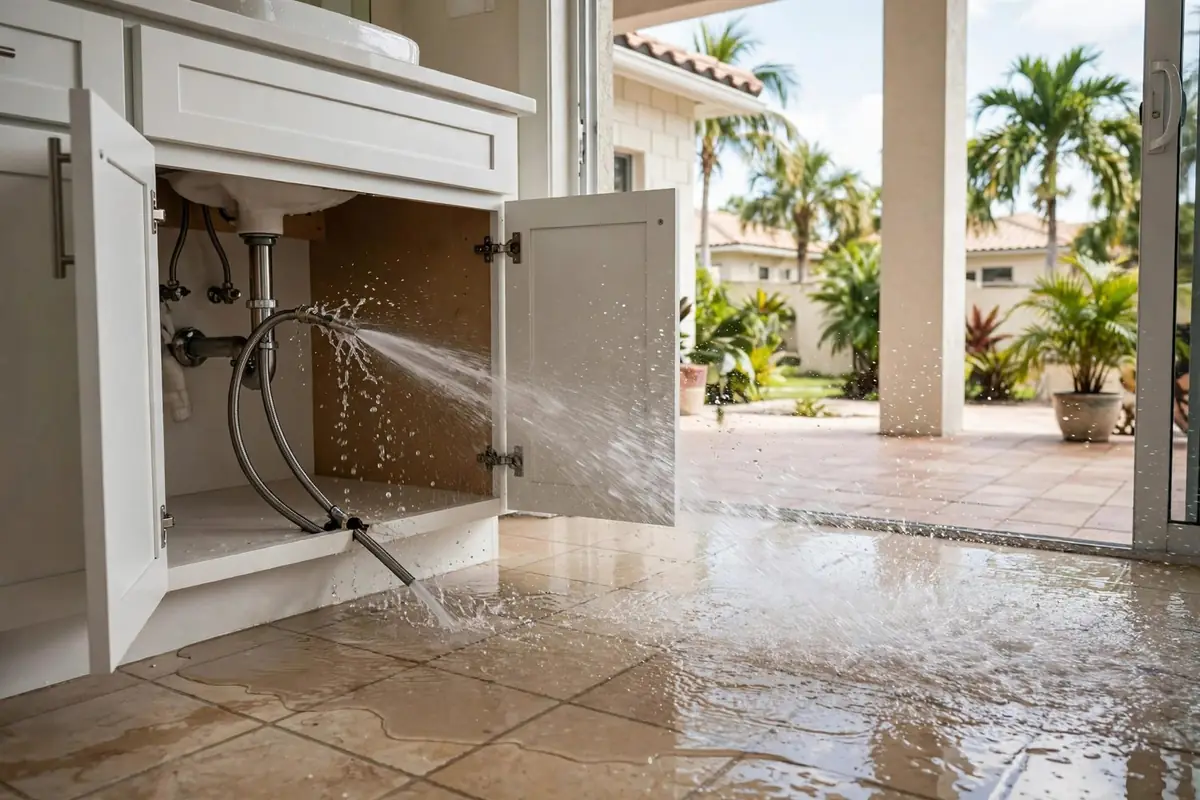
- The sound of running water when nothing is on.
- A water heater that runs constantly.
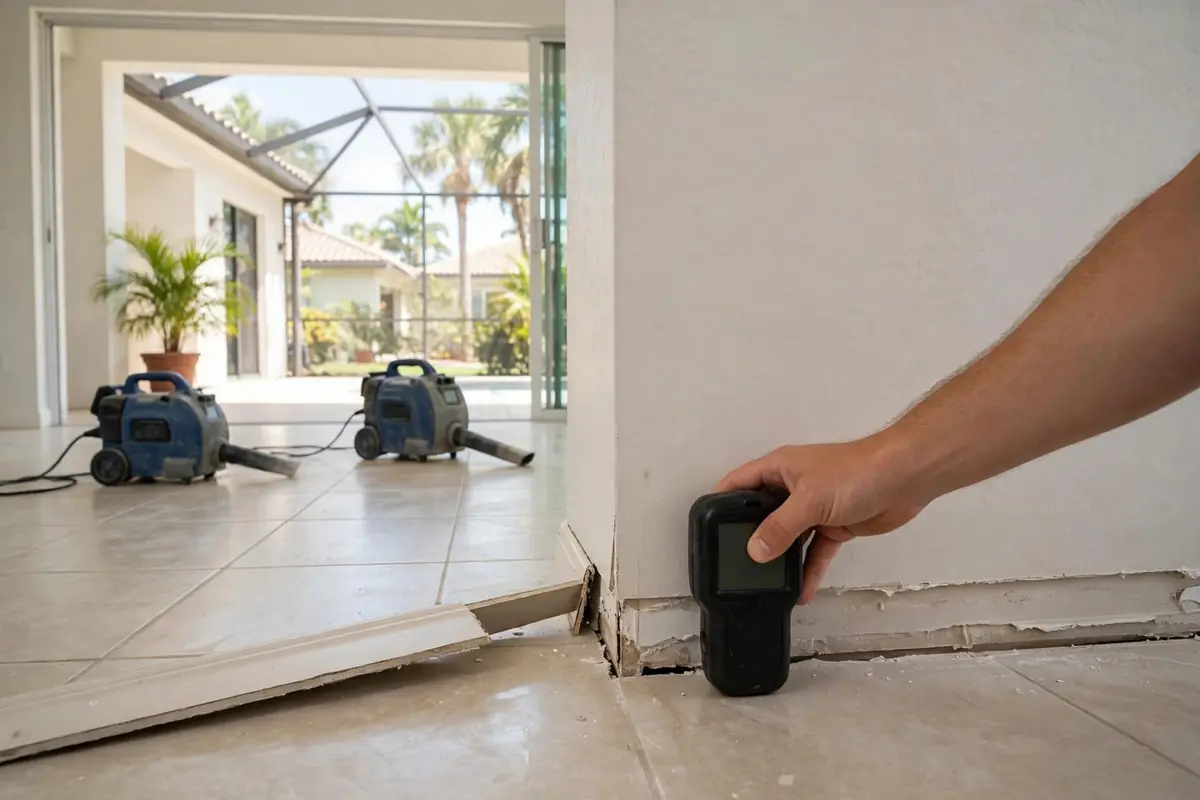
- New cracks in tile or the slab, or mildew along the base of a wall.
The water meter test
- Turn off every faucet, appliance, the ice maker and irrigation.
- Find the meter (usually in a box near the street) and note the reading, or watch the small triangle or star-shaped leak indicator.
- Wait 30 minutes to an hour without using water.
- If the reading changed or the indicator moved, water is leaking somewhere.
- Shut the main valve at the house and check again. If the meter still moves, the leak is between the meter and the house (the service line). If it stops, the leak is inside the house or under the slab.
Toilets are the most common hidden leak; drop food coloring in the tank and see if it shows in the bowl within 15 minutes before blaming the slab.
Your utility can help read the meter: City of Venice Utilities (941) 480-3333, North Port Utilities (941) 240-8000, or Sarasota County Public Utilities in unincorporated areas.
Finding and fixing it
A plumber with leak detection equipment (acoustic listening, pressure tests, thermal imaging) pinpoints the leak. The fix is either a spot repair through the slab or rerouting the line through the walls or attic, which avoids breaking the floor. Plumbing repairs like these generally need a permit.
The water damage side
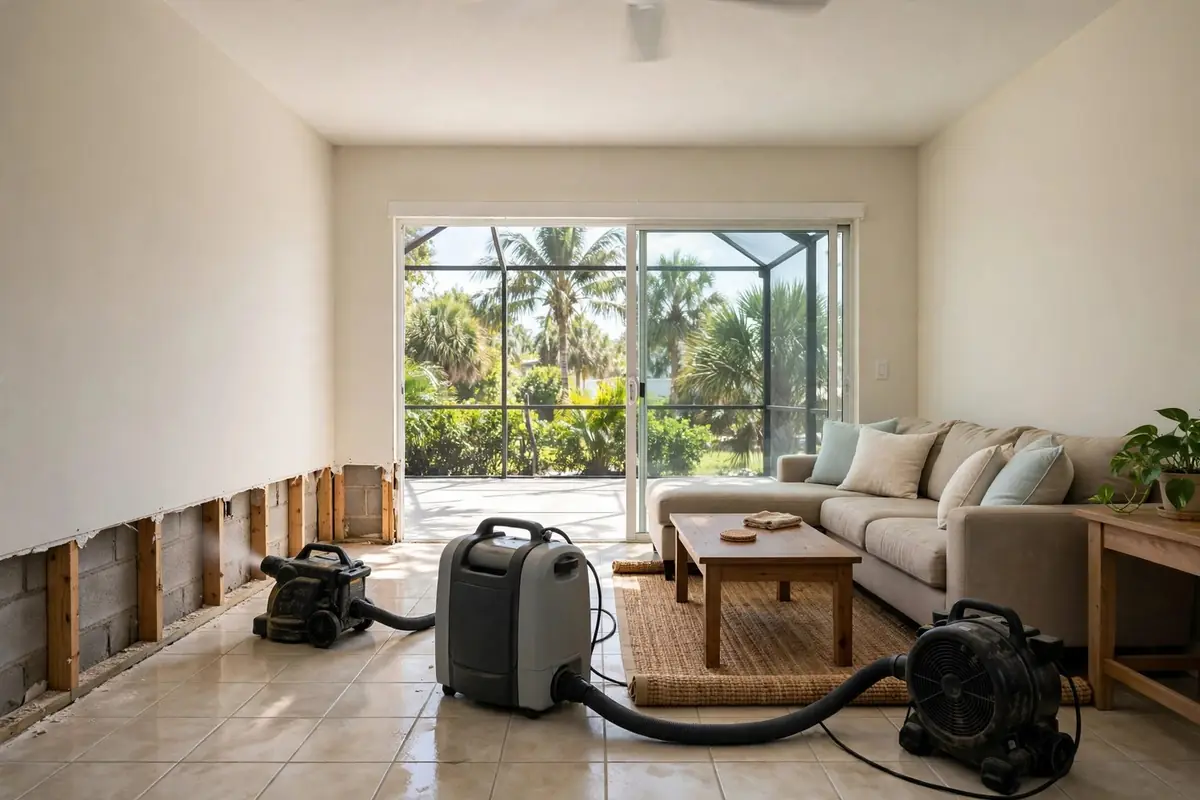
Water from a slab leak comes up through the floor, so it soaks carpet pad, the underside of laminate and plank, and the bottom of walls. The flooring often has to come up for drying, and baseboards and drywall get checked. Ask the plumber and the restoration company to coordinate so the floor is opened once.
Sources
- City of Venice Utilities
- City of North Port, Utilities Department
- Sarasota County Public Utilities: water
- Sarasota County, Planning and Development Services: Building
Last checked 2026-11-17 by the AMR Water & Mold editorial team. Editorial policy.