Surge in a canal home: what comes out
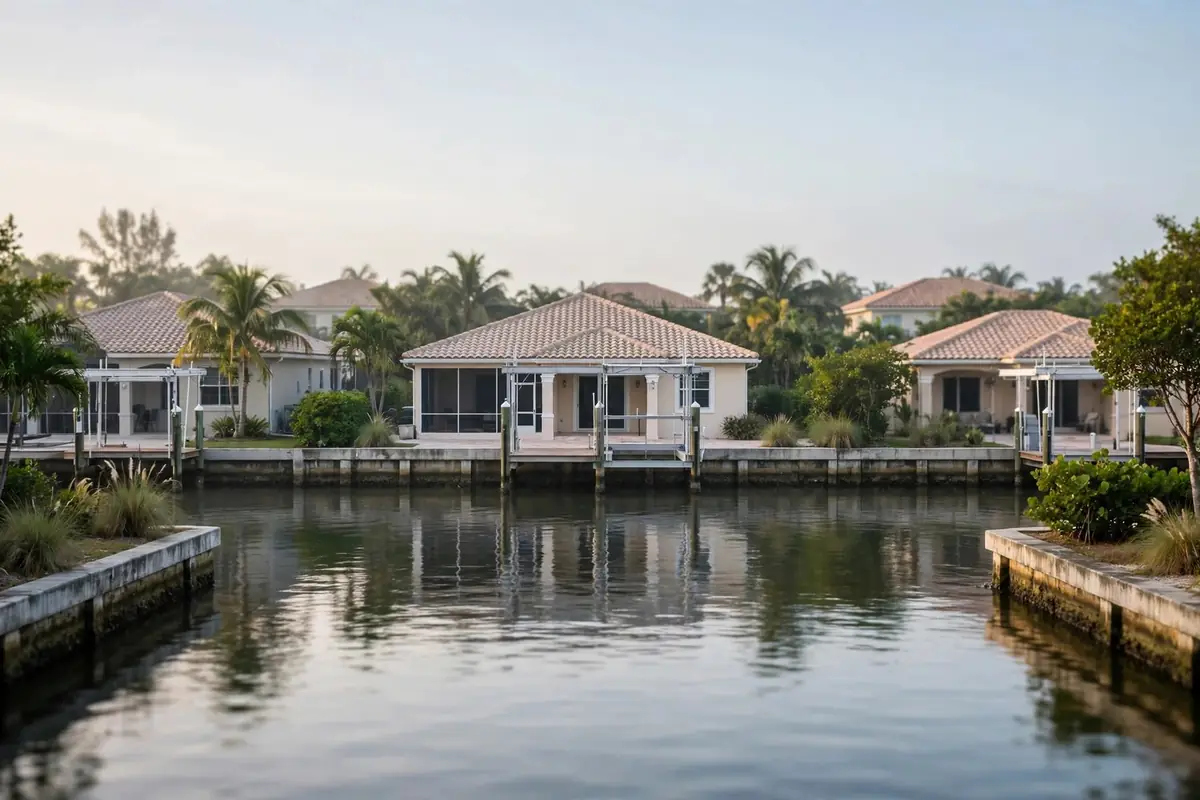
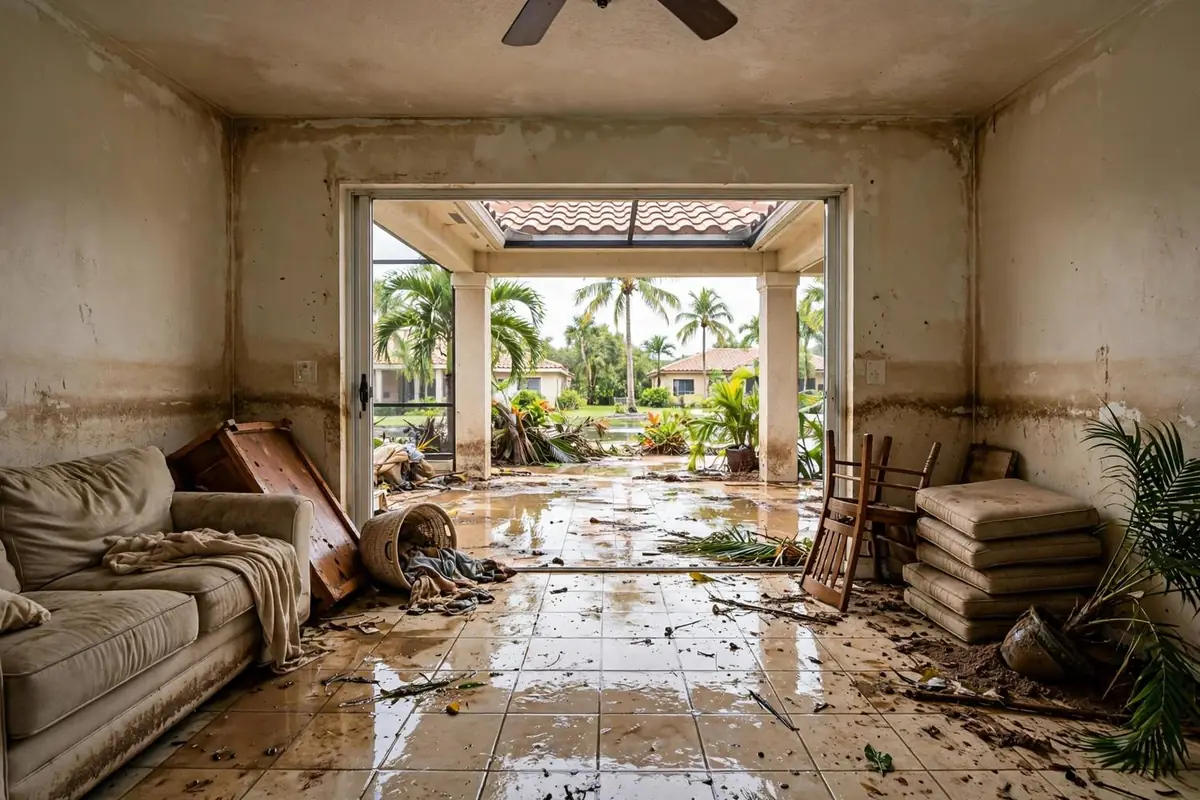
Milton pushed 5 to 8 feet of surge into the northern part of Charlotte Harbor and the Peace River in October 2024, and Helene brought 3 to 5 feet two weeks earlier (National Hurricane Center). In canal neighborhoods like Punta Gorda Isles, that water usually comes in through the pool cage and lanai doors first.
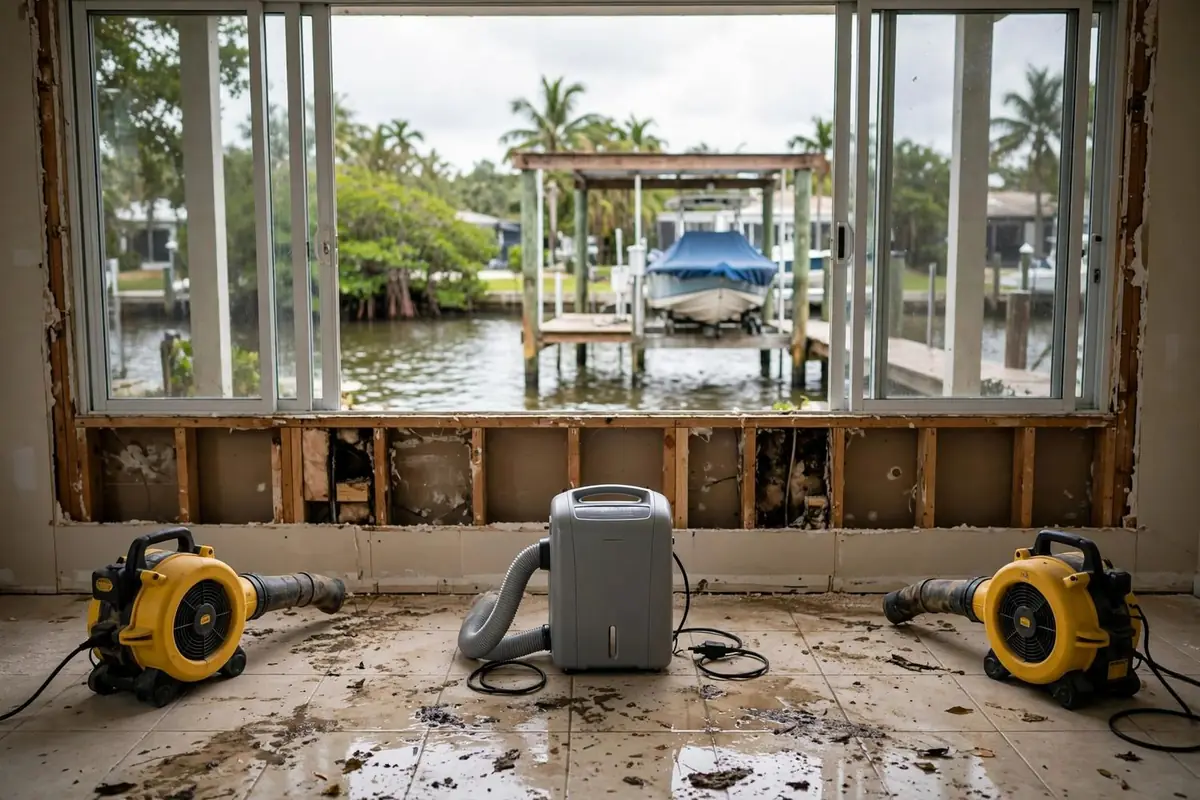
Harbor water carries salt, silt and whatever it picked up on the way, so the job is decontamination as much as drying. Expect the crew to strip baseboards and the lower part of the drywall above the highest stain, bag up soaked insulation and rugs, and pull out vanity and kitchen bases that sat in the water. Ceramic and porcelain tile is often kept and scrubbed. The exposed block, studs and slab get cleaned with an antimicrobial before the fans and dehumidifiers go in. Pool equipment, the air handler and any outlet that went under need a licensed trade to check them before they're switched back on.
Wind-driven rain after a storm
Ian's eye passed near Punta Gorda in 2022 with winds estimated at 125 knots. Wind pushes rain under roof tiles and through window frames and soffit vents. The house can look fine for weeks while insulation and drywall stay wet in the attic and walls. Signs: a ceiling stain that grows, paint bubbling near windows, or a musty smell. See roof leak after a storm and ceiling water stain.
Seasonal homes and slow leaks
With a median resident age of 66.3 in the city (Census ACS), many Punta Gorda homes sit empty for part of the year. Before leaving, shut off the main valve, set the AC to keep humidity down, and have someone check the house after storms. If you came back to water damage, expect the company you're connected with to open walls, check for mold and run drying equipment longer than a fresh leak needs.
Drying and repairs
The company you're connected with will first measure how far the water spread, using meters and an infrared camera, and pump out anything still standing. Whatever can't be dried is cut out and hauled away. Then fans and dehumidifiers run for several days while someone comes back daily to log readings. When walls and slab read dry, the rebuild can start. Inside city limits that needs a permit from the City of Punta Gorda; outside, from Charlotte County.
Which policy pays?
A canal home that took on harbor water is usually a flood claim, under an NFIP or private flood policy. Rain that blew in through a damaged roof or window is usually a homeowners claim, with the hurricane deductible applying. Many storm losses involve both, so tell each insurer what happened and keep the photos separate. Florida law gives you 1 year from the date of loss to report a new claim (s. 627.70132), and on policies written since January 2023 you can't sign your benefits over to the contractor (s. 627.7152). This is general information, not insurance advice.
Before you hire
- Proof of liability insurance and workers' compensation.
- For mold over about 10 square feet: the Florida mold remediator license number of the person doing the work, checked on the DBPR licensee search.
- A written scope and price before work starts.
- Daily moisture readings and photos you can give your insurer.
Sources
- National Hurricane Center, Tropical Cyclone Report: Hurricane Milton (AL142024)
- National Hurricane Center, Tropical Cyclone Report: Hurricane Helene (AL092024)
- National Hurricane Center, Tropical Cyclone Report: Hurricane Ian (AL092022), landfall near Punta Gorda
- U.S. Census Bureau, American Community Survey 2020–2024 5-year, Charlotte County places and ZIP areas, via Census Reporter
- Florida Statutes, s. 627.7152: assignment of post-loss benefits
- Florida Statutes, s. 627.70132: notice of property insurance claims
- City of Punta Gorda, Building Division
- FEMA, Flood insurance (National Flood Insurance Program)
Last checked 2026-11-16 by the AMR Water & Mold editorial team. Editorial policy.