
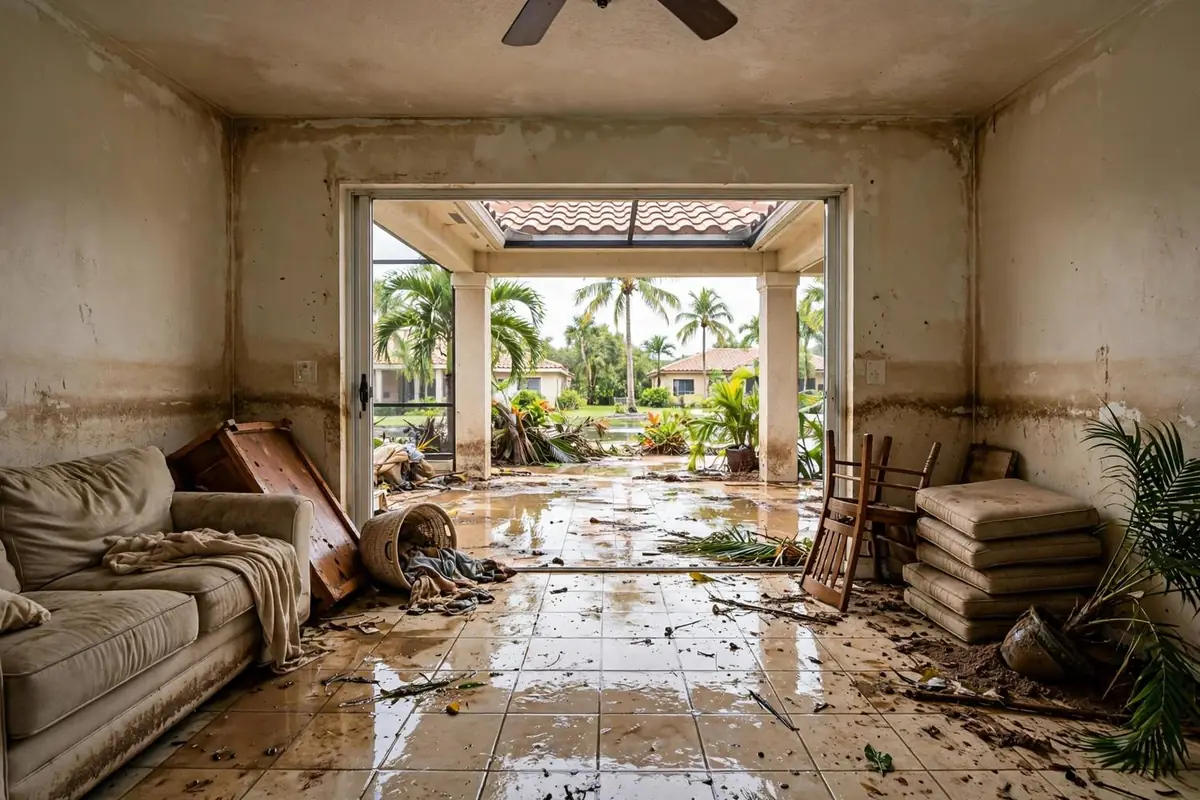
Three storms, three kinds of water
The National Hurricane Center's reports on the last three storms show why "storm damage" is not one thing:
- Ian (September 2022) came ashore on Cayo Costa at 130 knots, then again near Punta Gorda. Offshore winds kept surge low in Port Charlotte and Englewood, but the Peace and Myakka Rivers crested at record levels, and river flooding closed part of I-75 in southern Sarasota County. The damage was wind, rain and rising river water.
- Helene (September 2024) passed far offshore on its way to the Big Bend, yet still pushed 4 to 6 feet of surge from Venice to south of Englewood. Most of Charlotte County's major damage was from surge.
- Milton (October 2024) came ashore on Siesta Key as a Category 3, with 6 to 9 feet of surge from Venice south to Boca Grande and 5 to 8 feet in northern Charlotte Harbor.
Each kind of water is handled, and usually insured, differently. Knowing which one got into your house is the first step.
Step 1: safety before anything else
- Wait for officials to clear your area. Flood water can hide washed-out pavement, live wires and debris.
- If water reached outlets or the electrical panel, leave the main breaker off and have an electrician check it before power is restored.
- Run a portable generator outdoors only, more than 20 feet from windows, doors and vents, and never in the house or garage, even with doors open (CDC).
- Use a battery-powered or battery-backup carbon monoxide detector inside while a generator is running (CDC).
- Wear boots and gloves. Surge and flood water carry sewage, fuel and chemicals.
- Stay out from under sagging ceilings; they can hold a lot of water.
Step 2: photograph before you clean
Insurers need to see the damage as you found it. Walk every room with your phone before moving anything:
- A slow video of each room, then wide photos of each wall.
- Close-ups of the water line on walls, cabinets and furniture. Measure its height from the floor and photograph the tape.
- Roof, soffits, windows and doors from outside, especially anything broken or missing.
- Serial labels on the water heater, AC air handler and appliances.
Then report the claim. Under s. 627.70132, Florida Statutes, notice of a new property claim must be given within 1 year of the date of loss, but early notice keeps your options open.
Step 3: work out which water it was
| What you see | Likely source | Usually insured under |
|---|---|---|
| A level water line on every wall, silt or salt residue, wet from the floor up | Surge or rising flood water | A flood policy (NFIP or private) |
| Ceiling stains, wet insulation, water running down walls from above or around windows | Wind-driven rain through a damaged roof or opening | Homeowners, subject to the hurricane deductible |
| Water that rose after the storm had passed, near a river or creek | River or creek flooding | A flood policy |
Many houses have more than one. Keep the photos for each kind separate and tell each insurer what you found. FEMA notes that most homeowners policies don't cover flood. See water damage vs flood insurance.
This guide is general information, not legal or insurance advice. Policies differ; read yours and ask your agent about your situation.
Step 4: stop more water getting in
- Get the roof tarped as soon as it's safe. Policies generally expect reasonable steps to prevent further damage, and a tarp is one of them. Keep the receipt and photos.
- Board or cover broken windows and doors.
- Move furniture, rugs and boxes out of wet rooms, and get photos of anything you throw out.
Step 5: get drying started within 48 hours
The EPA advises drying wet materials within 24 to 48 hours to prevent mold. After a storm that is hard, because every company is busy, so call early.
- Surge or flood water: treated as contaminated. Wet drywall is cut out above the water line, insulation, carpet and pad are removed, and the structure is cleaned before drying. See storm and flood damage.
- Rain through the roof: the attic insulation and ceiling drywall are checked first. A small stain can hide a large wet area. See roof leak after a storm.
- Keep the AC running once power is safe; opening windows in Florida humidity usually adds moisture instead of removing it.
Step 6: watch for problems weeks later
Hidden moisture from a rushed cleanup is a common cause of mold months after a storm. Signs to watch: a musty smell that doesn't fade, paint bubbling low on walls, baseboards pulling away, or new ceiling stains after the next rain. See musty smell in the house.
Before the next storm
- Look up your flood zone: Sarasota County's maps changed on March 27, 2024; Charlotte County has its own maps.
- Check whether you have flood insurance. NFIP policies typically have a 30-day waiting period (FEMA), so buying one when a storm is in the forecast is usually too late.
- Take a dated video of your home and belongings now.
- Know where the main water shutoff and electrical panel are.
- Keep a battery-powered CO detector with your hurricane supplies.
Sources
- National Hurricane Center, Tropical Cyclone Report: Hurricane Ian (AL092022)
- National Hurricane Center, Tropical Cyclone Report: Hurricane Helene (AL092024)
- National Hurricane Center, Tropical Cyclone Report: Hurricane Milton (AL142024)
- CDC, Carbon Monoxide (CO) Poisoning Basics: portable generators
- FEMA, Flood insurance (National Flood Insurance Program)
- Florida Statutes, s. 627.70132: notice of property insurance claims
- U.S. EPA, A Brief Guide to Mold, Moisture and Your Home
- Sarasota County, new FEMA flood maps effective March 27, 2024
Last checked 2026-11-28 by the AMR Water & Mold editorial team. Editorial policy.