How much rain, and when
| Month | Rain (inches) |
|---|---|
| June | 7.81 |
| July | 7.39 |
| August | 8.34 |
| September | 7.16 |
| November | 1.54 |
| Whole year | 51.27 |
NOAA U.S. Climate Normals 1991–2020, station Venice, FL.
That's roughly 30 inches in four months, much of it in short, heavy afternoon storms with gusty wind. A roof that sheds a gentle winter rain can let water in when it's driven sideways at a seam, a vent or a wall.
Where slow leaks start
- Roof penetrations: plumbing vents, exhaust fans and AC lines that pass through the roof. Rubber boots and sealant around them crack in the sun.
- Where a roof meets a wall: flashing at a second story, a parapet or a chimney.
- Valleys: where two roof slopes meet and water collects.
- Tile roofs: the tile mostly protects the layer underneath, the underlayment, which does most of the waterproofing. Cracked or slipped tiles let sun and water reach it, and it wears out first.
- Flat roofs over lanais, Florida rooms and additions, where water ponds after storms.
- Skylights and the flashing around them.
- Not always the roof: wind-driven rain also enters at window frames, sliding doors, stucco cracks and soffit vents, and can look like a roof leak from inside.
Signs inside the house
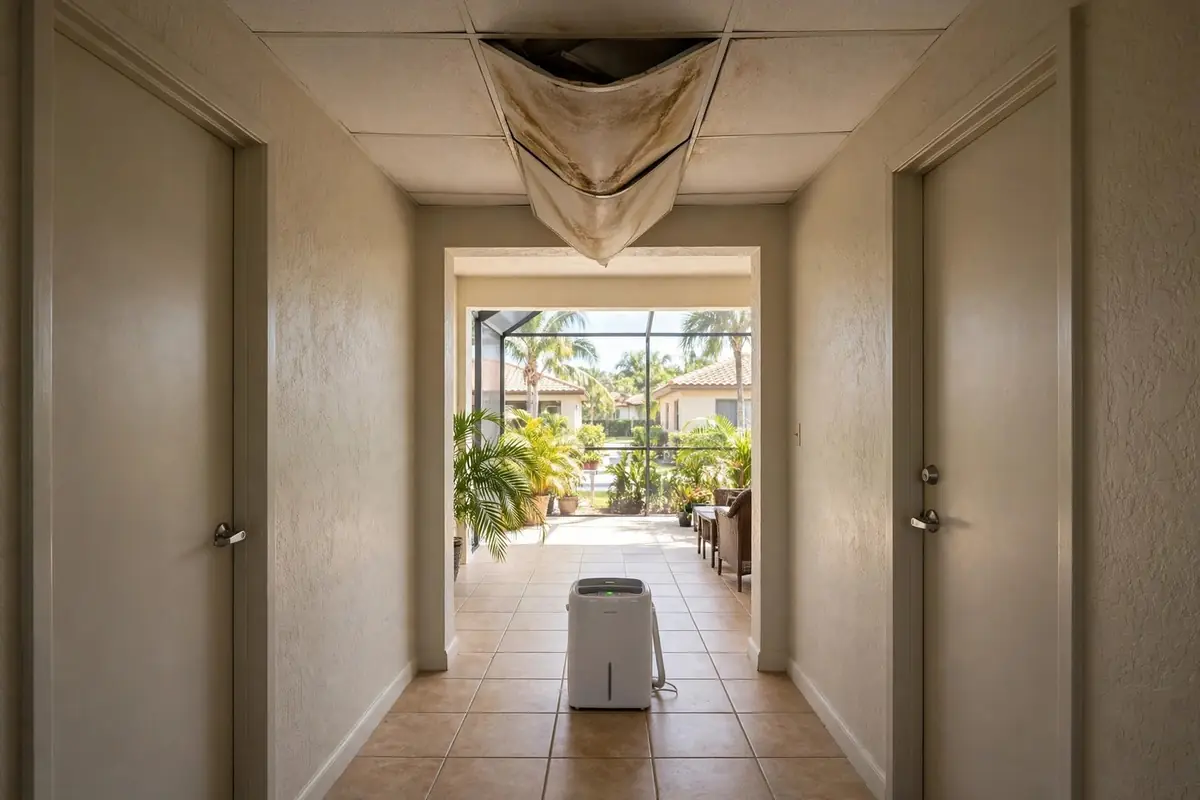
- A small yellow or brown ring on the ceiling, often near an outside wall or under a roof valley. See water stain on the ceiling.
- Bubbling or peeling paint high on walls or around window tops.
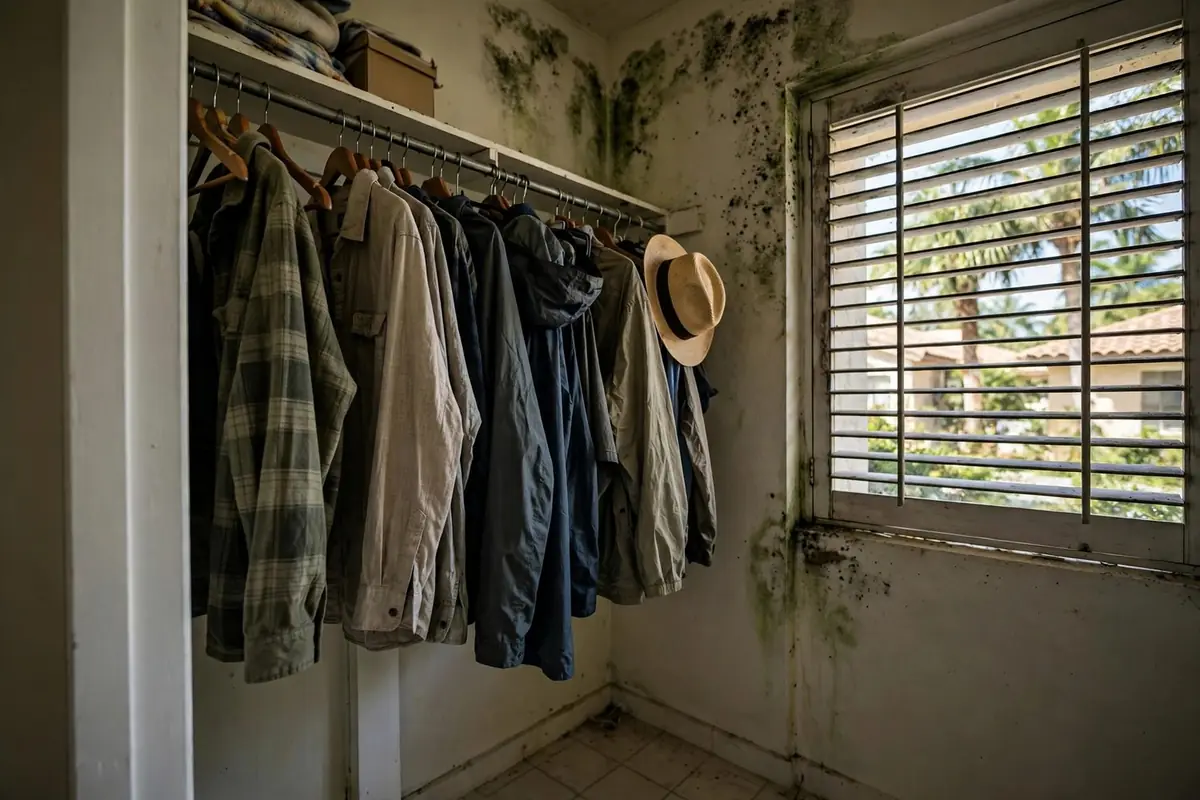
- A musty smell that's stronger in one room or closet, especially after rain.
- Dark spots on the ceiling of a closet or bathroom, where air moves less.
- Drips you hear during rain but can't find.
How to check the attic safely
- Go up during or right after a heavy rain, in daylight, with a good flashlight. Step only on joists or a walkway, never on the drywall between them.
- Look at the underside of the roof deck around vents, valleys and any spot above a ceiling stain. Wet wood looks darker and may shine in the light.
- Check the insulation: wet patches are matted, compressed or stained.
- Look at the AC air handler and ducts if they're in the attic. A wet spot under them is often condensate, not rain. See AC leak water damage.
- Take photos with the date. They help the roofer and your insurer.
Florida attics get dangerously hot in summer. Go up early in the day, keep it short, and skip it if you're not steady on a ladder.
Roof first, then drying
A drying company can't fix the roof, and drying a ceiling under an active leak is wasted effort. The order is:
- A roofer finds and repairs the entry point, or tarps it.
- Wet attic insulation is removed; soaked insulation rarely dries in place.
- Ceiling drywall is checked with a moisture meter. Small, quickly dried stains can sometimes stay; sagging or soft drywall is cut out.
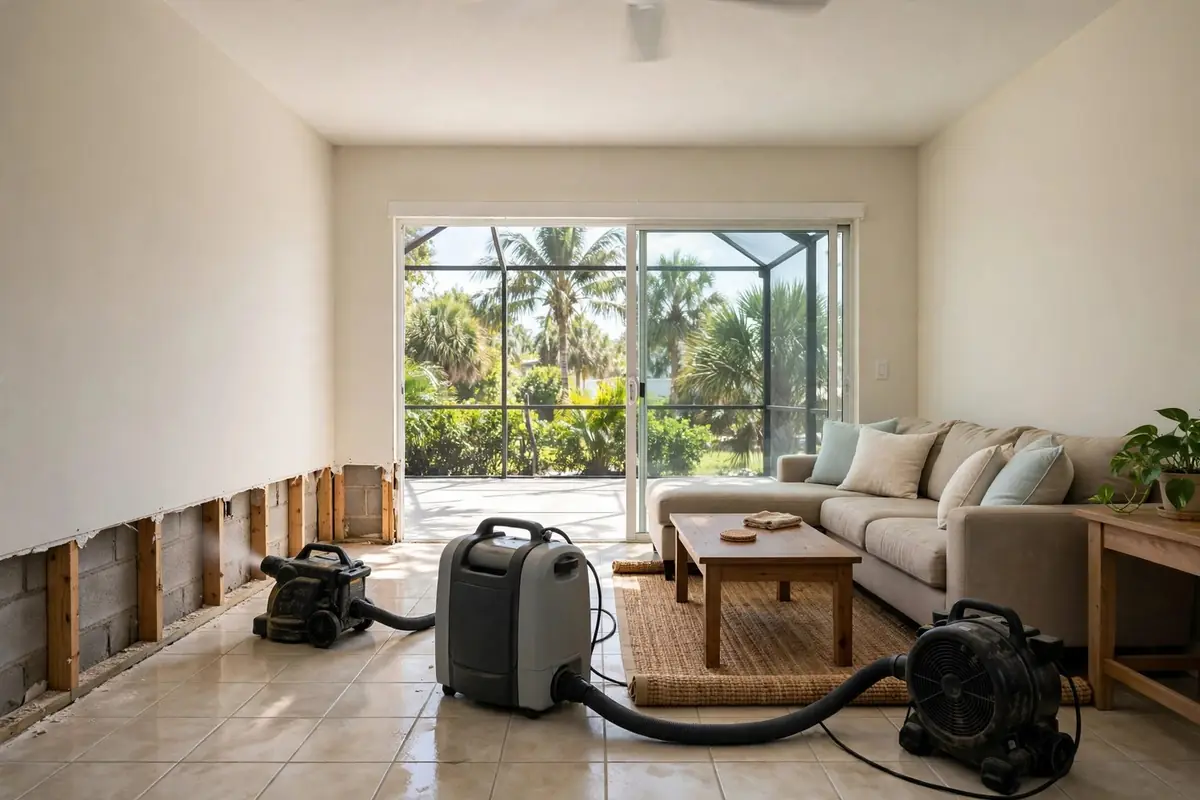
- Air movers and dehumidifiers dry the attic space and the room, with readings taken until dry.
The EPA advises drying wet materials within 24 to 48 hours to prevent mold. The Florida Department of Health suggests keeping indoor humidity below 60%, which is harder in summer if the AC is struggling.
Insurance: sudden vs slow
Homeowners policies are usually written for sudden, accidental damage. A leak that has been going on for months, or one caused by an old, worn-out roof, may be treated as wear and tear or maintenance and excluded. That's one more reason to act on small stains early and keep dated photos of when you found them. Policies differ; read yours and ask your agent.
A quick rainy-season routine
- Look at the ceilings in every room once a month from June to September.
- Walk the outside after big storms: slipped tiles, lifted shingles, debris in valleys.
- Check the attic after the first heavy storms of the season.
- Keep the AC condensate line clear, so attic or closet water isn't confused with a roof leak.
- Have the roof inspected after any named storm passes nearby.
Sources
- NOAA NCEI, U.S. Climate Normals 1991–2020, station Venice, FL (USC00089176)
- U.S. EPA, A Brief Guide to Mold, Moisture and Your Home
- Florida Department of Health, Mold and your health
Last checked 2026-11-28 by the AMR Water & Mold editorial team. Editorial policy.