The three categories in plain terms
| Category | What it means | Typical sources |
|---|---|---|
| Category 1 (clean) | Water from a clean source that hasn't picked up contamination yet | A burst or leaking supply line, a water heater, an overflowing sink with clean water |
| Category 2 (grey) | Water with significant contamination that could make people sick | Washing machine or dishwasher discharge, a toilet overflow with urine but no feces |
| Category 3 (black) | Grossly contaminated water that can carry pathogens or toxic agents | Sewage, drain backflows from beyond a trap, all seawater flooding, rising water from rivers or streams |
The Category 3 examples come from the S500 definition, as quoted in the IICRC's February 2026 position statement. It describes Category 3 water as "grossly contaminated," with sewage, seawater flooding and rising river water among its examples.
Water can change category as it sits
According to the S500, time and temperature can affect how contaminants grow, which can change the category. Clean water from a supply line that soaks into carpet and sits for days in a warm Florida house picks up bacteria from the floor and materials. It may no longer be treated as Category 1. This is one reason the first 24 to 48 hours matter so much.
Why the category matters to you
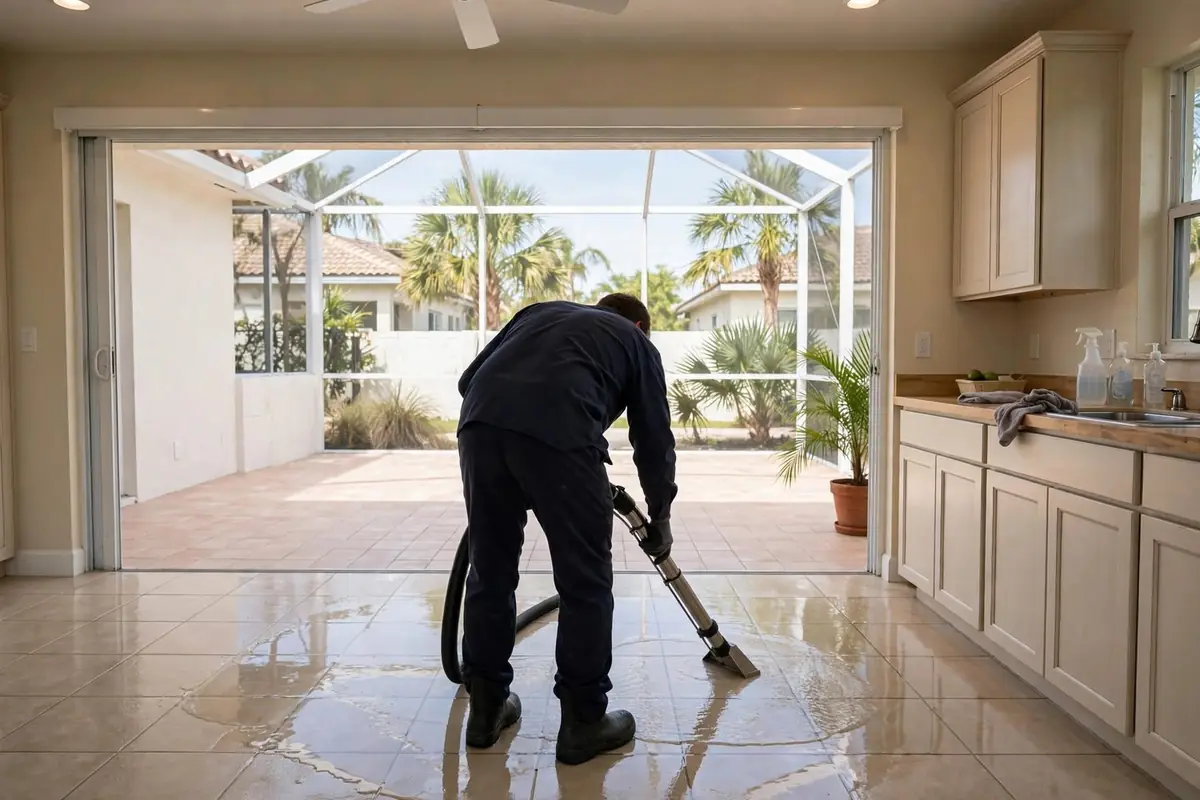
- Category 1, caught early: carpet, pad and drywall can often be dried in place. The job is mostly extraction and drying.
- Category 2: carpet pad is usually removed, and materials are cleaned and treated before drying.
- Category 3: porous materials the water touched, such as carpet, pad, drywall and insulation, are generally removed and discarded. The CDC advises throwing away items that can't be disinfected, like wall coverings, cloth, rugs and drywall.
Under the S500, Category 2 and 3 jobs are cleaned up before drying starts, and the crew uses contamination controls (containment, air pressure control) and protective gear. On a Category 1 job, those controls usually aren't needed.
Storm water: not automatically Category 3
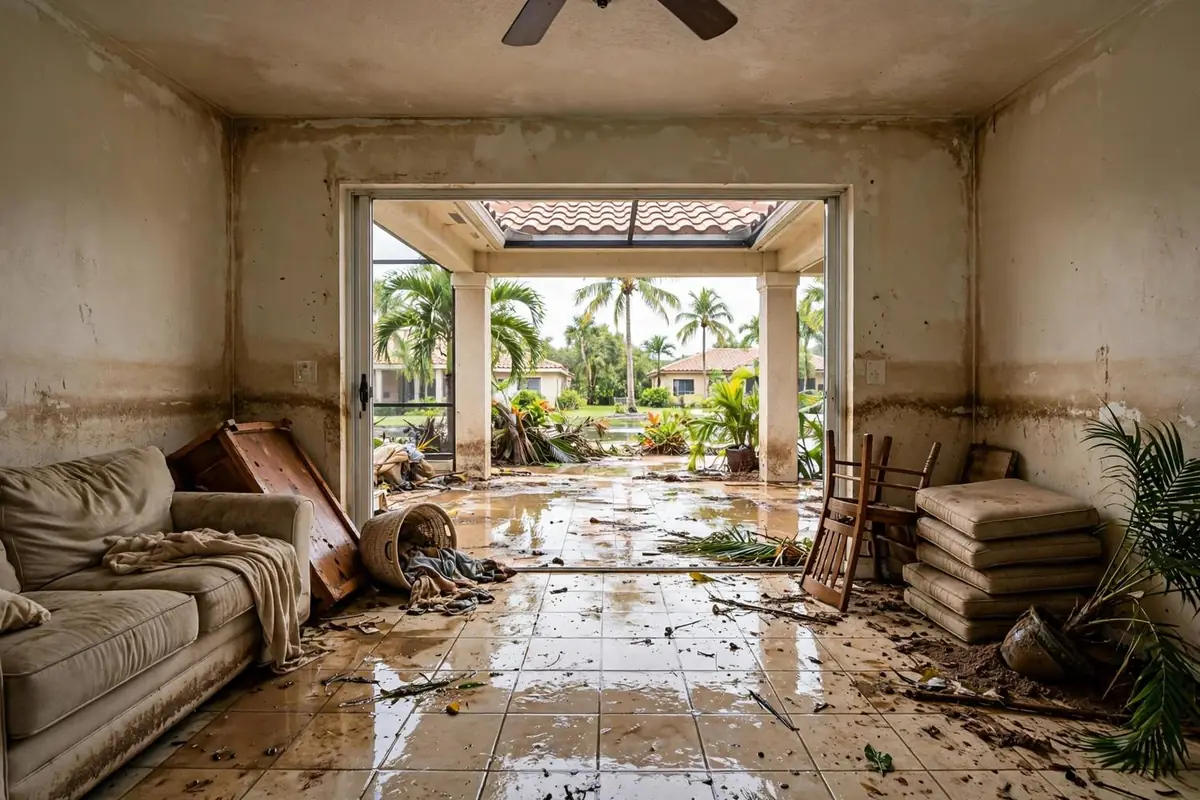
After a hurricane, it's tempting to assume every drop is black water. In February 2026 the IICRC's S500 committee issued a position statement saying that water coming in from above, wind-driven rain and other weather-related water are not automatically Category 3. What decides it is whether the water is grossly contaminated, which the restorer determines after inspecting and gathering information.
In practice, around here:
- Storm surge and rising flood water from the Gulf, the harbor or rivers like the Myakka and Peace: Category 3.
- Rain through a damaged roof that landed on clean attic insulation and drywall: often lower, depending on what it passed through and how long it sat.
Ask the company you're connected with to explain the category they assigned and why. It drives the scope of work your insurer will see. See after the storm: a water damage checklist.
Staying safe around contaminated water
- Assume flood water may contain sewage (CDC). Don't let children or pets play in it.
- Wear rubber boots and gloves for cleanup, and wash your hands after contact with flood water (CDC).
- Don't use household fans to dry a room that had sewage or flood water; they can spread contamination.
- Throw out food the flood water touched.
- People with weak immune systems, very young children and the elderly should stay out until cleanup is done.
Questions to ask the restoration company
- What category did you assign, and what did you base it on?
- Which materials will be removed, and which will be dried in place?
- Will you set up containment? Who checks that the area is clean before drying?
- Will I get moisture readings and photos for my insurer?
- For mold over about 10 square feet: what is the Florida mold remediator license number? See how to check a Florida mold license.
Sources
- ANSI/IICRC S500 Consensus Body, Position Statement: Category of Water Damage and Weather-related Events (Feb. 10, 2026)
- CDC, Floodwater after a disaster or emergency
- U.S. EPA, A Brief Guide to Mold, Moisture and Your Home
Last checked 2026-11-28 by the AMR Water & Mold editorial team. Editorial policy.