The first hour
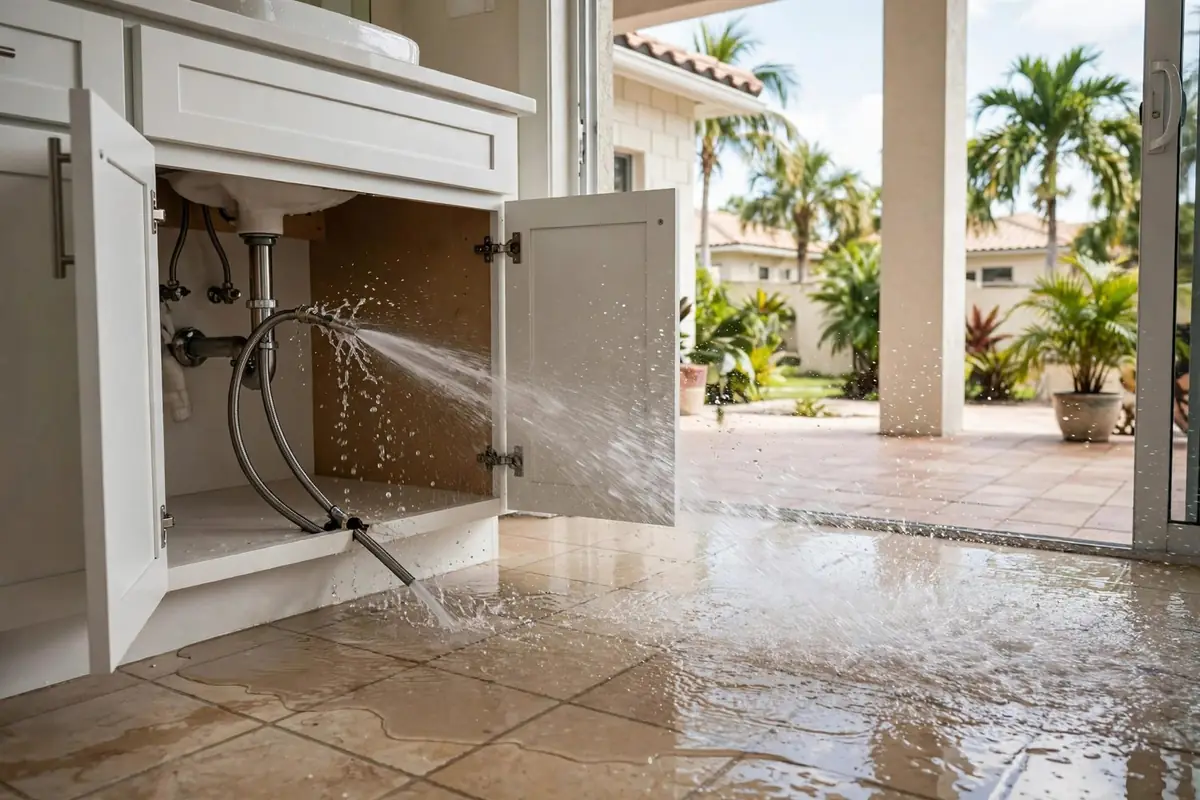
- Find the main shutoff. In many Port Charlotte block homes it's a valve on the line entering the house near a front hose bib, or in the garage. If it won't turn, Charlotte County Utilities can close the meter.
- Turn off the water heater if it's the source: power or gas off, then the cold inlet valve.
- Move what you can off wet floors: rugs, boxes, and foil or blocks under furniture legs.
- Photograph and video every room, the source and the water line on walls before cleanup.
- Skip the household vacuum on standing water.
Flooring and cabinets: what usually happens
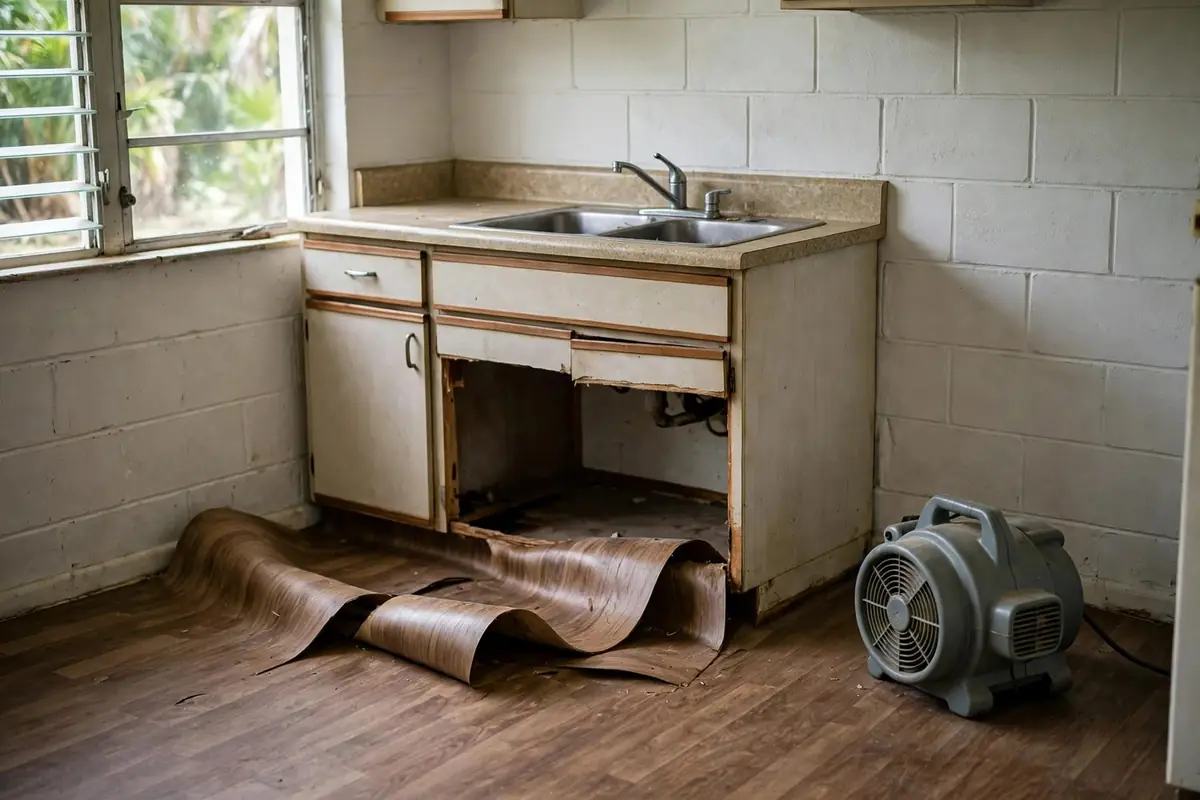
Laminate and vinyl plank flooring is common in Port Charlotte remodels. Once water gets under it, the planks cup and the underlayment stays wet, so it's usually lifted rather than dried in place. Tile set on the slab can often stay; the grout and the slab under it are dried with air movers and dehumidifiers.
Sink and vanity bases made of particleboard swell and rarely recover. The toe kick is often pulled so air can reach the floor under the cabinet. Solid wood cabinets can sometimes be dried.
Leaks in 1970s and 1980s homes
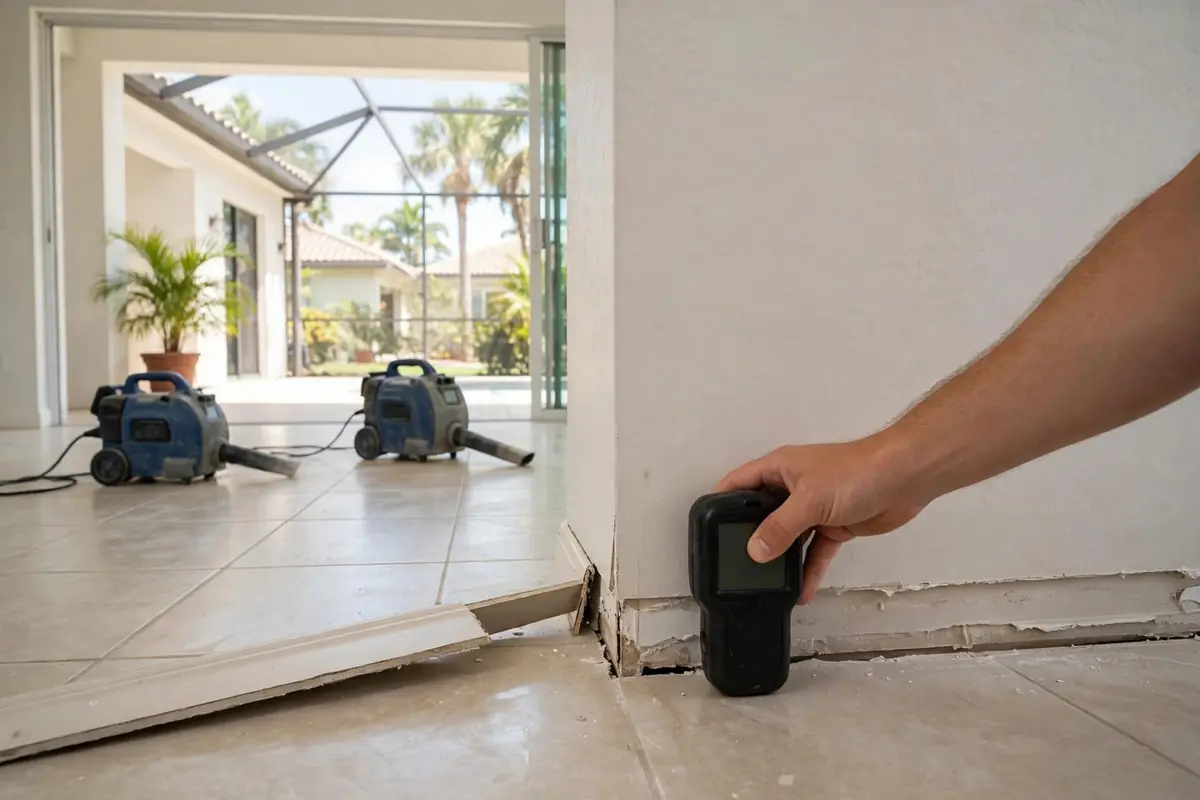
In ZIP 33952 the median home was built in 1977, and about 60% of homes predate 1980 (Census ACS). Original valves, supply lines and drain lines are common sources. A slow leak under the slab or inside a wall can soak drywall and baseboards for weeks before anyone sees it. Signs include a damp baseboard, a warm patch of floor, a meter that keeps spinning with every tap off, or a musty closet. The company you're connected with will use moisture meters and thermal imaging to find how far the water went.
Storm water and canal flooding
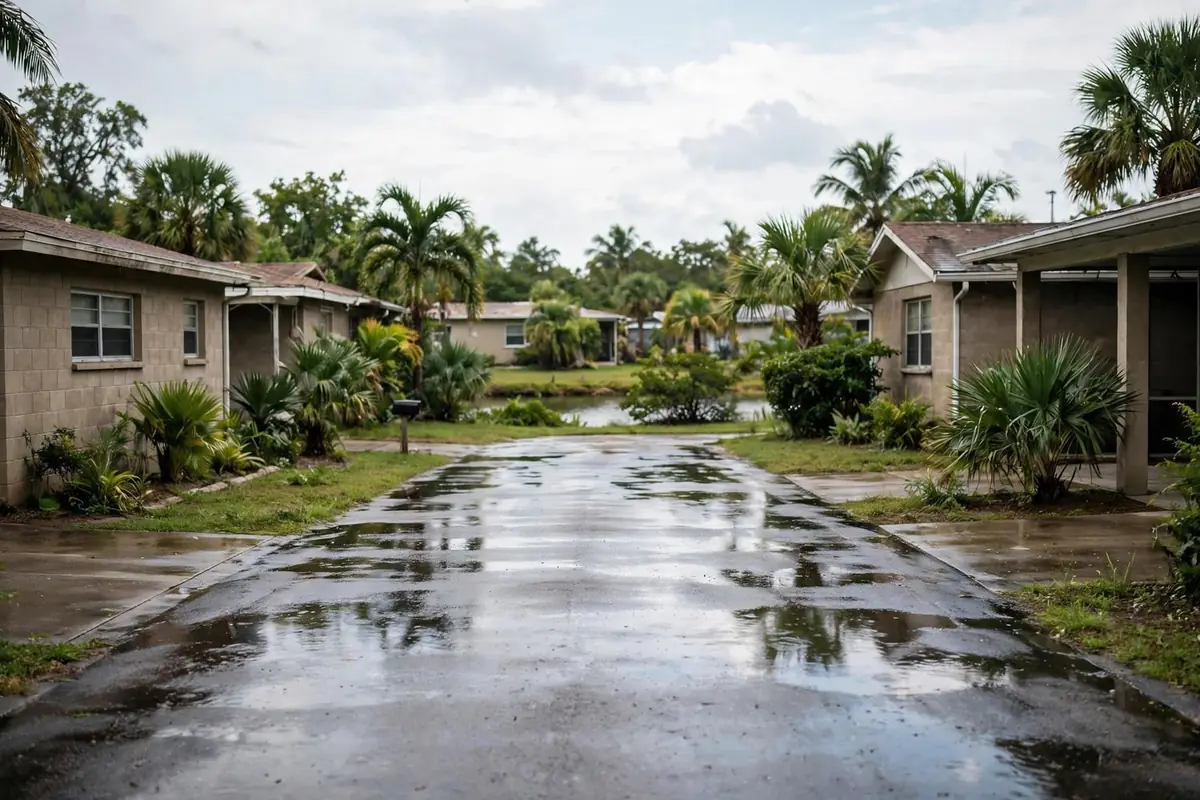
Helene and Milton both pushed surge into Charlotte Harbor in 2024; Milton reached 5 to 8 feet in the northern harbor and along the Peace River (National Hurricane Center). Rising water from outside is treated as contaminated. Drywall is cut out above the water line, wet insulation and carpet are removed, and the structure is cleaned before drying. That kind of loss usually falls under a flood policy, not homeowners insurance. See water damage vs flood insurance.
How long drying takes
A clean-water leak caught early often dries in three to five days, with readings taken daily. Water that sat for days, reached inside walls, or came from outside takes longer and usually means removing material. Once the readings say dry, repairs can start. Rebuilding drywall, cabinets, plumbing or electrical may need a permit from Charlotte County Community Development, Building Construction Services.
Insurance basics in Florida
Florida homeowners policies issued on or after January 1, 2023 don't allow you to assign benefits to a contractor (s. 627.7152), so you stay in control of the claim. A new claim must be reported within 1 year of the date of loss (s. 627.70132). Keep receipts, photos and the drying log. General information only, not legal or insurance advice.
Before you hire
- Proof of liability insurance and workers' compensation.
- For mold over about 10 square feet: the Florida mold remediator license number of the person doing the work, checked on the DBPR licensee search.
- A written scope and price before work starts.
- Daily moisture readings and photos you can give your insurer.
Sources
- U.S. Census Bureau, American Community Survey 2020–2024 5-year, Charlotte County places and ZIP areas, via Census Reporter
- National Hurricane Center, Tropical Cyclone Report: Hurricane Milton (AL142024)
- National Hurricane Center, Tropical Cyclone Report: Hurricane Helene (AL092024)
- Florida Statutes, s. 627.7152: assignment of post-loss benefits
- Florida Statutes, s. 627.70132: notice of property insurance claims
- Charlotte County Community Development, Building Construction Services
- U.S. EPA, A Brief Guide to Mold, Moisture and Your Home
Last checked 2026-11-16 by the AMR Water & Mold editorial team. Editorial policy.